


Web of Cooperation: Anomaly or Aspiration in the Halls of Power?
POLICY WIRE — Washington D.C., USA — The conventional wisdom about human power dynamics—it’s a brutal climb, a dog-eat-dog scrum, a gladiatorial contest where former allies become...

POLICY WIRE — Washington D.C., USA — The conventional wisdom about human power dynamics—it’s a brutal climb, a dog-eat-dog scrum, a gladiatorial contest where former allies become tomorrow’s targets—often feels less like a cynical observation and more like a hard fact of life. We’ve seen it play out time and again, in parliamentary squabbles, corporate boardrooms, and global geopolitical chess matches. But what if we’ve got it all wrong? What if the blueprint for sustained collective action, even peaceful cohabitation, actually lies hidden not in complex treaties or intricate social contracts, but in the unlikeliest of places?
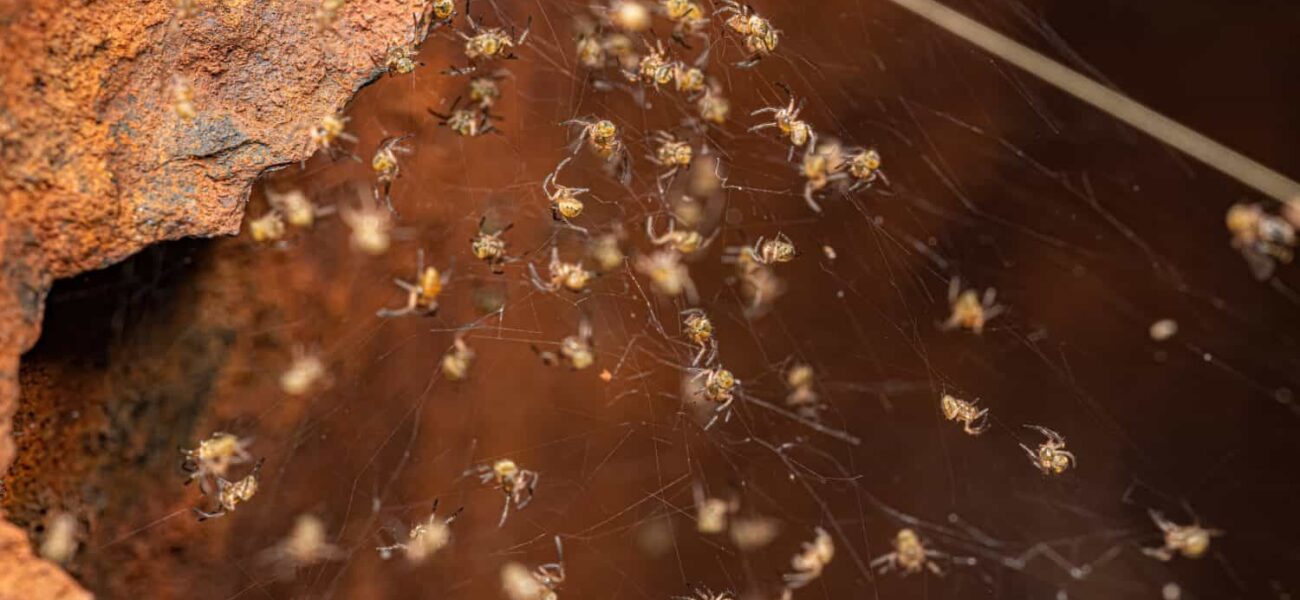
It turns out there’s a spider, often overlooked, that lives in massive communal groups. It hunts together, pools its resources, and—here’s the kicker—never turns cannibal. Think about that for a second. An arachnid, long maligned as a solitary, venomous hunter, has seemingly cracked the code on persistent cooperation, while we, the self-proclaimed apex intellects, struggle to keep a coalition together for a full legislative session. It’s almost laughable, isn’t it?
For centuries, human philosophers have pondered the ‘state of nature’ and concluded, often grimly, that we’re fundamentally self-interested, prone to conflict. And you’d be forgiven for believing it. From tribal skirmishes to modern electoral battles, the narrative is rarely about harmonious co-existence. Our politics are inherently adversarial,
noted Dr. Evelyn Thorne, a tenured professor of political sociology at Georgetown, her voice tinged with a weary realism. To suggest a species without even rudimentary cognition could embody a more ‘evolved’ form of social stability than ourselves—well, it certainly challenges our intellectual vanity, doesn’t it?
But challenge it does. This isn’t just some quaint biological curiosity; it’s a stark, web-spun mirror held up to our own messy arrangements. Imagine if national leaders could trust each other with that much certainty. If political parties didn’t always fear the knives from within their own ranks, let alone from across the aisle. This spider’s social model—which researchers observed with genuine surprise—offers a profound counter-narrative to our pervasive belief that self-preservation inevitably spirals into mutual destruction. Globally, internal conflicts, often driven by power grabs or resource hoarding, still account for over 90% of all armed conflicts since 1990, as reported by the Stockholm International Peace Research Institute (SIPRI). It paints a picture starkly different from our arachnid friends.
And it’s in regions like South Asia, where ethnic and religious mosaics often fracture into violent schisms, that the ideal of non-cannibalistic cooperation seems most elusive, and yet most desperately needed. Consider Pakistan, a nation born from division, perpetually wrestling with internal factionalism, sectarian violence, and political rivalries that frequently imperil its progress. Could a biological lesson, albeit an unconventional one, offer a different way to look at nation-building? Could it inspire a more integrated sense of shared destiny?
It’s not to say that human beings can simply adopt an arachnid social model. Don’t be silly. But the underlying principles of shared hunting, resource pooling, and the sheer absence of internal predation are compelling, aren’t they? They offer a hypothetical ideal against which our own messy human endeavors stand in stark, often disheartening contrast. Sometimes it feels like we’re programmed to tear ourselves apart—an evolutionary oversight, perhaps? But then, you see these spiders, these tiny masters of the web, — and you think: maybe not. Maybe there’s another path.
📄 POLICY WIRE WHITEPAPER PUBLISHED: PAKISTAN'S NATIONAL SECURITY POLICY PRIORITIES
👉 READ BY CLICKING HEREBut, then again, the human condition isn’t so easily changed. As former Ambassador Ali Hasan, known for his work in brokering complex regional accords in the Middle East and Central Asia, quipped, The most dangerous predators in any negotiating room aren’t the opposing party, but the ambitions within one’s own delegation.
It’s a sentiment many diplomats, from Islamabad to Istanbul, would quietly affirm.
This spider, by the way, doesn’t possess the lofty concepts of ‘justice’ or ‘fair play,’ doesn’t draft manifestos, doesn’t convene committees to resolve disputes. It simply… cooperates. And maybe that’s where we overcomplicate things. We inject layers of ego, ideology, and individual ambition into everything, making even simple resource sharing a zero-sum game. The spider, well, it just gets the job done, together.
What This Means
This unusual biological phenomenon throws a harsh spotlight on the persistent failures of human cooperative ventures, both domestically and internationally. Politically, it suggests that many foundational assumptions about power and competition might be deeply flawed—or at least incomplete. If a species considered ‘primitive’ can sustain complex collective behavior without self-immolation, it begs the question of why advanced human societies struggle so profoundly with internal cohesion. For economic policy, it challenges the unbridled free-market orthodoxy that often champions ruthless competition as the sole engine of progress. It posits, implicitly, that genuine resource sharing and the active elimination of internal ‘cannibalism’ (e.g., predatory business practices, unchecked exploitation) could unlock immense societal gains. Culturally, especially in diverse nations with deep historical fault lines like Pakistan, this biological blueprint could serve as an abstract, if unconventional, model for building genuine national unity, prioritizing communal benefit over factional gain. It’s an inconvenient truth, isn’t it? Our intellectual sophistication often seems inversely proportional to our practical capacity for simple, sustained collaboration. We ought to consider a humble lesson from the arthropods; they’re onto something we’ve yet to grasp.