

Spain’s Scars Remain: A Flamenco Truce in Andalusia’s Climate War
POLICY WIRE — Malaga, Spain — The scorching breath of summer, a predictable torment across Europe, found a new canvas for destruction recently in Spain’s sun-drenched south. Forget the postcards and...

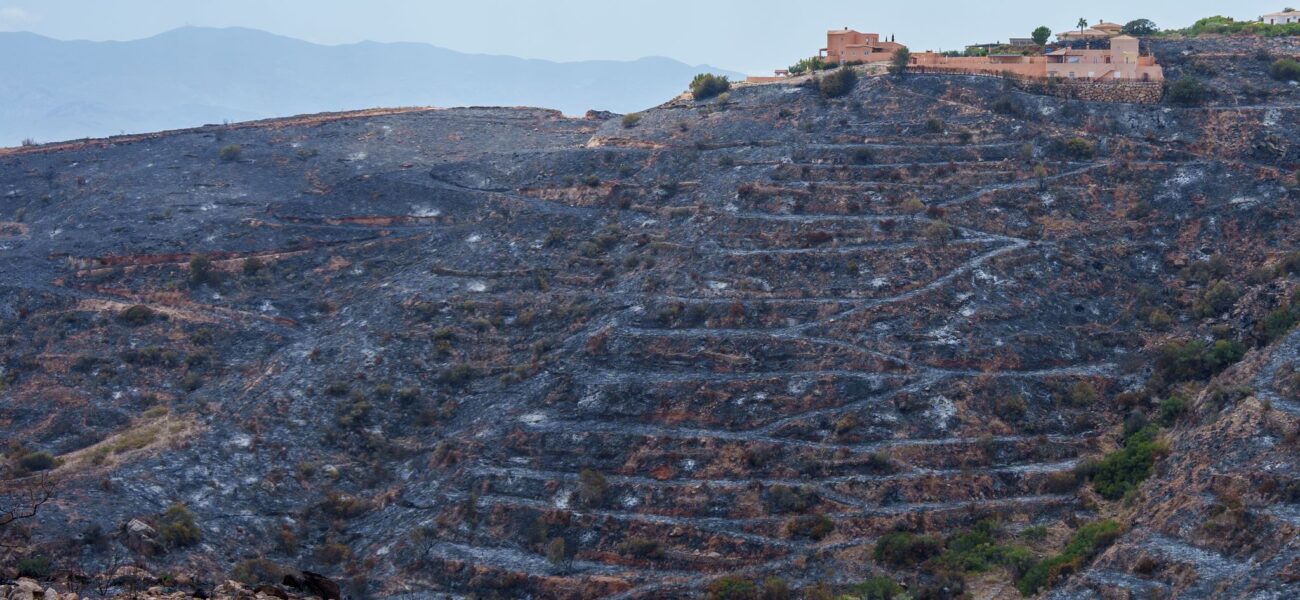
POLICY WIRE — Malaga, Spain — The scorching breath of summer, a predictable torment across Europe, found a new canvas for destruction recently in Spain’s sun-drenched south. Forget the postcards and the vibrant flamenco; this past week, Andalusia painted a grimmer picture, one of charred pines and an eerie silence where cicadas once buzzed. The sigh of relief emanating from Malaga province isn’t just about the fact that a relentless wildfire — one that ripped through an ecologically fragile mountain range — finally stopped its destructive march; it’s about the temporary deferral of a far larger, global reckoning.
Spanish authorities announced a halt to the blaze’s advance, an acknowledgment more of sheer exhaustion and some fortunate weather shifts than a triumphant victory over nature. Hundreds of firefighters, backed by an aerial armada, wrestled for days with flames that devoured thousands of hectares, forcing evacuations and leaving behind an apocalyptic landscape. But it isn’t over. That’s the hard truth nobody much wants to hear right now. This momentary ceasefire doesn’t magically regrow ancient cork oak forests or soothe the nerves of those who watched their homes, their livelihoods, become ash.
Local media initially bristled with the immediate terror: people fleeing with pets, firefighters battling impossible odds, smoke plumes visible for miles. The human cost? Measurable in the displacement of hundreds of families, many from quaint villages like Pujerra, where life revolved around the rhythms of the land. Economic forecasts for the affected areas? They’re looking pretty grim, I can tell you. Spain, remember, is grappling with a multi-year drought trend that scientists attribute to climate change, a grim precursor to such fiery outbreaks.
“We can applaud the incredible courage of our firefighters, but we cannot ignore the larger narrative,” declared Teresa Ribera, Spain’s Minister for Ecological Transition, in a recent press conference. “This isn’t an isolated incident; it’s a symptom of a planet under immense strain. We must adapt, certainly, but we must also accelerate our efforts to mitigate—because if we don’t, these tragedies will become our grim new normal.” It’s a sentiment many don’t want to hear while they’re hosing down embers, but it’s an inconvenient truth, isn’t it?
The situation in Andalusia, while localized, serves as a stark reminder of a global problem that disproportionately impacts vulnerable communities. Take Pakistan, for instance. Just last year, the country faced unprecedented, climate-induced flooding, submerging a third of the nation and displacing millions. The sheer scale of it was staggering, a kind of watery counterpart to Spain’s infernos. The human-made disaster of uncontrolled development intersecting with erratic weather patterns creates a devastating cycle—a vicious feedback loop where poverty exacerbates environmental degradation, and environmental disasters push more people into poverty. It’s a bitter cocktail, a recipe for chaos, really.
And let’s be frank, these are not just isolated meteorological events. They’re a policy conundrum wrapped in a weather report. According to the European Commission’s Copernicus Climate Change Service, southern Europe has experienced a dramatic increase in fire risk days over the last four decades, with some regions seeing an additional 40 to 60 days of extreme fire weather annually. Forty to sixty more days! It means summer now effectively begins earlier, lasts longer, — and packs a more ferocious punch. It isn’t just hot, it’s dangerous. Officials can deploy all the fire trucks in the world, but if the foundational climate dynamics aren’t addressed, it’s a never-ending battle.
📄 POLICY WIRE WHITEPAPER PUBLISHED: PAKISTAN'S NATIONAL SECURITY POLICY PRIORITIES
👉 READ BY CLICKING HEREBut the cessation of active spreading doesn’t erase the ecological wounds. Miles of critical Mediterranean ecosystem, home to rare flora — and fauna, now stand reduced to brittle skeletons. Reconstruction will take years, maybe decades. Many displaced residents aren’t just thinking about rebuilding; they’re wondering if they even should, given the ever-present threat. And can you blame ’em? “It’s a blessing, of course, that the fire has stopped,” sighed Maria Garcia, a resident of Estepona, whose family citrus farm narrowly escaped the flames. “But when you see that devastation, you start to question everything. Our livelihoods, our culture—it all feels so fragile in the face of this heat and these infernos. You just hope the politicians actually get it this time.”
Her words hang in the air, a potent mix of relief — and dread. It’s easy for folks in air-conditioned offices far from the smell of smoke to chalk this up to another “natural disaster.” But Spain—like so many nations teetering on the climate precipice, from the Sahel to Pakistan’s coasts—is being forced to confront an uncomfortable truth: this isn’t nature’s caprice, it’s a future shaped by our own collective choices, or lack thereof. And that’s a whole lot tougher to put out than a forest fire, isn’t it?
What This Means
The halt in the Andalusian wildfire’s spread, while providing immediate respite, serves as a stark economic and political bellwether. Economically, the region now faces significant losses in agriculture, forestry, — and tourism, its lifeblood industries. Property damage aside, the long-term impact on environmental services—like water regulation and biodiversity—will incur indirect costs for years. Politically, this incident ratchets up pressure on both regional and national governments to fast-track climate adaptation and mitigation policies, including improved fire prevention strategies and land management reforms. It also underscores a growing fault line in European policy debates: the conflict between traditional economic drivers and the urgent demands of environmental sustainability. Internationally, these events will only amplify calls from the Global South—nations like Pakistan—for richer, more industrialized nations to take greater responsibility for climate change and provide substantive support for adaptation efforts. It’s not just a Spanish problem; it’s a global bill coming due, one flaming patch of earth at a time.