


Silent Harbors, Shifting Sands: Eastern China’s Coastal Resilience Tested by Nature’s Fury
POLICY WIRE — Shanghai, China — The quiet thrum of industry, usually a ceaseless pulse along China’s bustling eastern seaboard, fell into an unsettling hush this week. It wasn’t a sudden...

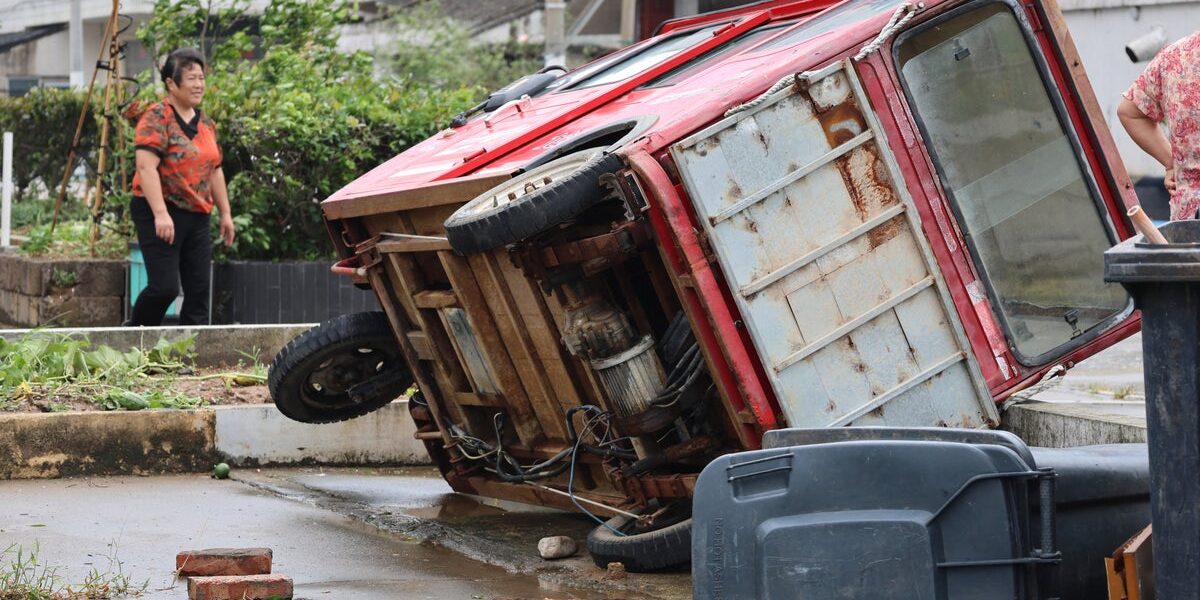
POLICY WIRE — Shanghai, China — The quiet thrum of industry, usually a ceaseless pulse along China’s bustling eastern seaboard, fell into an unsettling hush this week. It wasn’t a sudden economic slowdown or a surprise holiday that did it. Nope, just a rather rude visitor named Typhoon Bavi, who decided to roll up to the party with 170-kilometer-per-hour winds and an attitude. The storm, less an inconvenience and more a blunt force, pushed officials into orchestrating one of the largest peacetime population shifts in recent memory. Millions packed up, or were packed up, turning vast industrial zones and sleepy fishing villages into eerie, wind-swept ghosts of their former selves. The scale of it all—truly staggering.
It’s an image China’s state media rarely highlights: the sheer, raw vulnerability beneath the polished facade of its economic might. Bavi, making its less-than-grand entrance over provinces like Jiangsu — and Zhejiang, didn’t just tickle the coastline. It hammered it. Shipping channels—those arteries of global commerce—clogged or closed altogether, stranding countless vessels. Ports from Shanghai northwards hunkered down, their massive cranes motionless, silent sentinels against the swirling chaos. You’d think after years of these behemoths, they’d have a system. They do, actually, a remarkably efficient one, as evidenced by the sheer number of folks they moved.
Because, make no mistake, China moved people. A lot of people. Close to three million souls from coastal communities, some by decree, some by urgent suggestion, were sent inland to weather the storm. Fishing fleets, thousands strong, were called back to port, lashed down, or sent scurrying for safer waters. Factory operations, already wrestling with a global market that sometimes feels like a rodeo, had to shutter doors, grinding production to a halt. This isn’t just about soaked socks and inconvenient detours; this is about billions in economic activity — an estimated 0.8% of China’s annual GDP, according to a recent report by the World Bank, is directly exposed to coastal storm risks annually. It’s an astronomical figure, a constant overhead for the Dragon economy, you might say.
“Our first and foremost priority is always the safety of our citizens,” stated Li Wei, Director of China’s National Meteorological Center, in a remarkably calm, almost practiced tone on state television. “The coordinated evacuation efforts, unprecedented in their scale, reflect our government’s unwavering commitment to minimizing human cost in the face of such natural phenomena. We’re getting better at this, folks.” And that’s no small feat, corralling populations of this magnitude in such a tight window. But it’s not just about local damage; these aren’t isolated incidents. The global impact, though harder to quantify immediately, definitely stings.
The global supply chain, already as temperamental as a superstar soprano, feels every hiccup. Any prolonged disruption to shipping in this part of the world inevitably sends ripples across continents. From automotive parts destined for Europe to electronics headed for America, delays here translate into headaches there. “It’s a stark reminder that even seemingly localized climate events have tendrils reaching into every corner of the globalized economy,” observed Dr. Aisha Khan, Senior Economist at the Asian Development Bank, her voice grave. “These aren’t just weather patterns; they’re economic accelerators or decelerators. And let’s not forget the long-term burden on vulnerable economies. We often see the downstream impacts hit places like Pakistan harder, particularly for industries reliant on efficient maritime trade with China, often leading to increased costs for consumers or delays in projects associated with initiatives like the Belt and Road.” That particular bit stings in Islamabad.
📄 POLICY WIRE WHITEPAPER PUBLISHED: PAKISTAN'S NATIONAL SECURITY POLICY PRIORITIES
👉 READ BY CLICKING HEREThe larger narrative, of course, isn’t Bavi itself, but the increasing frequency — and ferocity of such storms. Climate change isn’t some theoretical bogeyman here; it’s a tangible, wind-swept reality. China, a nation whose incredible economic expansion has also contributed to global emissions, finds itself on the front lines, navigating a new normal of atmospheric extremes. They’ve poured colossal sums into coastal defenses and early warning systems—but how much can you truly defend against an angry ocean and a supercharged atmosphere? It’s an arms race with Mother Nature, — and She’s not running out of ammunition anytime soon. Meanwhile, policymakers on the opposite side of the globe watch, some with concern, others with an almost morbid curiosity, as books shape US views on China amidst rivalry, painting a complex picture of collaboration and contention, even in the face of shared global challenges.
What This Means
This massive evacuation — and the associated economic standstill underscore a few uncomfortable truths. First, even for a state as meticulously organized — and authoritarian as China, nature dictates the rules. Their ability to mobilize millions within hours is impressive, yes, but it also speaks to the sheer, existential threat these events pose to a highly concentrated population and industrial base. It’s a dress rehearsal for future, potentially larger, climate-induced migrations and disruptions. The political implication? Continued investment in infrastructure will strain state budgets, and Beijing might have to confront increasingly frustrated populace demanding solutions for climate change even as it prioritizes economic growth. Economically, repeated shocks like Bavi aren’t just dents in the quarterly reports; they erode investor confidence, divert resources, and inflate insurance premiums for businesses—all the way down to small factories. And on the international stage, expect more calls for global climate action, ironically from a nation that’s both a leading emitter and a major victim. It’s a tough balancing act, one that’s only going to get tougher as the winds pick up. For those keeping an eye on maritime routes, this means shipping delays become a fact of life, creating a constant game of whack-a-mole for global logistics managers and pushing commodity prices higher. The cost of a few days’ bad weather here isn’t just felt in Shanghai; it’s felt everywhere, sometimes even in the price of your morning coffee or that new phone you’ve been eyeing.