
Dodgers’ Oval Office Ordeal: Betts Opts Out of Presidential Photo-Op Amidst Grind
POLICY WIRE — Washington D.C., USA — The ceaseless churn of America’s pastime often eclipses the grandstanding, the ceremonies, the pomp and circumstance that cling to national achievements....

POLICY WIRE — Washington D.C., USA — The ceaseless churn of America’s pastime often eclipses the grandstanding, the ceremonies, the pomp and circumstance that cling to national achievements. It’s a grind, baseball. A veritable marathon of sweat, travel, and strategy where a legitimate day off is about as common as a sober conversation at a post-game presser. It’s this unforgiving schedule, not a looming ideological battle, that appears to be quietly shaping who will—and who won’t—stand shoulder-to-shoulder with the President later this month.
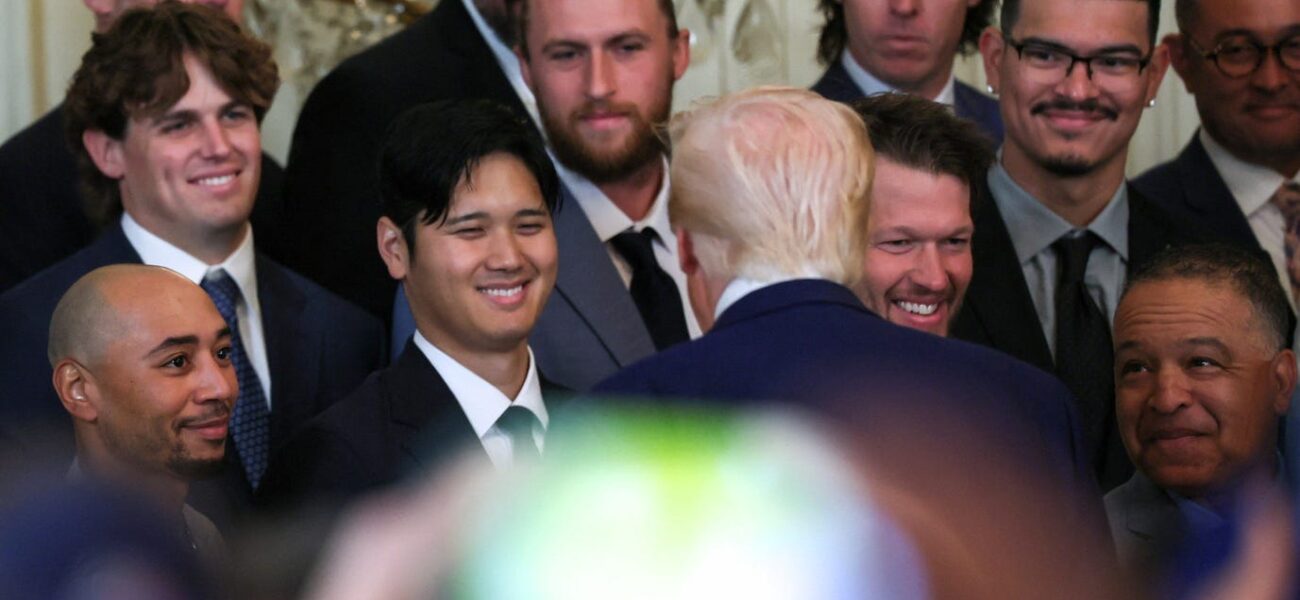
On July 23, the reigning World Series champions, the Los Angeles Dodgers, are set to descend upon the White House. This visit marks their third trip in as many years, celebrating a dynasty that’s seen them clinch three titles in short order: 2020, 2024, and 2025. Yeah, you read that right—three in five years. They beat the Toronto Blue Jays in a thrilling Game 7 to seal their back-to-back glory in 2025, just after knocking off the New York Yankees in five games the previous year. Their first post-1988 championship came in 2020. They’ve been busy, that’s for sure. They were just there in April 2025, celebrating their 2024 win, a gathering that included familiar faces like Mookie Betts, Shohei Ohtani, and Clayton Kershaw. [QUOTE_PLACEHOLDER]
But this upcoming trek, sandwiched between crucial series against the Philadelphia Phillies and the New York Mets, finds itself smack in the middle of what’s been described as a particularly demanding stretch for the Dodgers. The team is navigating nine games in 10 days, a brutal gauntlet even for peak-condition athletes. So, it shouldn’t be too shocking that some players are prioritizing—well, pretty much anything else—over another photo opportunity. You know, a tradition steeped in perceived national unity but often perceived as a mere political prop by those actually involved.
Mookie Betts, one of the biggest names in the game, won’t be among them. Betts told the California Post on July 11 that he wasn’t expected to appear at the White House. He plans on skipping the festivities. Now, if you’re looking for political drama, you’re outta luck this time, or so he says. He claimed the decision wasn’t political. Instead, Betts stated that he wanted to spend the day with his family, which includes his newborn daughter. An entirely understandable—and frankly, very human—choice. It’s not like the man hasn’t already paid his dues in these White House rituals.
And he won’t be alone in his absence. Kiké Hernández is also not expected to make the trip. His reasoning, much like Betts’, is refreshingly practical: he’s currently on a minor league rehab assignment. Baseball, you see, respects no presidential schedule or national tradition when a strained hamstring needs nursing back to health.
Compare this to other corners of the global sporting arena, say in South Asia, where athletes’ public appearances, or indeed their deliberate non-appearances, carry significant cultural and political weight. A Pakistani cricketer, a national icon, choosing family over a state ceremony might spark widespread debate, touching on national duty, personal loyalties, and perceived dissent. It’s a complex intersection where celebrity, governance, — and public expectation often collide dramatically. While Betts’ decision in America might raise a few eyebrows, it likely won’t ignite the same fervor or political dissection one might witness from Karachi to Kolkata. It speaks volumes about differing expectations placed upon national heroes across varying geopolitical landscapes. His choice remains a private matter here, which wouldn’t always be the case there.
📄 POLICY WIRE WHITEPAPER PUBLISHED: PAKISTAN'S NATIONAL SECURITY POLICY PRIORITIES
👉 READ BY CLICKING HEREThis subtle, yet telling, act of absence from some of baseball’s brightest stars illustrates the persistent tension between athletic endeavor and the often-perfunctory demands of public life. Even for the most dominant teams, there are limits to the extracurricular commitments their players will accept, especially when they clash with family, health, or just a rare moment of personal reprieve during a relentless season. These athletes aren’t politicians; they’re entertainers and, sometimes, family men. For some of them, another ceremonial handshake simply can’t compete with those personal priorities, regardless of the high office involved. And it’s not like they’re the first, either; you can bet the archives are stuffed with instances of high-profile athletes—or entire teams—opting out, for various stated reasons. That’s part of the game’s broader economy.
What This Means
The decision by star players like Mookie Betts and Kiké Hernández to forgo the White House visit, even for ostensibly non-political reasons, sends a nuanced signal. Politically, it subtly reduces the impact of the presidential photo-op. For a president seeking to align with successful national institutions, the absence of marquee players diminishes the optics—less glitter, less reflected glory. It also allows the administration to avoid any potential awkwardness or implicit political statements that could arise from unwilling participants. No, this isn’t a direct snub that would ripple across foreign policy desks in Tehran, but it’s certainly not the universally lauded spectacle administrations often seek from such events. And for an administration keen to portray widespread national appeal, a less-than-full complement of champions on display is never ideal.
Economically, for the players, prioritizing personal time or health (as Hernández is) can be invaluable. Player longevity — and mental well-being are increasingly recognized as assets. Missing a largely ceremonial event to tend to family or recuperate likely maintains a healthier, happier athlete, potentially extending careers and protecting immense financial investments for both player and team. For the league and team, while it might seem like a missed PR opportunity, portraying players as individuals with lives outside the ballpark—especially those balancing newborn children with elite athletic careers—can also resonate with fans, adding a relatable dimension to their superstar personas. It shows that even global figures can prioritize the same things many everyday folks do. It makes sense, really. But you’ve gotta wonder, for those who skipped the event, was the off-day really just about sporting justice?