


Pakistan’s Perilous Digital Divide: When Political Reality Becomes Rendered Fiction
POLICY WIRE — Islamabad, Pakistan — It wasn’t a leaked document or an inconvenient truth causing the stir this time, but something far more insidious: a carefully crafted digital mirage. Forget the...

POLICY WIRE — Islamabad, Pakistan — It wasn’t a leaked document or an inconvenient truth causing the stir this time, but something far more insidious: a carefully crafted digital mirage. Forget the casual Photoshop gaffes or the clumsy deepfakes targeting unsuspecting celebrities. That’s a low bar, folks. The real, gnawing danger, the one that makes actual journalists like me — twenty years in the trenches—get that chill up our spine, is when the very images shaping political narratives are churned out by algorithms, not cameras. When what you see ain’t what you get, especially in the cauldron of South Asian politics, you’ve got problems.
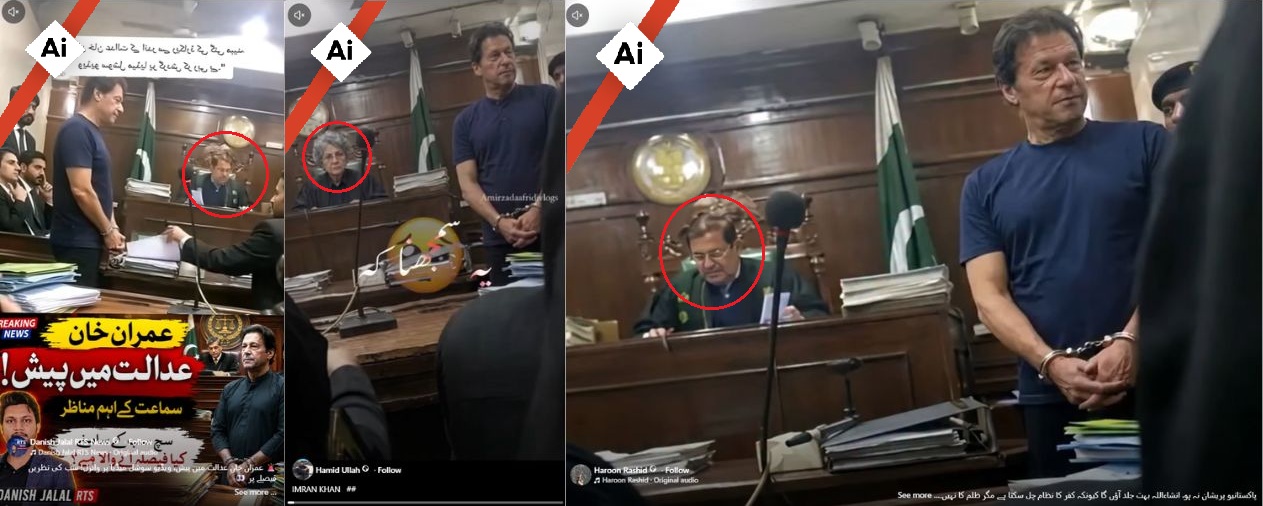
And so, we’ve come to this. In the sprawling, often chaotic drama that’s Pakistani governance, images of former former former Prime Minister Imran Khan, reportedly from inside a courtroom, have circulated—images now widely dismissed as completely, totally AI-generated. You gotta wonder, don’t you? What a tight spot. This isn’t just a minor blip; it’s a gut-punch to the already bruised notion of objective reality in a nation consistently wrestling with political volatility and an increasingly fervent social media battlefield. For a country where information, legitimate or otherwise, can spark protests or consolidate power, this development feels like dropping a lit match into a dry forest. It’s a heck of a gambit, no doubt, but one that certainly amps up the already stratospheric stakes. [QUOTE_PLACEHOLDER]
This episode (if you can even call manufactured visual evidence an episode, it’s more like a systemic malfunction) doesn’t just surface in a vacuum. Pakistan, with its young, digitally savvy population, finds itself navigating an information superhighway that’s more like an unpoliced wilderness. Khan, already incarcerated and facing multiple charges, has seen his political movement largely sustained through online channels. His supporters are known for their social media prowess, deploying everything from memes to sophisticated digital campaigns to keep his narrative alive—often to the chagrin of state machinery trying desperately to contain it. The lines were blurry before, sure, but now they’re just… gone. How’s anyone supposed to figure out what’s real?
And let’s be frank: the digital deception isn’t a problem unique to Islamabad’s high-stakes political theater. Globally, we’re seeing an exponential rise in synthetic media. According to a 2023 report by Recorded Future, the detection of deepfake media content soared by over 500% from 2021 to 2022, highlighting the escalating digital threat. It’s an arms race for attention and, crucially, for credibility. But in Pakistan, this particular AI footage takes on an extra layer of grim significance, intertwining with deep-seated grievances, institutional distrust, and a populace hungry for clear answers—yet instead fed a diet of digital fabrication. The integrity of an election, of a legal process, even the historical record itself—all suddenly rendered suspect by a few lines of code. It’s a sobering thought, particularly for a country that’s seen its share of truth bend in various forms throughout its tempestuous history. But this, this is new.
We’ve already seen how platforms amplify false narratives—it’s part of the global mess, really. Consider Remote Reality: Zuckerberg’s Jet Ski Call Exposes Digital Divide’s Glaring Hypocrisy, where perceptions are everything and often shaped by carefully curated — or outright fabricated — media. But a fake courtroom appearance? That’s punching a different kind of hole in the fabric of governance. It challenges not only the media but the judiciary itself, turning due process into a subject of digital parlor tricks. This isn’t about mere propaganda; it’s about digital gaslighting on a national scale.
What This Means
This incident isn’t just a passing oddity; it’s a flashing red light for Pakistan’s political establishment and, indeed, for every nation grappling with the relentless march of AI. Politically, it deepens the chasm of public trust in official narratives and media reports, making consensus building (a precious commodity in Pakistan) an even more Sisyphean task. For opposition movements, the double-edged sword of AI is clear: it can extend a leader’s voice beyond physical barriers, as some Khan supporters have sought to do with AI-generated speeches, but it also opens the door wide for counter-disinformation or, as we’ve seen here, completely manufactured scenarios. It makes verification a nightmare for already struggling news organizations, which are often targets of state pressure themselves.
Economically, this sort of information pollution can deter foreign investment, making an already cautious market even more skittish. Stability and predictability are paramount for business, and a country where even images from a court aren’t trustworthy feels anything but stable. It contributes to a perception of lawlessness—or at least, narrative chaos—that complicates governance and scares away the capital needed for genuine progress. You simply can’t run a thriving economy when the bedrock of truth is constantly shifting beneath your feet. What a messy affair. And it won’t just affect Pakistan; neighboring countries in South Asia, facing similar digital literacy gaps and political tensions, are watching. This specific instance might just be the opening salvo in a prolonged, grinding information war—one where algorithms, not armies, will determine the winners and losers of public opinion.
But how do you fight a phantom? This isn’t a physical enemy. It’s an idea, or rather, the deliberate destruction of ideas, via pixels. This isn’t a battle fought with tanks but with truth—or the perception of it. It’s an age where you can’t even trust what you see. And that, dear reader, is a truly terrifying precedent for a democracy teetering on the edge of its own making.