


Florida’s Inferno Claims a Titan: Haaland’s Humbling Exit Reflects Climate’s New Grip on Global Sport
POLICY WIRE — Miami Gardens, Fla. — In an arena typically reserved for gridiron heroes, the true antagonist wasn’t a towering defender or a tactical mastermind. It was the air itself—thick,...

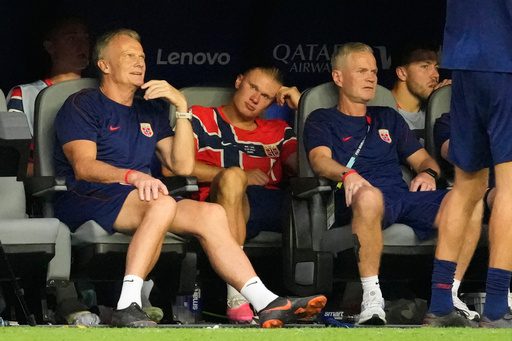
POLICY WIRE — Miami Gardens, Fla. — In an arena typically reserved for gridiron heroes, the true antagonist wasn’t a towering defender or a tactical mastermind. It was the air itself—thick, oppressive, and dripping with South Florida humidity, an invisible shroud that turned elite athletes into exhausted, gasping mortals. That’s how Erling Haaland, Norway’s formidable striker, found himself yanked from the pitch Saturday, a ghostly shadow of his usual prolific self. Not by a crushing tackle, but by the relentless, enervating reality of a heat index that climbed past 100 degrees Fahrenheit, according to NOAA readings. It was an environmental victory, more than an English one, and a stark reminder that even gods—or at least, footballing demigods—are bound by Earth’s escalating conditions.
Haaland’s premature exit—some 15 minutes before Norway’s World Cup dream dissolved completely against a tenacious England side—spoke volumes. Not just about the fatigue of a young man, but about the unsustainable demands of a global sport increasingly pushing its stars to their physical limits, often in increasingly hostile climates. He’d bagged seven goals across four matches, a spectacular haul that single-handedly put a Norwegian outfit, previously considered long-shots, into the quarterfinals. But Saturday? He barely registered, a spectral presence for most of the contest, stifled by more than just England’s cunning defense.
Coach Ståle Solbakken didn’t mince words after the 2-1 defeat. “It was not a tough decision to take him out,” Solbakken confided to reporters, a grimace etched on his face. “He was finished. Completely spent. Had a dead leg too. We couldn’t ask for more. You’re playing on a field that felt like an oven, in a sport where every second demands explosive action. That takes its toll. No human is immune, not even Erling.” It’s a concession that transcends the tactical playbook, painting a clearer picture of the existential challenge facing players in tournaments scheduled amidst changing global weather patterns. Because, let’s face it, these are athletes, not machines.
England, for their part, managed the conditions better, scoring both their goals through Jude Bellingham, Haaland’s former Borussia Dortmund teammate. Their plan was surgically precise: deny Haaland possession, wear him down, let the heat do the rest. And it worked. You’d think the Manchester City teammates, Foden and Stones, sharing inside info on their club’s scoring juggernaut, were the architects. They probably were. Bellingham’s ascendancy and England’s dogged advance highlight a different kind of strength, a resilience—and perhaps, an institutional advantage—in adapting to brutal conditions. It certainly lends credence to those who talk about England’s calculated moves, both on and off the pitch, in expanding its global sports influence. That soft power play, it’s a tightrope walk.
But the true narrative here isn’t just about English triumph or Norwegian defeat. It’s a microcosm of something larger. “This tournament, more than any before it, showcased the sheer physical toll on our athletes,” commented Marcus Thorne, a long-time policy advisor for FIFA’s player welfare initiatives, in a follow-up interview. “It’s a growing concern for player welfare and—let’s be honest—for the sustained marketability of our biggest stars. The heat? It’s a new adversary, requiring different strategic thought, even beyond the pitch. We’ve seen similar struggles in the Gulf states, in South Asia. This isn’t going away.” Indeed, for a region like South Asia, where extreme heat waves are becoming tragically commonplace and football’s popularity is burgeoning, events like this Miami quarter-final offer a chilling preview of how climate change will reshape the sport they adore.
Haaland, after all, isn’t merely a striker; he’s a global brand, his blond locks and singular swagger recognized from Oslo to Islamabad. His journey, despite its abrupt end, wasn’t without meaning. “Erling has done more than just score goals; he’s elevated Norway’s profile on a global stage, proving that a smaller nation can challenge the established giants,” said Norway’s Minister for Culture and Sports, Ingrid Olsen, during a state broadcast. “We might not have taken the trophy home, but his fight, even in defeat, demonstrates a resilient national spirit. And that’s something worth celebrating, isn’t it? He put us firmly on the map.”
What This Means
Haaland’s struggles in the Miami swelter serve as a powerful, unsettling dispatch from the front lines of global sports, where climate reality is forcing a reckoning. For organizations like FIFA and Olympic committees, it’s no longer just about logistics; it’s about existential planning. We’re likely to see a greater focus on host city selection based on climate resilience, increased calls for mid-game hydration breaks, and possibly even more rigorous pre-tournament acclimatization protocols. Economically, this could mean massive infrastructure investments in climate-controlled stadiums, driving up hosting costs and potentially limiting the pool of eligible nations. For players, it signals a shift in what it means to be an elite athlete: not just peak physical conditioning, but extreme environmental adaptation. The image of a superstar brought to his knees by heat rather than an opponent’s skill is a powerful one. It reminds us that no matter the billions poured into sport, nature still calls the shots, and everyone—even the Erling Haalands of the world—has a breaking point.