


Kyiv’s Domestic Gauntlet: Zelenskyy Demands Accountability Amid War’s Chaos
POLICY WIRE — Kyiv, Ukraine — The shadow war inside Ukraine wages on, largely away from the frontline shellfire but no less destructive. Even as Russian forces press their advantage in the East,...

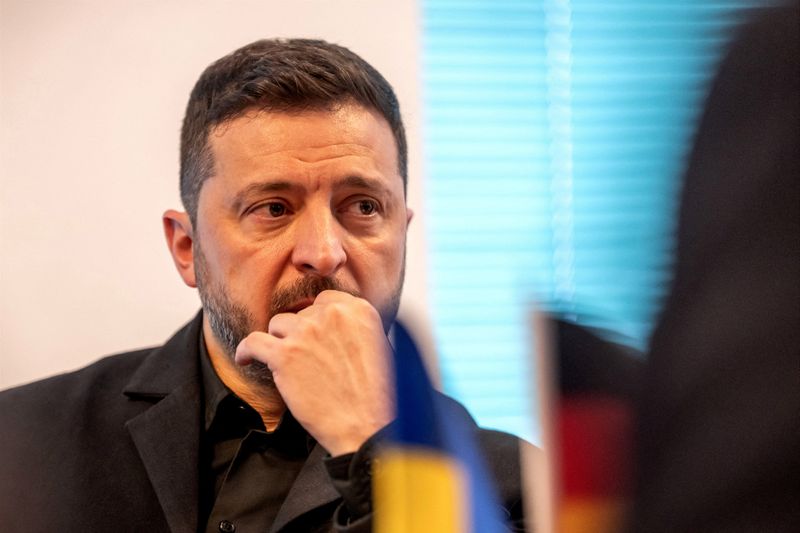
POLICY WIRE — Kyiv, Ukraine — The shadow war inside Ukraine wages on, largely away from the frontline shellfire but no less destructive. Even as Russian forces press their advantage in the East, President Volodymyr Zelenskyy has turned a sharp eye inward, signaling a palpable shift in priorities: the enemy within, or at least the sloppiness, won’t be given a free pass. It’s an interesting maneuver, a public declaration of stern resolve against his own—a move that certainly gets you wondering what’s really simmering beneath the surface.
It’s not often a wartime leader pauses to castigate his own administration over what’s been termed, rather vaguely, a [QUOTE_PLACEHOLDER] incident. One might assume every last cartridge is accounted for in a conflict zone, especially with billions in international aid flowing in. But, well, assumptions can be dangerous, can’t they?
The president has made it quite clear. Officials, whoever they may be, will be held accountable. And it makes you ponder the sheer audacity, the sheer political will, required to enforce such internal discipline while rockets are raining down elsewhere. It certainly isn’t a task for the faint of heart, is it? We’re talking about trust here, a commodity rarer than a snow leopard in July, and apparently, even in Ukraine’s desperate fight, some things can’t be swept under the rug of wartime necessity. It signals a leader grappling with the dual pressures of existential external threat and corrosive internal dysfunction.
Because ultimately, international support, the very lifeline of Kyiv’s resistance, isn’t limitless. And partners in Washington and Brussels have a rather short fuse when it comes to aid going missing or being mismanaged. Just consider that a significant chunk, an estimated over $100 billion, has been committed to Ukraine since the full-scale invasion, according to a recent Congressional Research Service report. Losing track of even a small fraction of that in military supplies or materiel can be devastating for morale, not to mention a handy talking point for Kremlin propaganda.
This isn’t just about a warehouse, not really. It’s a message, stark — and unmistakable, being sent through the ranks. Accountability isn’t an abstract concept; it’s a non-negotiable fact. A wartime government can’t afford even a whiff of malfeasance. Zelenskyy’s latest move looks a lot like an attempt to preemptively cleanse the system, to shore up credibility before critics can pick away at the seams.
And frankly, it’s not just a Ukrainian problem. Nations globally, from emerging democracies to established powers, grapple with the opaque realities of defense spending and accountability—especially during times of crisis. Pakistan, for instance, has historically faced immense scrutiny over its substantial foreign military assistance. Concerns about proper oversight, diversion of funds, — and effective use of materiel have long shadowed aid packages. It’s a narrative all too familiar, where the sheer volume of military aid often outstrips the mechanisms of accountability, leading to accusations and mistrust. There’s a quiet consensus, particularly in many parts of the Muslim world that receive such assistance, that transparency around arms is often the first casualty of urgent necessity, with consequences that linger long after the initial crisis.
📄 POLICY WIRE WHITEPAPER PUBLISHED: PAKISTAN'S NATIONAL SECURITY POLICY PRIORITIES
👉 READ BY CLICKING HEREWhen resources are finite, and every bullet counts, ensuring every piece of military hardware—down to the smallest nut and bolt—is where it should be, becomes paramount. It isn’t merely about bookkeeping; it’s about tactical readiness — and the trust of those on the ground. A [QUOTE_PLACEHOLDER] might sound trivial, but its implications reach into the very sinews of national defense. We’re watching a real-time display of a leader trying to manage an unwieldy machine under unimaginable pressure.
What This Means
President Zelenskyy’s move, forcing accountability at a time when all focus might appear to be external, carries significant political weight both domestically and internationally. Domestically, it aims to reinforce public trust, suggesting that even in the maelstrom of war, the rule of law and integrity aren’t mere aspirations but actionable principles. It’s a direct response to, and perhaps even an acknowledgement of, persistent concerns about corruption that dog Ukrainian politics—concerns that Western partners never entirely dismiss, no matter their solidarity against Russian aggression. The image of a cleaner, more accountable Ukraine is key to maintaining long-term Western investment — and support.
Economically, any mismanagement of military assets implies wasted resources—a luxury Ukraine absolutely cannot afford. Foreign aid, especially military hardware, isn’t free. There are political strings, expectations of strategic effectiveness, and an underlying requirement for prudent stewardship. If these [QUOTE_PLACEHOLDER] issues escalate or are seen as part of a broader pattern, it could potentially chill the ardor of some donors. That, in turn, could impact Ukraine’s overall war effort — and its post-conflict reconstruction funding. For Kyiv, the ability to demonstrate a clean house, even when under bombardment, is critical to sustaining both the war machine and its eventual economic recovery. This isn’t just about deterrence on the battlefield; it’s about deterrence against donor fatigue. This signals Zelenskyy’s commitment to internal reforms, perhaps paving the way for deeper integration with European structures, which prioritize transparency as a cornerstone.