

Tahoe’s Wild Warning: Bear Incident Spotlights Global Human-Nature Policy Brink
POLICY WIRE — Lake Tahoe, USA — The boundary, it seems, isn’t quite as rigid as we’d like to imagine. Not between states, not between political ideologies, and certainly not between...

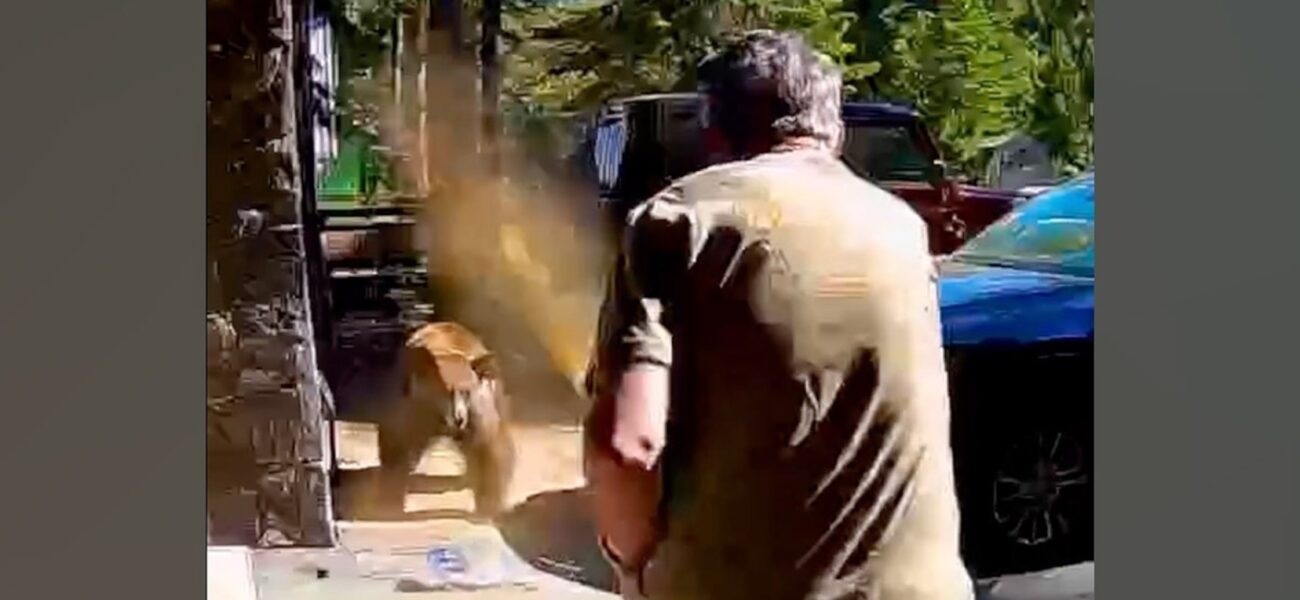
POLICY WIRE — Lake Tahoe, USA — The boundary, it seems, isn’t quite as rigid as we’d like to imagine. Not between states, not between political ideologies, and certainly not between suburban backyards and the wild creatures that call the disappearing landscape home. For one California family, that blurred line recently erupted into raw, unfiltered drama right on their Lake Tahoe property, caught on camera for the digital masses to consume and judge. It’s easy to dismiss it as just another wild animal encounter; it’s another thing entirely to see it as a stark reflection of deeply ingrained policy failures — an increasingly common face-off that demands more than a passing headline.
It wasn’t a slow build, see. No meandering walk through the woods. But a sudden, gut-punch of an event involving a black bear — and a man trying to protect his children. You don’t often get to witness nature’s unfiltered assertion of presence like that. The whole thing unfolded in moments. A moment of normalcy, then chaos, then—thankfully—relief. But those moments, broadcast across social feeds, they’ve gotten folks talking, got ’em worried. About safety, sure, but also about the bigger picture: what exactly are we doing to make these clashes so common?
Local authorities, per usual, downplayed the incident’s uniqueness, noting that these animals are increasingly prevalent in residential areas, a byproduct of development and—well—us. One official reportedly stated, [QUOTE_PLACEHOLDER], which sounds comforting until you consider what it really implies. Because when creatures start showing up where they don’t used to, it’s never just because they’re taking a scenic detour. It’s about habitat crunch, food scarcity, — and human expansion elbowing them right out of their traditional spots.
And it’s not like this is some isolated American curiosity. Just look east. In Pakistan, particularly in regions bordering forests and mountains like Kashmir or Gilgit-Baltistan, similar scenarios play out with astonishing frequency. Whether it’s snow leopards descending into villages in search of livestock or bears raiding orchards in remote valleys, the pattern holds: growing human populations, receding natural buffers, and an inevitable friction. It’s the same ecological calculus, just with different players — and slightly warmer weather. These communities, often already struggling with poverty, bear the direct brunt of policies that don’t adequately account for environmental protection or sustainable co-existence.
Globally, human-wildlife conflict is on a regrettable upswing. A 2021 report from the Wildlife Conservation Society, for instance, estimates the annual costs—economic and otherwise—stemming from such clashes exceed USD 4 billion. That’s a staggering figure, often shouldered by those least equipped to handle it. You think the policy wonks in Washington or Islamabad are factoring that into zoning decisions or agricultural subsidies? They’re not, are they?
This isn’t just about managing wildlife populations; it’s about managing our own footprint. About recognizing that the wilderness isn’t just a place to visit for a weekend. It’s an ecosystem, delicate — and unforgiving, that’s steadily being encroached upon. We’re living in a world where wildlife encounters are increasingly becoming front-page news, viral videos. But why? Is it really that animals are becoming bolder? Or is it that we’ve left them fewer — and fewer places to be?
📄 POLICY WIRE WHITEPAPER PUBLISHED: PAKISTAN'S NATIONAL SECURITY POLICY PRIORITIES
👉 READ BY CLICKING HEREWhat This Means
The incident at Lake Tahoe isn’t some quirky one-off. It’s a bellwether, a local skirmish in a much larger, global conflict brewing between expanding human civilization and the natural world. Economically, this translates to heightened costs for wildlife management, property damage, and—more gravely—potential public health and safety expenses. Politically, it puts intense pressure on local governments to reconcile competing interests: developers clamoring for land, environmental groups advocating for protection, and residents demanding safety. This isn’t just about bears and families; it’s about property values, insurance premiums, and the very viability of communities nestled near wild spaces.
The lack of cohesive policy across jurisdictions, often driven by short-term economic gains, exacerbates these problems. When land-use policies fail to consider long-term ecological impacts, they set the stage for these dramatic confrontations. The solution isn’t simply more fences or increased culling. It demands a more integrated approach, one that looks at wildlife corridors, sustainable urban planning, and perhaps even innovative deterrents. Because we’re not just dealing with an animal problem, are we? We’re dealing with a human policy problem, one that stretches from the American West Coast to the furthest reaches of the Hindu Kush, demanding immediate, smart, and internationally coordinated attention.
It’s time to admit that a truly stable society recognizes its place within the broader ecosystem, not above it. That means tough choices. It means compromise. And it means finally acknowledging that nature, given half a chance, will always assert itself—often at the most inconvenient times.