


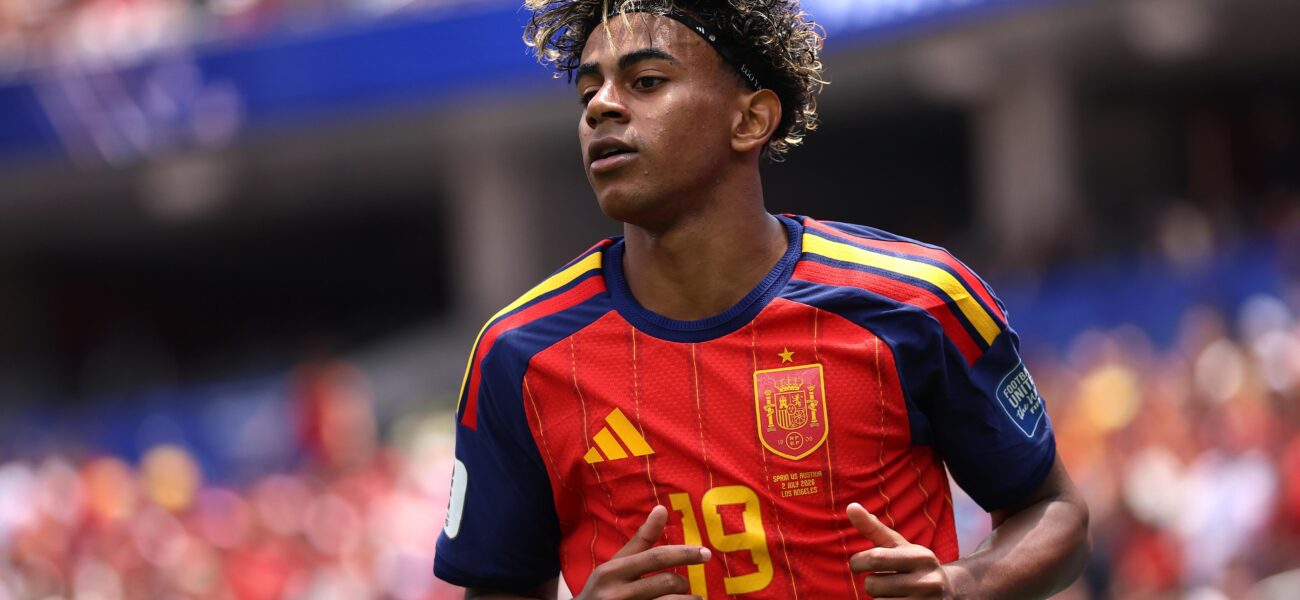
World Cup: Yamal vs. Mendes in Defining Spain-Portugal Duel
Witness the epic World Cup clash: Lamine Yamal faces Nuno Mendes in a high-stakes duel. Billions watch as this rivalry shapes legacies and global football.

POLICY WIRE — Dallas, United States — It’s often the small, deeply personal skirmishes—not the grand tactical schemata laid out on whiteboards—that define the sweeping narratives of a World Cup. We’re not talking about geopolitical alliances here (well, not directly), but about the brutal, beautiful geometry of a singular talent pitted against his toughest adversary. And what’s cooking for Monday’s blockbuster Round of 16 clash between Spain and Portugal is precisely that: a grudge match that’s already got more voltage than a thunderclap, played out under the harsh stadium lights of Dallas, California.
Because, let’s be honest, few expected 19-year-old sensation Lamine Yamal to come out with it, not like that. The Barcelona prodigy, the kind of raw talent who makes defenders sweat through their kits, recently named Portugal’s Nuno Mendes as the “toughest opponent” he’s ever faced. Imagine: not some grizzled veteran from La Liga, but another speed demon, slightly older, definitely tougher, who just happens to patrol the very flank Yamal calls his hunting ground. The universe, it seems, enjoys a bit of poetic cruelty. They’ll be going at it again, head-to-head, for the biggest stakes yet.
It’s an electrifying prospect, this duel. Former Spain and Real Madrid defensive titan Michel Salgado knows a thing or two about tight spaces and even tighter marking. He calls it as he sees it. “The duel between Lamine — and Nuno will be one of the head-to-head matchups of the World Cup. The kind that makes matches — and tournaments great. I think that duel will probably be one of the defining moments of the game,” Salgado quipped, his words slicing through the pre-match bluster, per AS. “If Lamine gets the better of Nuno, Spain will have a big advantage… but if it’s the other way around, Portugal will gain the upper hand.” He still backs Yamal, mind you, with his ‘magic box full of tricks,’ but admits Mendes will need to be at his absolute peak. That’s just a given.
But the bad blood – or maybe, the professional rivalry, let’s keep it civil – isn’t exactly new. Mendes, for his part, isn’t shy about reliving their last encounter, which ended with him as Player of the Match during last summer’s Nations League final. “It was a clash like many others I have had during the season,” Mendes stated coolly at the time. “I have faced up to many great players, very technically skilled players who can make a difference, but today I cancelled out Lamine and didn’t let him do what he does best.” That’s a punch straight to a young man’s ego, and Yamal won’t have forgotten it. Don’t think for a second he won’t be looking for redemption.
The global stakes for this contest are astronomical. Forget national pride for a second—though that’s boiling over, of course. Think market value, think sponsor dollars, think cultural impact. A single moment of individual brilliance or error in this specific matchup could swing hundreds of millions in revenue, shaping legacies for years to come. FIFA reported that the 2022 World Cup in Qatar drew a cumulative global audience of over 5 billion, with significant increases noted across Asian markets, demonstrating the tournament’s monumental reach beyond its traditional European and South American strongholds. Imagine the viewership figures this year.
📄 POLICY WIRE WHITEPAPER PUBLISHED: PAKISTAN'S NATIONAL SECURITY POLICY PRIORITIES
👉 READ BY CLICKING HEREFrom the bustling chai cafes of Lahore to the remote villages of Aceh, the football fever that grips South Asia and the wider Muslim world is often unseen by Western media. They’re watching, trust me. They’re analyzing every pass, every tackle. The emotional investment in these spectacles, where the fortunes of heroes like Yamal are forged or fractured in a single game, creates a truly unifying narrative, regardless of their home team’s participation. It’s why countries across this vast, diverse region — despite often being embroiled in their own unique sporting dramas — still obsess over Europe’s premier clubs and national squads. Their passion isn’t abstract; it’s visceral, and it fuels the entire global industry, from broadcast rights to boot deals. They don’t just see a game; they see human drama unfolding on a planetary stage.
What This Means
This showdown between Yamal — and Mendes isn’t just about who progresses to the World Cup quarter-finals. It’s a microcosm of several larger geopolitical — and economic currents at play within the modern game. For Spain, Yamal isn’t merely a winger; he’s a burgeoning national symbol, a poster child for a new generation. His success reinforces narratives of Spanish footballing dominance and could elevate brand Spain on the global stage. For Portugal, Mendes, a more established entity, embodies resilience and defensive prowess. A victory over Yamal reasserts Portugal’s place among the elite, while showcasing the premium on world-class defensive talent—a commodity as valuable as any oil contract in some circles. His performance also impacts his individual market valuation and his club’s (Paris Saint-Germain, a Qatari-owned club, lest we forget) strategic objectives. This isn’t just football; it’s an extension of national prestige, economic soft power, and the hyper-commodification of athletic genius. The very fabric of this FIFA-driven empire depends on such compelling personal narratives, keeping billions hooked and billions flowing. The political economy of global sports leans heavily on individual stars performing heroic deeds.
So, as the whistle blows, look past the 22 players. Focus on two men, on one wing, on a singular battle for pride — and progression. It’s the kind of contest that doesn’t just decide a game; it writes another brutal chapter in the endless saga of footballing legend.