


Silent Standoff: Kremlin Confirms Turkey Talks on Disputed S-400s Amid Geopolitical Chess Match
POLICY WIRE — Washington, D.C., USA — It’s a dance as old as diplomacy itself: two major players, a handful of sensitive hardware, and a web of global implications that could make...

POLICY WIRE — Washington, D.C., USA — It’s a dance as old as diplomacy itself: two major players, a handful of sensitive hardware, and a web of global implications that could make anyone’s head spin. While the world frets over the next crisis, the Kremlin’s recent, rather understated admission has pulled back the curtain on a low-burn but incredibly significant strategic dialogue. Moscow has indeed confirmed it’s been chatting with Ankara, the capital of Turkey, about the precise future of those Russian-made S-400 air defense missile systems. Not exactly front-page screaming stuff, is it? But this quiet disclosure — no flashy declarations, just a matter-of-fact statement — hints at a geopolitical recalculation that’s a whole lot more complex than it appears on the surface.
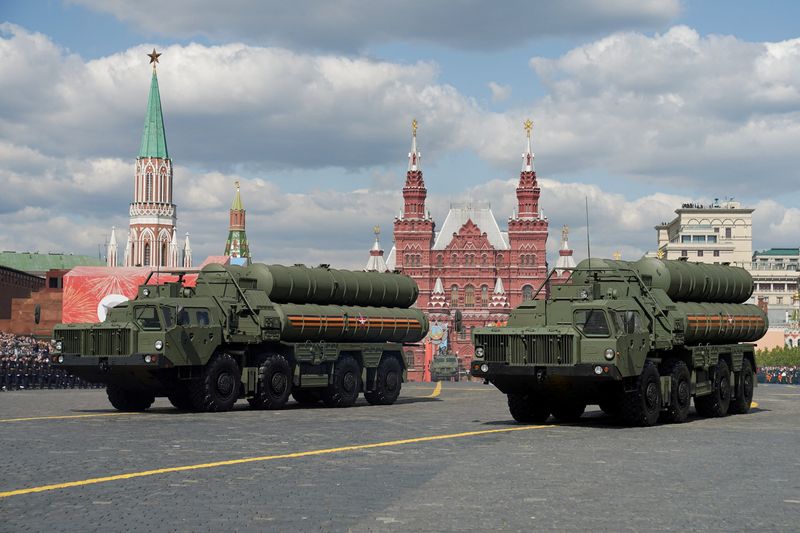
See, these S-400 systems aren’t just any old weaponry. They’re a lightning rod, a very expensive point of contention that’s been nagging at the collective psyche of NATO nations for years. Turkey, a card-carrying member of the alliance, went ahead and acquired them from Russia back in 2017, a move that sent shockwaves through Brussels and Washington. The reasoning from the Western perspective was pretty clear-cut: a Russian system operating within NATO’s sphere could, theoretically, gather intelligence on allied aircraft, including the advanced F-35 fighter jets Turkey once hoped to acquire. Because of that purchase, the U.S. canned Turkey’s F-35 participation — and slapped on sanctions, a real sting for a supposed ally. [QUOTE_PLACEHOLDER]
And now, Russia simply says it’s in touch with Turkey on the fate of those very missiles. It’s a statement so baldly direct, so devoid of theatrics, you almost miss the sheer weight of what it means. It isn’t just about a weapons deal gone sideways; it’s about shifting alliances, strategic leverage, and the ongoing, messy struggle for regional influence. But what are they actually discussing? That’s the million-dollar question, isn’t it?
Some chatter suggests Ankara might be trying to offload the systems, or perhaps simply de-activate them permanently, to smooth over relations with its NATO partners. This is pure speculation, mind you, but not entirely out of left field. But Russia doesn’t exactly make it easy to return a high-tech gift. Other theories posit that Turkey is merely negotiating for more spare parts, maintenance, or perhaps even an upgrade. It’s an elaborate game of poker, played with sophisticated weaponry — and nation-states as chips.
Consider the broader context, too. Turkey isn’t just any country; it straddles Europe and Asia, with deep historical and cultural ties across the Middle East and into Central Asia. It’s an often-unpredictable force in a highly volatile neighborhood. The current President, Recep Tayyip Erdoğan, has consistently balanced Turkey’s relationships with both East and West, sometimes to the exasperation of both. This balancing act plays out in Syria, in the Black Sea, and across the Caucusus—places where Russian and Turkish interests frequently rub up against each other.
The original S-400 procurement deal, according to defense analysts at the time, was valued at around $2.5 billion. That’s no small change, particularly for a country with economic vulnerabilities. The repercussions weren’t just diplomatic; they were industrial, military, — and financial. And the ghost of that decision continues to haunt Turkey’s international standing. They’re stuck with hardware that effectively isolated them from critical defense collaboration with their most powerful allies.
📄 POLICY WIRE WHITEPAPER PUBLISHED: PAKISTAN'S NATIONAL SECURITY POLICY PRIORITIES
👉 READ BY CLICKING HERESo, these ongoing talks are less about the technical aspects of an air defense system and more about Ankara’s long-term geopolitical direction. Is it a signal that Turkey is ready to reconcile more fully with NATO, even if it means ditching a controversial, high-profile Russian acquisition? Or is it simply another move in Erdoğan’s continuous high-stakes gamble to secure a truly independent foreign policy, irrespective of Western or Eastern demands?
This whole episode — the S-400 saga, the quiet Russian admission — acts as a mirror, reflecting the complexities of being a NATO member with significant strategic ambitions that often diverge from those of Brussels and Washington. It puts Pakistan, a significant non-NATO U.S. ally and a country that’s historically weighed military acquisitions from various global powers, into a sort of quiet observer status, too. What lessons can Islamabad draw about the consequences of independent procurement decisions and managing great power expectations? Navigating the dragon and the eagle requires a delicate touch.
But the true implications of this Russian statement remain shrouded in that classic Kremlin opacity. Are these conversations merely routine maintenance discussions, or do they portend a dramatic shift in how Turkey handles its controversial purchase?
What This Means
This low-key announcement from the Kremlin packs a punch because it re-opens a diplomatic wound many in Washington hoped was slowly healing. Politically, if Turkey is negotiating a path to mollify NATO concerns over the S-400s — even potentially returning or de-activating them — it signals a possible thawing of relations and a realignment towards its traditional Western allies. That would be a significant win for NATO cohesion, particularly in light of ongoing conflicts in Europe where Turkish cooperation is valuable, say, in controlling the Black Sea. Economic implications could follow suit, potentially leading to a lifting of lingering U.S. sanctions and a reopening of defense trade opportunities with Western partners, such as a renewed push for F-16 sales to Ankara. This is good for stability on the southeastern flank of the alliance. And from a broader South Asian and Muslim world perspective, countries like Pakistan, always observing global military supply chains, will note the profound headaches that arise when arms purchases clash with alliance obligations. They’ll also remember that even in the absence of an immediate confrontation, the geopolitical fallout of such decisions can reverberate for years, dictating future military, diplomatic, and economic leverage. Geopolitical stakes often stretch far beyond initial transactions.