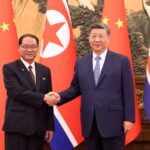



Navigating the Dragon and the Eagle: Asia’s Perilous Dance for Self-Interest
POLICY WIRE — Washington D.C., USA — It wasn’t a G7 declaration, nor a fiery speech from Beijing, but a quiet bureaucratic maneuver in Kuala Lumpur that truly brought it home. A proposed shift in a...

POLICY WIRE — Washington D.C., USA — It wasn’t a G7 declaration, nor a fiery speech from Beijing, but a quiet bureaucratic maneuver in Kuala Lumpur that truly brought it home. A proposed shift in a major infrastructure contract, ostensibly for efficiency, whispers something far grander: the subtle, painstaking re-calibration of national survival. Across a continent vast and varied, from Tokyo boardrooms to Islamabad’s defense ministry, the grand strategy isn’t about choosing sides anymore. It’s about building a trampoline—just in case—so you don’t splat too hard when the two global heavyweights finally drop each other.
Asian leaders—you gotta feel for ’em—are performing an intricate ballet, trying not to stumble as Washington and Beijing shove each other in the geopolitical ballroom. There’s an economic pull from China, raw — and magnetic, especially with its Belt and Road projects. But then there’s America, the historical security blanket, suddenly twitchy, demanding clearer commitments. The pressure? It’s real. It’s daily. [QUOTE_PLACEHOLDER]
This isn’t some abstract parlor game for them. We’re talking trade routes, tech standards, even what kind of satellite dishes your kids grow up with. Each handshake, each signed memorandum, gets scrutinized for its implicit allegiances. They’re chasing something termed strategic flexibility. And it’s exactly what it sounds like: keeping all options open, all lines of credit active, and all diplomatic channels flowing, even as the global chessboard shrinks to a two-player game.
Consider the delicate dance of nations like Pakistan. Wedged between aspiring regional powers and historic ties, Islamabad finds itself routinely balancing the hefty economic investment pouring in from China—think the colossal China-Pakistan Economic Corridor (CPEC) – with the lingering, sometimes testy, but always present, relationship with the United States. Its leaders aren’t just signing deals; they’re performing a perpetual tightrope walk. One wrong step could mean alienating a critical partner or, worse, losing autonomy. For them, it isn’t merely about economics or security; it’s about navigating sovereign survival while superpower titans quarrel over turf.
Because ultimately, neither Washington nor Beijing offers a perfectly clean sheet. Both bring baggage, expectations, — and very sharp elbows. Nobody wants to be a proxy. Nobody wants to be the battlefield. They’d much rather be the broker, the indispensable link, the one whose stability is so precious that both big boys have to play nice.
The numbers don’t lie, though they paint a grim picture of this binary choice. According to recent World Bank data, trade dependency on China for several Southeast Asian nations has climbed by an average of 15% over the past decade, even as their security partnerships often remain tethered to the West. That’s a stark indicator of the conundrum. It’s an economic magnet versus a security anchor. You need both to stay afloat, don’t you?
📄 POLICY WIRE WHITEPAPER PUBLISHED: PAKISTAN'S NATIONAL SECURITY POLICY PRIORITIES
👉 READ BY CLICKING HEREAmerica, for its part, isn’t helping when it sometimes talks down to its partners, making demands that ignore local complexities. China, on the other hand, often arrives with massive checks and fewer sermons about human rights, which, let’s be honest, sounds pretty appealing to a nation just trying to build a power plant. But there’s always a catch, isn’t there? Debt traps, subtle political influence—the strings are there, just maybe made of silk instead of rope. And sometimes, you find yourself between a rock — and a hard place with little wiggle room.
Even Japan, a staunch U.S. ally, isn’t putting all its economic eggs in the Western basket. Its investments in regional supply chains often crisscross Chinese networks, an acknowledgment of market realities that even the Pentagon’s strategists can’t ignore. That’s why leaders everywhere are desperately working the phones, visiting capitals, looking for that sweet spot of self-interest where loyalty doesn’t mean utter subservience. The global economy of spectacle, as some call it, ensures every move is broadcast, every perceived slight amplified.
What This Means
This dynamic signals a creeping multi-polarity, not necessarily in overt military power, but in influence and allegiance. Asia’s pursuit of strategic flexibility isn’t about fostering true neutrality—that’s a fantasy for small states in peaceful times. Instead, it’s about establishing leverage. These nations aim to make themselves indispensable enough, complex enough, and networked enough that neither Washington nor Beijing can afford to see them fail, or worse, fall entirely into the rival’s camp. Economically, we’re gonna see accelerated diversification of supply chains, creating redundancies and new, often regional, trade blocs—even if those blocs maintain some ties to the superpowers. Politically, this leads to an unpredictable diplomatic landscape. Old alliances will fray or morph, and new, fluid partnerships will emerge, often on an issue-by-issue basis rather than a blanket commitment. Expect more hedging, more obfuscation, — and less outright declaration of intent. For Washington and Beijing, it means their competition might actually solidify a more independent and self-interested Asian power bloc, not just a collection of client states. Beijing’s ambitious plays, like in the space race, illustrate this pursuit of broad influence beyond just economic ties.
It’s not pretty. It’s not simple. But for Asian leaders, it’s the only game in town. And they’re playing it with a desperate intensity that we’d all do well to observe.