


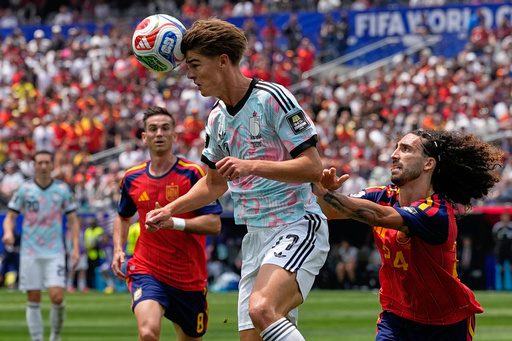
Belgium’s World Cup Hopes Drown in Tears as Spain’s Bench Hero Rises
POLICY WIRE — INGLEWOOD, Calif. — The World Cup quarterfinal between Spain and Belgium wasn’t decided by grand strategy or an inevitable surge of Spanish dominance. Nope. It hinged on the...

POLICY WIRE — INGLEWOOD, Calif. — The World Cup quarterfinal between Spain and Belgium wasn’t decided by grand strategy or an inevitable surge of Spanish dominance. Nope. It hinged on the abrupt, tear-stained exit of a world-class goalkeeper, Thibaut Courtois, and the cruel, instant baptism by fire of his understudy. It’s always something. In high-stakes sports, fortunes can turn on a sudden injury—a twisted ankle, a pulled muscle—and this match, with all its gleaming star power, was no different. You gotta wonder if those silent moments of injury concern echo beyond the pitch, into boardrooms where global sponsorships hang in the balance, into homes where millions had their hearts set.
Because that’s exactly what happened: A medical staff’s intervention, a coaching decision, and then—poof—Belgium’s anchor was gone. Courtois, Real Madrid’s stalwart, went down. He received treatment. Moments later, visibly distressed — and tearing up, he was off. Only Germany’s Manuel Neuer has played more World Cup matches than Courtois’ 21, marking an astonishing career that — in that moment — felt like it was crumbling. You don’t often see that level of raw emotion spilled on such a grand stage, — and it really did set the tone.
His replacement, Senne Lammens from Manchester United (a perfectly capable keeper, mind you), wasn’t exactly cold. But he was unprepared for the maelstrom that would follow just fifteen minutes later. Enter Mikel Merino. The Spaniard, a versatile hand from English club Arsenal, who had himself only just trotted onto the field a couple of minutes prior. He’d been making a name for himself, scoring crucial goals earlier in the tournament. And just like that, the script was rewritten. A long shot from Pau Cubarsí, Lammens spills it—the nightmare scenario, every keeper’s fear. Merino boots it home, easy as you like, in the 88th minute. Spain now wins 2-1.
That’s football. That’s a quarterfinal. One second you’re flying, the next you’re packing your bags. The sheer velocity of those shifts in fortune; it’s a political economist’s dream — and a policy wonk’s puzzle. The aspiration felt globally by young athletes — say, a hopeful striker in Karachi dreaming of Wembley, or a budding midfielder in Dhaka idolizing stars like Merino — often finds its brutal reflection in moments like these, where opportunity and disaster are mere inches apart. And for Spain, this particular brand of good fortune has been quite the habit lately.
Spain — and France now face off in a semifinal, a fixture that’s been on everyone’s mind since the draw came out. “We came here for this, to play against the best teams in the world,” Merino said, brimming with an almost unbelievable confidence. “We’re confident in our possibilities, at the same time respecting the opposition. This is one of those games that you dream of when you’re a kid, and now we have the chance to compete against a massive rival. Hopefully we’ll get the win.” His coach, Luis De La Fuente, put it even more succinctly, through a translator: [QUOTE_PLACEHOLDER] It will, indeed. One giant will emerge, another will inevitably fall. It’s the simple arithmetic of the game.
📄 POLICY WIRE WHITEPAPER PUBLISHED: PAKISTAN'S NATIONAL SECURITY POLICY PRIORITIES
👉 READ BY CLICKING HEREFor Belgium, coach Rudi Garcia tried to put a brave face on it: [QUOTE_PLACEHOLDER] A generous assessment, perhaps. He later conceded that “to beat a team of this caliber, you need luck on your side as well, and it was too much for us to get into the semifinals.” The brutal calculus of professional sport. You just don’t get unlimited bites at the cherry, do you?
Spain, meanwhile, rolls on. They hadn’t allowed a goal in their first five matches at this World Cup. Goalkeeper Unai Simón had a World Cup-record 650 minutes without conceding before Charles De Ketelaere found the net. But hey, good things eventually end. And now, they’ll put their own 37-game unbeaten competitive streak (stretching back to March 2023) on the line against France. It’s a gamble of epic proportions, an all-in bet on a table where the stakes couldn’t be higher. No room for tears there. No room for anything but brutal execution. Because in this sport, especially at this level, that’s what makes the difference.
What This Means
This match isn’t just about football. It’s a textbook case study in the economic and psychological pressures embedded within hyper-competitive global industries. The reliance on individual performance, the fragility of a high-value asset like an elite goalkeeper (Courtois’s market value, reputation, and the potential for a long-term injury) — these factors aren’t unique to sport. They’re echoed across tech startups, global financial markets, and even geopolitics, where one key player’s ‘stumble’ can have cascading effects. The concept of the ‘super-sub’ like Merino isn’t just a sporting narrative; it’s a commentary on preparedness, the cultivation of depth, and the economic wisdom of not relying too heavily on single points of failure. Nations — and corporations learn this hard. The collective sigh across Belgium tonight, versus the ecstatic roar in Spain, highlights the deeply personal stakes for populations often starved for moments of shared national triumph. The economic windfalls associated with progressing deeper into such tournaments—sponsorships, tourism, national branding—are tangible. This isn’t just a game; it’s a barometer for national pride and soft power, something any developing nation, from Pakistan to Morocco, keenly understands and seeks to harness for its own benefit. Success, however fleeting, often sells the narrative of capability, even if that capability comes down to one person slipping, and another seizing their chance. But that’s the deal, isn’t it? It always is. For more on such dramatic turns, see The Price of History: FIFA Carves Up World Cup Final Field, Fans Pay the Cost.