

Merino’s Stealth Strike: Spain Advances, Ronaldo’s Epic World Cup Chapter Closes Quietly
POLICY WIRE — ARLINGTON, Texas — Football, they say, is a game of moments. But sometimes, it’s a game of the quiet moment that steals a thunderous legend’s last scene....

POLICY WIRE — ARLINGTON, Texas — Football, they say, is a game of moments. But sometimes, it’s a game of the quiet moment that steals a thunderous legend’s last scene. Mikel Merino, a name perhaps not etched into the annals of football history with the same gilded letters as a certain Portuguese superstar, delivered that quiet, brutal moment. While the world focused on the swansong of an icon, a fresh-legged substitute from Arsenal of all places, snatched Spain’s quarter-final berth from the jaws of impending extra time, sending Cristiano Ronaldo not just off the pitch, but definitively out of World Cup contention.
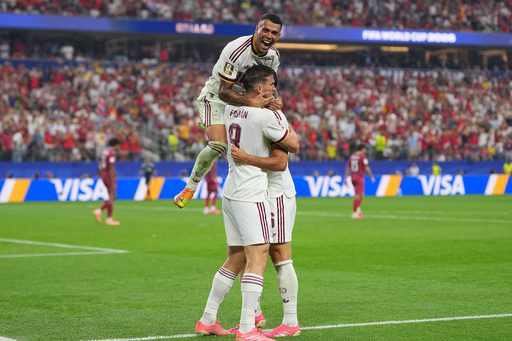
It was all happening so fast, wasn’t it? Deep into second-half stoppage time, with the collective breath of two Iberian nations — and millions more across the globe — held tight, Merino emerged. He’d been on the field for barely ten minutes. Arsenal forward made all that fretting moot, according to reports from the pitch. But that’s the game, isn’t it? One minute, you’re fretting about managing substitutes; the next, the guy you held back changes everything. Merino had just been knocked down, then played the ball back, darted toward goal, and with a swift finish after Ferran Torres’ clever pass, beat Diogo Costa. Simple. Deadly. Done. [QUOTE_PLACEHOLDER]
Coach Luis de la Fuente, predictably effusive, hailed his match-winner. He’s one of the best in his position worldwide, — and he has given us a fantastic result and a fantastic goal. De la Fuente also couldn’t help but champion his deeper roster, telling reporters, I want to express the importance of substitutes that came in later in the game. Not just today, but the contribution in other games has been enormous. You can almost see the tactical satisfaction beaming off him, can’t you?
Because that’s how Spain operates now. Not always with flashy individual brilliance, but with a relentless, collective, suffocating precision. They’ve got a 35-game unbeaten streak, a remarkable testament to their enduring quality. And their path to the quarter-finals, where La Roja will face either the United States or Belgium, marks their deepest run since winning their lone World Cup title back in 2010. They’ve recorded six straight shutouts at the World Cup, a new record. But Merino, who celebrated with a guttural scream reminiscent of his father’s past triumphs, didn’t appear bothered by the enormity of the moment. He’d recovered from right foot surgery, a doubt for the tournament itself, and now here he was, celebrating his first World Cup goal. What better way to celebrate, he said. You remember all the good — and the bad, and there have been difficult moments for me this year. Indeed.
And what of the vanquished? Cristiano Ronaldo, the man synonymous with individual records and towering expectations, saw his World Cup saga conclude with a whimper rather than a bang. He is the all-time leader in international goals with 146 — and appearances with 233, an absolute leviathan of the game. He didn’t have many genuine chances against Spain’s impregnable defense. His last gasp was less a heroic effort and more a quiet flicked backward kick in the first half that Unai Simón calmly collected. Ronaldo, in his post-match comments, struck a tone of quiet resignation. I’ll wake up tomorrow like I woke up today, with a clear conscience, he stated. I gave my best. I won three titles with Portugal. Before Cristiano, Portugal hadn’t won any title. So, I’m happy. The biggest title that I won with the national team was in 2016 (European Championship), which for me had the same dimension as a World Cup, honestly.
📄 POLICY WIRE WHITEPAPER PUBLISHED: PAKISTAN'S NATIONAL SECURITY POLICY PRIORITIES
👉 READ BY CLICKING HEREHis honesty, for better or worse, defines him. For fans from Karachi to Kuala Lumpur, who follow European football with an almost religious zeal, Ronaldo’s exit resonates differently. There, where the sport transcends mere entertainment, becoming a shared cultural touchstone, the fall of a titan isn’t just a sports headline; it’s a chapter closing on an era. It’s an undeniable marker of time’s relentless march.
This latest clash of Iberian giants — a rivalry stretching back over a century to their first friendly in Madrid — lacked the fireworks of their legendary 3-3 World Cup draw eight years prior. But its quiet intensity, a defensive grind until Merino’s intervention, spoke volumes. It was a great match. Two superb teams, de la Fuente acknowledged. As we had said it, it was like an anticipated final. As it was expected, we had to suffer until the very end. But they didn’t — not quite. Not with a super sub lurking.
What This Means
In the grand theater of geopolitics, national success on the global stage, even a football pitch, carries a surprising amount of soft power. Spain’s disciplined, collective victory over a team heavily reliant on a single, albeit historic, figure like Ronaldo, reflects a deeper shift. It’s about strategic depth versus individualistic charisma — a microcosm of leadership debates playing out in boardrooms and government ministries worldwide. For Madrid and Lisbon, this sporting outcome will briefly inflate national pride, impacting everything from local business confidence to tourist appeal. Spain’s consistency, especially its defensive solidity, broadcasts an image of stability and efficiency, qualities nations often covet. Portugal, on the other hand, now faces a very public reckoning with succession, a challenge many political systems and corporations routinely struggle with: how to move beyond a foundational, larger-than-life personality. It’s a lesson in adaptability versus reliance on a singular, fading star. Perhaps policymakers in other capitals ought to take note.