

Albuquerque’s Unseen Victims: A Gunshot Survivor’s Tragic End Raises Tough Questions
POLICY WIRE — ALBUQUERQUE, N.M. — It wasn’t the bullets from a downtown brawl that ultimately ended Juan Ortega’s life. Not directly, anyway. That’s the twist in a narrative you might think you know...

POLICY WIRE — ALBUQUERQUE, N.M. — It wasn’t the bullets from a downtown brawl that ultimately ended Juan Ortega’s life. Not directly, anyway. That’s the twist in a narrative you might think you know all too well in America’s urban centers—violence begetting violence. But sometimes, it’s the quiet aftermath, the silence where public systems falter, that delivers the final, crushing blow. Days after surviving a chaotic exchange of gunfire that left one man dead by police hands and a bystander wounded, Ortega, recovering from a gunshot wound, was found lifeless in a southwest Albuquerque home.
Investigators were met with a scene that underscored the city’s persistent struggle, one not exclusive to New Mexico. They found narcotics nearby. And the official word from Albuquerque police suggests Ortega didn’t succumb to his recent trauma. investigators said Ortega appeared to die from an overdose.
What a bleak punctuation mark on a story already brimming with misfortune, isn’t it? The man who dodged death’s first hurried call apparently met its quieter, more insidious form—a drug overdose—just after being released from the hospital. [QUOTE_PLACEHOLDER]
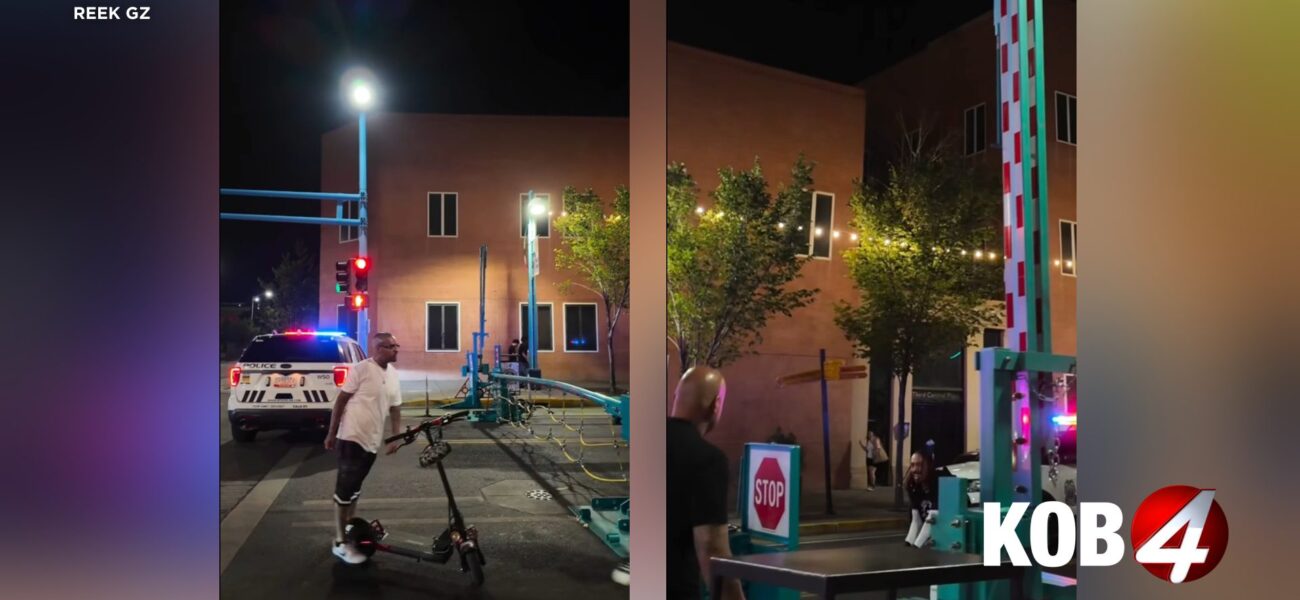
Because these things rarely happen in a vacuum, do they? The saga began, as so many do, with a flashpoint: a confrontation near Central Avenue and 3rd Street.
Imagine, if you will, the hum of downtown on a weekend, the energy, and then, suddenly, chaos. Police recounted the sequence: Albuquerque police said Ortega pushed Griego, before Griego shot Ortega and another man.
Stephen Griego, identified as Ortega’s antagonist in this tragic tableau, ended up dead himself, shot by APD officers on the scene. And social media, ever the unflinching witness, captured a sliver of the preceding tension: Social media video shows a man in a white shirt pushing Griego before shots rang out.
And then there was the fourth man, an unwitting participant in this public spectacle. He was a bystander about a block away,
struck by a bullet, rushed to a hospital, — and eventually released. APD said the fourth man was possibly shot by an officer,
a grim detail that adds yet another layer of complexity—and concern—to the episode. One doesn’t need a forensics degree to see the implications here, just a pulse. This isn’t just about individual choices; it’s about the frayed threads of a societal safety net that can’t hold.
But the true sting in this particular tale resides in Ortega’s post-shooting fate. After being shot, recovering, then dying from an overdose? It forces us to ask tough questions about what happens when victims navigate America’s strained healthcare and social welfare systems. He was injured, yes, but not in immediate mortal danger from the wound. Was there follow-up for a trauma victim? What about for potential addiction issues, especially if narcotics were found at his home?
It’s a situation that, unfortunately, echoes dilemmas far beyond New Mexico’s high desert plains. In many burgeoning urban centers across South Asia—think of Lahore or Dhaka, cities grappling with rapid demographic shifts and economic pressure—marginalized communities often face similar double-edged challenges: exposure to escalating street violence, coupled with woefully inadequate public health responses for mental health or substance dependency. The raw human cost is often amplified in environments where systemic support is a luxury, not a given. The human brain doesn’t just recover from a bullet wound; it often needs immense support for the psychological damage, too. Without that, self-medication is often a tragic path taken. Indeed, a report by the United Nations Office on Drugs and Crime indicated that drug use in Pakistan, for example, affected over 6% of the population aged 15-64 in 2013, with opiate use being a significant concern. The context is different, but the vulnerability remains.
📄 POLICY WIRE WHITEPAPER PUBLISHED: PAKISTAN'S NATIONAL SECURITY POLICY PRIORITIES
👉 READ BY CLICKING HEREBut here, back in the States, Juan Ortega died Thursday at a residence near Dennison Road
just days after walking out of a hospital. His death highlights a particularly nasty systemic blind spot. We’ve become accustomed to the headlines about gun violence. And we’re inundated with statistics on overdose deaths. But when the two collide like this—a gun victim succumbing to drugs post-hospital discharge—it really hits different. It speaks to a profound, often overlooked, failure in providing comprehensive care, particularly for those whose lives are already hanging by a thread.
His story—it’s not unique, not really. But it should make us sit up. It should compel us to look past the sensational street drama and scrutinize the unglamorous, yet devastating, policy gaps that leave people like Ortega so utterly exposed. The bullets didn’t kill him in the end; perhaps a fragmented, under-resourced public health infrastructure did. You might wonder if America, with its vast resources, really is doing all it can, especially when you consider places like Pakistan where challenges are even more acute yet sometimes met with more concerted, albeit underfunded, public health drives to combat substance abuse in the face of societal upheaval.
What This Means
The sequence of events surrounding Juan Ortega’s death is more than just another tragic news item; it’s a policy nightmare, a sharp observation on intersecting crises. Politically, this case shines an uncomfortable light on the effectiveness—or lack thereof—of existing law enforcement strategies, public safety protocols, and, most glaringly, the continuity of care for individuals discharged from hospitals, particularly those with a known history of violence or suspected substance use issues. It asks tough questions about police accountability, especially when a fourth man was possibly shot by an officer
, echoing broader calls for reform. The economic implications are also pretty clear. Hospitals, already stretched, treat immediate injuries, but what happens when the underlying causes—like addiction, mental health issues, and socio-economic desperation—go unaddressed? This results in repeat emergency room visits, strained public services, and, ultimately, more deaths that were perhaps preventable.
Ortega’s death is a chilling indictment of America’s public health infrastructure—its cracks are showing, they’re gaping, actually. You see it across the nation, an inability to bridge the gap between acute medical intervention and long-term community support for substance abuse, especially for high-risk individuals. When someone recovering from a gunshot wound is released without apparent, robust support systems in place, and then dies of an overdose, it speaks to a systemic failure. The investment in public health — and addiction services pales in comparison to the reactive measures of policing. It also raises questions about judicial oversight and resources, particularly for urban areas in New Mexico, which seems to constantly wrestle with its justice system at the brink. You gotta wonder if any of these policy frameworks truly see the full human being involved, beyond the incident itself. But also, this is a universal failing. You look at cities around the world, from Karachi to Kuala Lumpur, and you’ll find similar, complex narratives of urban struggles, violence, and inadequate social safety nets, particularly as urban centers grapple with investment in childhood and youth futures, hoping to prevent such spirals in the first place. This case isn’t an anomaly; it’s a symptom.