


Hoop Dreams and Harsh Realities: Young Ballers Ignite Vegas, Echo Global Talent Gambles
POLICY WIRE — Las Vegas, Nevada — An injury, as any long-time observer of global ambition knows, can twist a perfectly straight narrative into a labyrinth. But what if that narrative—and that...

POLICY WIRE — Las Vegas, Nevada — An injury, as any long-time observer of global ambition knows, can twist a perfectly straight narrative into a labyrinth. But what if that narrative—and that injury—actually heightens the drama, fueling a more compelling spectacle than pre-ordained greatness might ever deliver? It’s a question echoing from the dazzling lights of the Las Vegas Summer League, where the debut of young stars Cameron Boozer and Caleb Wilson has become less about basketball and more about the brutal poetry of athletic enterprise.
Wilson, for example, just hit the professional hardwood after an agonizing hiatus. He was sidelined, as these things go, by a thumb injury that had sliced his college season short in March. But there he was on a Friday night, battling against a familiar rival, his body language speaking volumes of pent-up kinetic energy. His coach, Tiago Splitter, saw something others clearly didn’t need an eye-test for, remarking simply, The size and the athletic ability is special. It’s something you don’t see very often. [QUOTE_PLACEHOLDER]
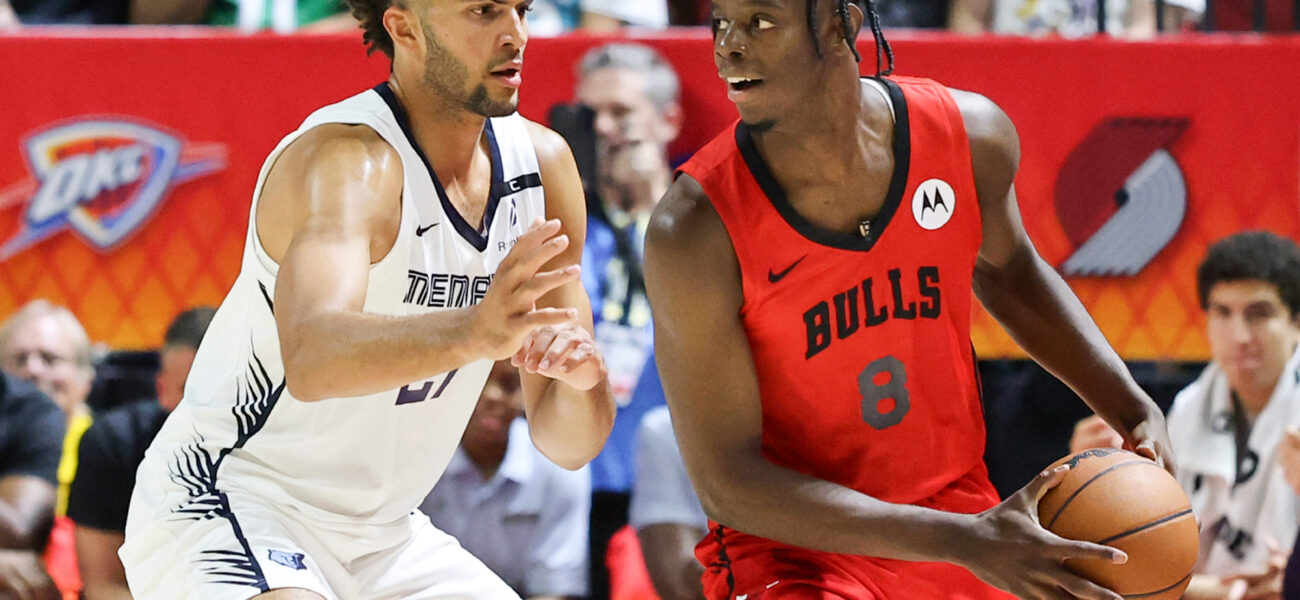
Their meeting wasn’t just a game; it was a carefully curated event. The schedulers, it seems, know exactly what buttons to push, throwing Wilson’s Chicago Bulls directly against Boozer’s Memphis Grizzlies in his inaugural pro outing. Boozer, after all, had already established his bona fides, opening his professional run with 15 points, 4 rebounds and 4 assists on efficient 7-of-11 shooting in Utah’s Summer League, setting an immediate, formidable bar for their shared draft class.
It’s a story as old as sport itself, the two gladiators, separated at birth—or in this case, after winning the 2024 Peach Jam on Nightrydas Elite—then set against each other in grand fashion. We’ve seen it play out across countless rivalries, from collegiate wrestling in Punjab to high-stakes cricket matches between Pakistan and India. But now, it’s global, instantly streamable, — and packed with layers of endorsement deals waiting to be inked.
Wilson didn’t dawdle, though. He punched first, sinking a 3-pointer on Chicago’s very first possession, a declaration—sure, a confident one—that his shot, perhaps remarkably, hadn’t gone cold despite months away. It served as a curious counterpoint to his modest college performance, where He attempted just 27 3s last season. But it was Boozer who really got to work from that moment, an efficient, low-maintenance scoring machine. He operated with poise, flashing an uncanny control even as fouls started stacking up. And it’s his understated dominance that’s drawn comparisons to seasoned veterans, a testament to his adaptability against NBA-caliber opposition versus mere college defenses.
But Wilson, not to be outdone, soon shed whatever apprehension he might have felt. He admitted to feeling jitters leading up to the game, but that was ancient history by halftime. His subsequent 16 points were high-volume, yes, but they erased any questions about his recovery. Then he erupted again in the second half, pouring in another 13 points, an efficient surge that erased a Memphis cushion and dragged Chicago right back into the fight.
📄 POLICY WIRE WHITEPAPER PUBLISHED: PAKISTAN'S NATIONAL SECURITY POLICY PRIORITIES
👉 READ BY CLICKING HEREThe closing minutes? Oh, they delivered. You don’t often see Summer League games—or, really, any sporting contest featuring such raw, young talent—finish with such frenzied precision. Wilson, playing hero ball, buried a 3 to pull within two. But Boozer, unflappable, calmly knocked down both free throws, restoring a precious four-point cushion. And, truly, even a 29-footer from Wilson at the buzzer couldn’t snatch victory. Memphis, somehow, held on.
Wilson finished with 35 points—a Summer League high at the time—shooting 12-of-21 overall and 7-of-11 from 3 to go with 5 rebounds, 2 steals and 3 blocks in 33 minutes. Boozer tallied 23 points, 6 rebounds, — and 4 assists. The distinction? Wilson was all explosive energy, a sheer force of will after injury. Boozer was quiet, calculated, — and ultimately, effective enough to seal the win.
Wilson’s stated goal is not for the faint of heart: I want to be the greatest of all time. Y’all got one of the GOATs in y’all history, so it’s time for another one. And in that sentence, you’ve got the full scope of ambition, unburdened by injury or a rough start—a drive that, for better or worse, continues to power this very peculiar corner of the global economy.
What This Means
This early Summer League showcase, while nominally about two young men and a ball, represents far more—it’s a micro-economy of potential, projection, and carefully managed hype. Policy makers, particularly in regions like Pakistan or other emerging markets throughout South Asia, should watch these spectacles closely. They aren’t just entertainment; they’re blueprints. Nations are increasingly investing in sports infrastructure, youth academies, and global branding, looking to emulate the talent pipelines and commercial successes seen in Western leagues. Pakistan, for instance, has long struggled to expand its global sports footprint beyond cricket, yet its burgeoning youth population presents a demographic advantage. If global sports narratives, built on individual excellence and manufactured rivalry, can generate billions, the lessons of nurturing raw talent—even through injury—and strategically placing them on a world stage, become economically rather valuable commodities. The performance of a young athlete, his perceived value, his journey through injury and comeback, these aren’t just sports anecdotes. They’re compelling narratives for investors, brand managers, — and the soft power aspirations of states.