


Beyond the Bat: Boston’s Trade Gamble Illuminates Pro Sports’ Brutal Economics
POLICY WIRE — Boston, U.S. — America’s pastime, it turns out, operates with the cutthroat precision of a hostile takeover bid. You think it’s about dingers — and double plays? Think...

POLICY WIRE — Boston, U.S. — America’s pastime, it turns out, operates with the cutthroat precision of a hostile takeover bid. You think it’s about dingers — and double plays? Think again. What we’re witnessing in Boston, as the Red Sox orbit the edge of contention, isn’t some heartwarming Cinderella story. No, it’s a high-stakes commodities play, where human assets like Houston Astros shortstop Jeremy Peña become negotiating chips in a multibillion-dollar enterprise. Every single win, every loss, is logged onto a ledger, a profit-and-loss statement for a conglomerate—not just a team.
The Red Sox, it appears, are desperate for a narrative shift. Not merely an uptick in the standings—though they’ve certainly strung together a respectable 11-2 run lately, pulling them within a couple games of an American League Wild Card berth—but a return to perceived dominance. Their season began with promises, then sagged, riddled by injury to their incumbent shortstop, Trevor Story, who managed a dismal .206 average before his body simply quit. Then came Marcelo Mayer, the presumed future, who couldn’t even manage a .220, felled by a forearm issue. Boston’s left with spare parts at one of the game’s most critical positions, flailing for a steady hand, and this, friends, makes them dangerous in the trade market. Dangerous because they need something, *anything* really, that screams ‘win’ louder than their current roster whispers ‘maybe’.
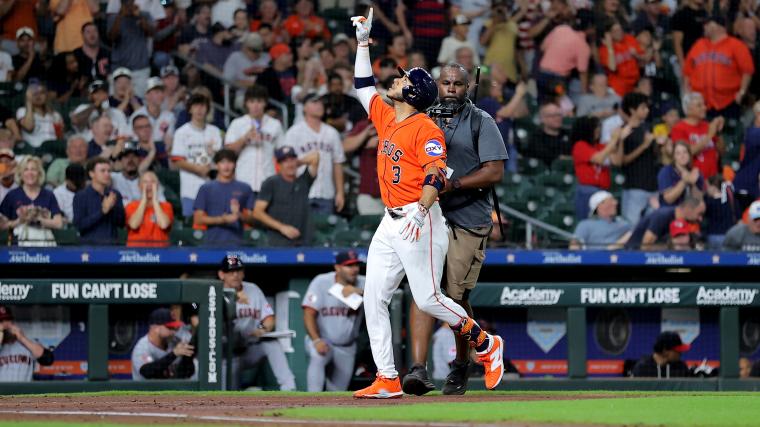
Enter Jeremy Peña, a Gold Glove winner from the Houston Astros. A player whose numbers—a .295 average, six home runs, and 48 RBI in just 48 games—are less about individual brilliance and more about economic efficiency. He’s not just hitting; he’s manufacturing value. He’s an asset that fits the physical dimensions of Fenway Park, they say, a man built to rake doubles off the Green Monster. It’s less romantic, more an algorithm, you see. Jeff Passan, ESPN’s MLB sage, even identified Boston as an ideal landing spot, not based on cosmic alignment, but on team needs and contractual logistics. It’s a pragmatic fit, devoid of sentiment.
And what’s an acquisition without proper compensation? Houston isn’t running a charity. They need a left-handed slugging outfielder and prospects to refill a farm system constantly tapped for top-tier talent. Boston just so happens to have Jarren Duran, who fits that bill like a perfectly tailored suit, along with some tantalizing farm products (minus untouchables like Franklin Arias and Anthony Eyanson, of course). Plus, pitcher Patrick Sandoval, freshly returned from Tommy John surgery and impressive in his limited outings, could be thrown into the mix. He’s exactly the kind of reclamation project a savvy Houston front office might covet. It’s a dance, a calculated maneuver on a chessboard where every player is priced, every draft pick collateral.
But how do these high-wire deals play out in the broader financial landscape of professional sports? Mr. Miles Thompson, a veteran sports economist, put it plainly in an interview earlier this month: “These aren’t just trades for competitive balance; they’re tactical maneuvers to maximize market valuation and fan engagement, particularly in the social media era.” It’s about securing broadcast rights, keeping stadium seats filled, selling jerseys. According to data compiled by Sportico in 2023, Major League Baseball’s total revenue for the preceding season exceeded $11.6 billion, making every piece of a franchise a potential income stream. So, yeah, it’s serious business. Houston’s General Manager, Dana Brown, for example, once remarked during a press conference about building his roster, “We don’t build dynasties on emotion; we build them on efficiency. Every dollar, every roster spot, is a strategic investment in the future of the franchise.” That’s the cold, hard truth.
📄 POLICY WIRE WHITEPAPER PUBLISHED: PAKISTAN'S NATIONAL SECURITY POLICY PRIORITIES
👉 READ BY CLICKING HEREEven across continents, this isn’t lost on observers. Imagine the emerging sports markets in South Asia, where the nascent but growing interest in sports beyond cricket sees foreign investments pouring into academies and infrastructure. From the burgeoning youth soccer leagues in Pakistan to efforts to globalize the NBA and MLB, the drive is always to secure talent, sure, but mostly to capture attention and capital. The global demand for sports entertainment isn’t dwindling, you know. It’s only diversifying, searching for new avenues.
What This Means
This potential Red Sox-Astros transaction transcends simple wins — and losses. It’s a microcosm of professional sports’ political economy, highlighting the relentless commodification of talent and the escalating arms race for competitive advantage. Teams aren’t just clubs; they’re billion-dollar enterprises jostling for regional supremacy, soft power (yes, even baseball creates soft power through brand recognition), and crucially, a larger slice of the global entertainment pie. The acquisition of a player like Peña represents a direct investment, a bet on future returns—not just in the win column, but in ticket sales, merchandise, and broadcast revenue. The willingness of ownership to pursue such a move underscores the understanding that in modern sports, complacency isn’t an option. You either acquire or you recede. And no multi-billion dollar entity, especially one as historically significant as the Red Sox, is interested in receding from prominence without a fight—a financial, market-driven fight.