

Fentanyl Floodgate: New Mexico’s Dire Query to DEA over Millions of Pills on the Street
POLICY WIRE — Santa Fe, N.M. — It’s a chilling proposition: trading immediate public safety for a distant, larger win. That’s the high-stakes gamble a federal whistleblower claims the Drug...

POLICY WIRE — Santa Fe, N.M. — It’s a chilling proposition: trading immediate public safety for a distant, larger win. That’s the high-stakes gamble a federal whistleblower claims the Drug Enforcement Administration made in New Mexico, alleging nearly two million fentanyl pills were deliberately allowed to circulate. This isn’t a theoretical debate on agency tactics; it’s a real-world dilemma with potential for catastrophic fallout, sparking outrage from the state’s political heavyweights.
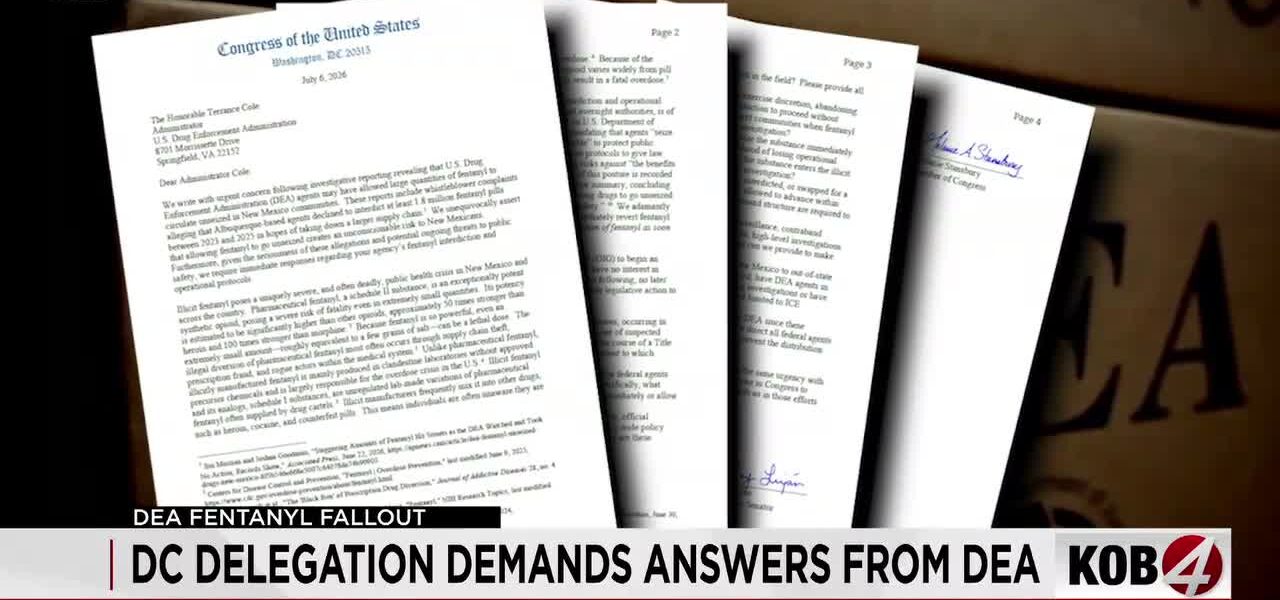
Forget the routine political spat, this one cuts deeper. Because the implications? They’re stark, brutal, — and hit right at home. A whistleblower came forward last month and claimed agents didn’t seize the fentanyl so they could catch the “bigger fish.” The idea, ostensibly, was to track the illicit supply chain further up the food web, hoping to net major traffickers. But the cost of that ambition, according to state officials, could be measured in lives. New Mexico’s two senators and three representatives—a united front, unusual in today’s polarized landscape—sent a pointed letter to the DEA, raising concerns about the claims.
This isn’t just about New Mexico, you see. It’s a snapshot of a global conundrum. Many nations, from the drug transit hubs in Pakistan to the opium fields of Afghanistan, grapple with the very same calculus: disrupt small-scale dealers immediately or let some poison slip through your fingers in pursuit of the kingpins? The letter from New Mexico’s delegation, in its raw specificity, really reflects these international policy quagmires. The delegation wants to know when DEA agents can use discretion to let a fentanyl transaction move forward without immediate seizure and what safeguards protect communities when shipments continue during an ongoing investigation. It’s a fundamental question of risk tolerance in an arena where missteps are deadly.
Governor Michelle Lujan Grisham isn’t pulling any punches. She wants President Donald Trump to answer claims that DEA agents let nearly two million fentanyl pills stay on New Mexico streets. That’s an awful lot of incredibly potent synthetic opioid just floating around—enough to devastate communities, poison entire neighborhoods. A single kilogram of pure fentanyl can contain upwards of half a million lethal doses. Policy choices always have consequences, and sometimes those are felt most acutely on the ground.
The congressional delegation’s letter wasn’t merely a strongly worded memo. It was a forensic demand for accountability — and operational transparency. The lawmakers said allowing fentanyl to go unseized creates an unconscionable risk to New Mexicans, and they said they expect DEA cooperation as they consider action in Congress. This includes a request for written documentation of all cases since Jan. 17 when the DEA declined to seize fentanyl. they’re demanding the agency explain its current internal guidelines for how federal agents handle active drug trafficking investigations involving fentanyl.
They’re not stopping there, either. They want to know what other tactics, including enhanced surveillance, are available during long-term high-level investigations without creating what lawmakers called unacceptable risk to public safety. Because, for many in Santa Fe, the potential for thousands, maybe millions, of pills to flood their streets because of a calculated gamble feels less like strategy and more like a dereliction of duty. And it leaves a lot of ordinary folks feeling utterly exposed. This isn’t just bureaucratic infighting; it’s a fight for trust, — and ultimately, for lives.
📄 POLICY WIRE WHITEPAPER PUBLISHED: PAKISTAN'S NATIONAL SECURITY POLICY PRIORITIES
👉 READ BY CLICKING HEREThe letter also throws a curveball, asking whether any DEA personnel based in New Mexico have been reassigned to out-of-state enforcement efforts since January 2025. This query suggests suspicions of internal shifting or understaffing—an unspoken challenge to the agency’s priorities. It implies that perhaps New Mexico, despite being a major drug trafficking corridor, isn’t getting the dedicated resources it deserves, or that vital local intelligence is being spread thin.
What This Means
This incident represents a political and public relations nightmare for the DEA, which faces the unenviable task of balancing aggressive long-term cartel dismantling with immediate harm reduction. For New Mexico, the fallout could be multi-faceted. Politically, the heat on Governor Grisham — and the delegation ensures this won’t be brushed aside. They’re locked in, needing a robust explanation for their constituents.
Economically, the presence of such a vast quantity of fentanyl—or even the public perception of its unseized status—can corrode confidence in public safety, potentially impacting everything from tourism to local business investment. Who wants to settle in a state where dangerous drugs are rumored to be freely flowing, even under federal eyes?
From a policy standpoint, this uproar forces a re-evaluation of high-level drug enforcement strategies. The traditional pursuit of “bigger fish” via delayed intervention, a long-standing tactic often debated within international policing circles (especially those battling cross-border narco-trafficking in places like the Federally Administered Tribal Areas of Pakistan), is now under intense domestic scrutiny. If local elected officials believe the risk to their populations is unconscionable, how long can federal agencies continue such tactics without significant overhaul or more robust community safeguards?
The controversy also has national implications. Fentanyl, originating often in Asia (sometimes synthesized in labs that rely on precursor chemicals from nations like China), moves through a global pipeline that eventually spills onto American streets. This New Mexico scandal highlights a vulnerability in that pipeline’s final defense. And that means a conversation we need to have. Now.
📖 GET YOUR FREE COPY NOW OF POLICY WIRE DIGITAL MAGAZINE JULY 2026 EDITION
👉 READ & DOWNLOAD FREE MAGAZINE