

Fentanyl Fiasco: New Mexico Rages as DEA’s ‘Bigger Fish’ Gambit Lands 2 Million Pills on the Street
POLICY WIRE — Santa Fe, N.M. — It’s a dangerous wager, this federal ‘long game.’ One that now has New Mexico’s elected brass seeing red, particularly after reports surfaced detailing a...

POLICY WIRE — Santa Fe, N.M. — It’s a dangerous wager, this federal ‘long game.’ One that now has New Mexico’s elected brass seeing red, particularly after reports surfaced detailing a stunning DEA decision: letting nearly two million fentanyl pills stay on the streets. For a drug ravaging communities nationwide, it’s a gamble many simply don’t understand—or tolerate.
The saga unfurled with a whistleblower, painting a stark picture. Federal Drug Enforcement Administration (DEA) agents, so the story goes, consciously opted *not* to seize a colossal cache of fentanyl. Their motive? The time-honored, oft-criticized strategy of nabbing a “bigger fish.” But for Governor Michelle Lujan Grisham, and for virtually every resident trying to stem the tide of opioid deaths, that justification simply doesn’t cut it.
“It’s an abdication of federal duty, plain and simple,” Governor Lujan Grisham stated flatly, her frustration barely contained in a recent press briefing. “When New Mexicans are dying on our streets, when families are torn apart, ‘bigger fish’ is no excuse for letting poisons proliferate in our communities. We elect officials to protect us, not to run some opaque high-stakes drug-dealer lottery with public safety.” It’s a sentiment echoing across the Land of Enchantment, a state already reeling from the drug crisis.
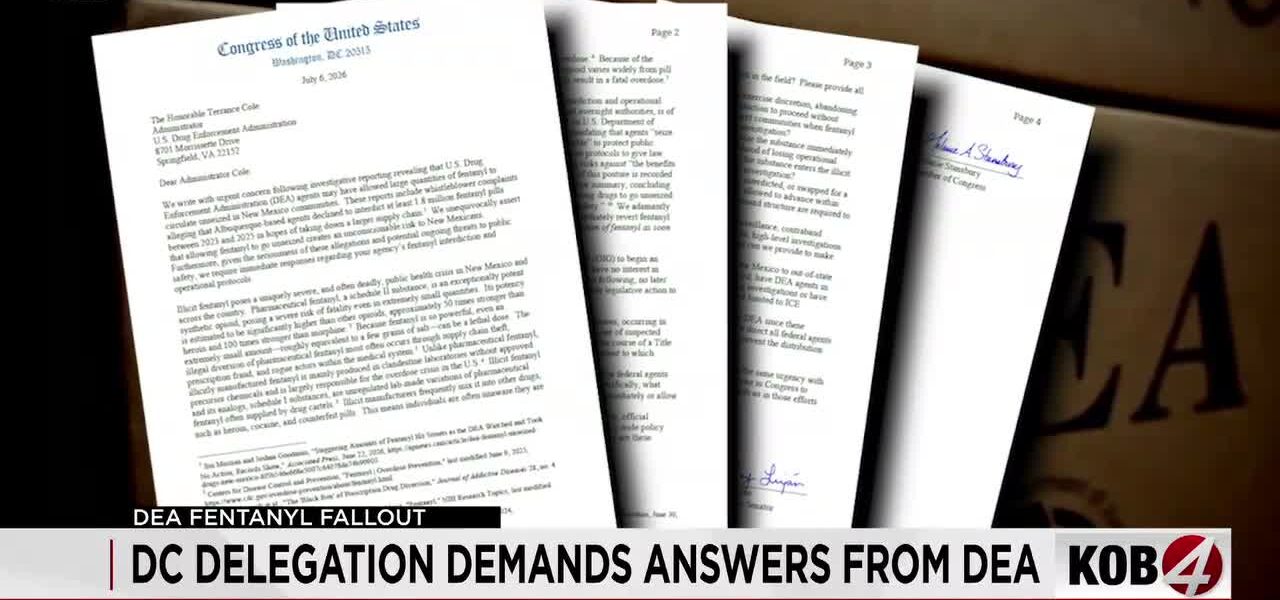
Her call for answers wasn’t solitary. New Mexico’s entire congressional delegation—two senators, three representatives—also fired off a terse letter to the DEA. They aren’t just miffed; they’re demanding paperwork. They want to know every instance since January 17th when agents bypassed a fentanyl seizure. They’re probing internal guidelines, trying to understand when, exactly, discretion turns into calculated risk with the lives of ordinary citizens hanging in the balance.
And then there’s the political optics, thick — and greasy. Former President Donald Trump, in a characteristically pointed remark via his social media platform, didn’t pull any punches, indirectly criticizing federal drug policies he considers lax. “The border is a sieve, folks. The real ‘bigger fish’ are pouring this stuff in through lax enforcement, not some agent’s tactical oversight. It’s coming across like water, and Democrats don’t want to fix it!” This jab, while not directly addressing the New Mexico incident, underscores the contentious national debate surrounding drug interdiction strategies and border security. One might argue it complicates an already complex situation.
Because this isn’t just a domestic skirmish. The global narcotics pipeline, often fueled by precursor chemicals sourced from abroad, has complex arteries running through regions like South Asia. Pakistan, for instance, frequently contends with its own battle against drug transit and illicit chemical trafficking, a reality that makes local leniency, however strategically intended, echo louder across international efforts to curb supply. A seemingly local decision has global implications, influencing how other nations view the seriousness of American drug enforcement.
The lawmakers also questioned what alternative tactics, like enhanced surveillance, are on the table for long-term, high-level investigations without—and this is their core argument—“creating unacceptable risk to public safety.” They’re worried sick, frankly. And they want to know if any New Mexico-based DEA personnel have been shipped out of state since January 2025. It suggests a suspicion that resources might be getting shuffled, or perhaps—whisper it—punishment for blowing the whistle.
📄 POLICY WIRE WHITEPAPER PUBLISHED: PAKISTAN'S NATIONAL SECURITY POLICY PRIORITIES
👉 READ BY CLICKING HEREFentanyl’s shadow isn’t just long; it’s devastatingly wide. According to the Centers for Disease Control and Prevention, synthetic opioid-related overdose deaths, predominantly fentanyl, surged by over 100% between 2019 and 2021 alone, marking a horrifying acceleration in a years-long crisis. These aren’t just numbers; they’re lives. And decisions like the one allegedly made in New Mexico directly impact them.
The federal agents might believe they’re playing 4D chess. But the public sees a very tangible, immediate threat. It’s an old tactic, going after the cartel bosses instead of the foot soldiers or, worse, the street-level dealers. But when that tactic appears to cost potentially millions of doses of a super-potent opioid, well, it’s not just a strategic misstep. It’s a catastrophe in waiting.
What This Means
This escalating controversy highlights a deep chasm between federal law enforcement’s often opaque, long-term strategies and the immediate, dire public health emergency at the state level. Politically, Governor Lujan Grisham’s forceful stance bolsters her image as a staunch protector of her constituents, aligning perfectly with her populist approach. It’s a strategic move, framing the federal government, specifically the DEA, as detached and bureaucratic, perhaps even careless with lives. This narrative resonates powerfully with a public exhausted by the drug crisis.
Economically, the unseized fentanyl represents not just potential death, but also a continued drain on public resources. Increased emergency room visits, strained social services, and reduced workforce participation—all ripple effects from the opioid epidemic—could see an acceleration in New Mexico. Because this alleged incident isn’t a one-off; it reflects a broader policy dilemma on how to fight organized crime without compromising street-level safety. And frankly, this public airing of dirty laundry damages the DEA’s already strained public trust, making community cooperation—a vital tool in successful drug interdiction—far harder to secure. This saga will inevitably force a difficult recalculation within federal agencies on the ethical boundaries of tactical discretion versus immediate public safety, likely leading to tightened protocols and greater transparency, lest states like New Mexico consider more drastic state-level policy responses to federal perceived failings.