

Red Devils’ Fatal Flaw? Belgium’s Grand Ambitions Hobbled by a Twelfth-Hour Injury
POLICY WIRE — Doha, Qatar — There’s a certain grim irony in watching the meticulously constructed plans of nations — painstakingly honed over years, often funded by a significant slice of the...

POLICY WIRE — Doha, Qatar — There’s a certain grim irony in watching the meticulously constructed plans of nations — painstakingly honed over years, often funded by a significant slice of the national treasury — unravel in the blink of an eye, or in this case, the twinge of a hamstring. Football, at its dizzying World Cup heights, isn’t merely a game. It’s a barometer of national sentiment, a political commodity, and an economic engine that, occasionally, seizes up just moments before full throttle.
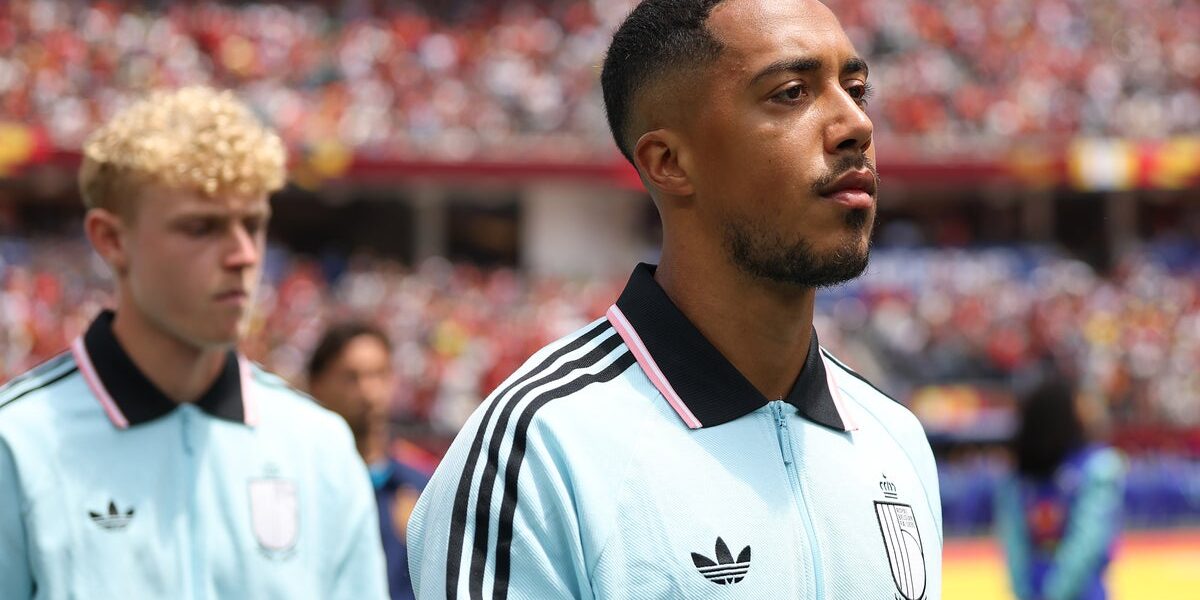
Twelve minutes. That’s all the time Belgium’s ‘Golden Generation’ had to recalibrate its collective consciousness, to mourn the unexpected collapse of its midfield maestro, Youri Tielemans, who crumpled out of the starting XI just before their quarter-final showdown with Spain. And what a theatrical, almost cruel, twist of fate for the Red Devils. The kind of late-stage disruption that’d give a government strategist cold sweats. It’s a harsh reminder that even the most formidable global spectacles operate on the brittle foundation of human biology.
“It’s a brutal reality check, isn’t it? You plan for months, years even, and then, a hamstring,” lamented Philippe Leveque, a senior official with the Belgian Football Federation, speaking to Policy Wire from the stands. “It’s the price of ambition at this level, — and frankly, it just is. We don’t have time for ‘what ifs’ now. We adapt.” That stoicism is what you expect from a man whose job depends on the uninterrupted functioning of an entire national sporting infrastructure, yet even he couldn’t quite mask the quiet despair.
Hans Vanaken, a Club Brugge stalwart, was flung into the fray as the unexpected understudy. He’s not a nobody, of course, but he isn’t the man who scored Belgium’s game-saving equaliser against Senegal, nor the one who then slotted the decisive penalty. Tielemans, bless his knack for last-gasp heroics, had been instrumental. He snatched victory from the jaws of elimination in the Round of 32, forcing an extra-time reprieve and subsequently sinking Senegal’s hopes. But now? He’s a spectator.
This eleventh-hour scramble isn’t just a coach’s headache; it’s a policy nightmare in miniature. Every single Belgian expatriate, every diplomatic official proudly sporting the tricolor, felt that sudden drop in morale. Nations, especially those in regions desperate for any global spotlight, hinge immense national pride on these outcomes. Think of Pakistan, for instance, a cricketing nation where football is steadily, slowly, building its grassroots—dreaming of a ‘Golden Generation’ of their own. They, too, understand the sheer gut-punch of seeing national hopes, however nascent, derailed by the unpredictable. Because at the end of the day, these moments capture a shared human experience that transcends cultural divides, from Brussels to Balochistan, everyone knows what a sudden loss of their main man means.
Meanwhile, the Spanish camp maintained a diplomatic, almost dispassionate stance. “We don’t wish injury on any opponent, certainly,” stated Elena Sánchez, a spokesperson for the Royal Spanish Football Federation. “But football doesn’t wait for sympathy. Our strategy remains unchanged: clinical execution, regardless of who’s on the field for the other side.” A perfectly pitched non-comment, illustrating that ruthless pragmatism which separates the contenders from the mere participants.
📄 POLICY WIRE WHITEPAPER PUBLISHED: PAKISTAN'S NATIONAL SECURITY POLICY PRIORITIES
👉 READ BY CLICKING HEREThe statistical likelihood of such an event—a starting player sustaining a warm-up injury significant enough to pull them from a high-stakes match—isn’t astronomically low either. Studies have shown that approximately 8.5% of professional footballers will experience a match-day injury over the course of a season, according to a recent UEFA medical report. But for it to strike at this precise, most vulnerable juncture, just before the crucible of a World Cup quarter-final, it stings with a unique malevolence.
What This Means
This isn’t just about football. It’s a masterclass in the fragility of even the grandest geopolitical strategies. Governments often invest heavily in ‘soft power’ initiatives, and nothing generates more international goodwill or cultural cachet than a successful national team on the world stage. Belgium’s aspirations for a deep tournament run weren’t merely about sport; they were tied to national identity, youth development funding, and attracting foreign investment. A stumble here means not just dashed hopes, but a potential dip in the currency of national prestige that sports provides.
And then there’s the economic ripple. Broadcasters, sponsors, even travel agencies had hedged their bets on Belgium’s continued performance. The unexpected vulnerability introduced by Tielemans’ absence isn’t just a slight disadvantage on the pitch; it’s a tremor in a global economic ecosystem. It’s why organizations around the world obsess over contingency plans, why political leaders sweat the details of every public appearance—because a single, unexpected fault line can propagate instability through systems designed for robust continuity. It’s not a shift in the global order, not quite. But it’s certainly a small, sharp reminder that control, ultimately, is an illusion. Maybe this is a microcosm of a larger phenomenon: the end of eras isn’t always heralded by grand pronouncements; sometimes, it’s a pulled muscle. A very public, very painful pulled muscle.