


Falcons Gamble on Dotson: High-Stakes Career Reset
Jahan Dotson's move to the Falcons is a high-stakes gamble on a career reset. Discover how this NFL reinvention mirrors global labor market dynamics.

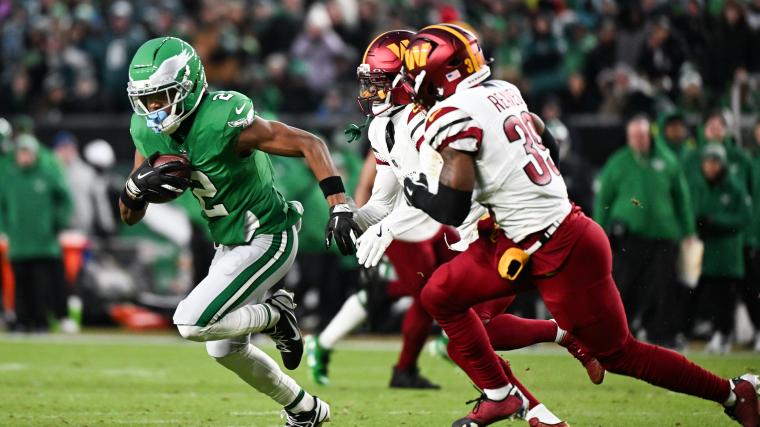
POLICY WIRE — Washington, D.C. — Some careers are less about a linear climb and more about a brutal, Darwinian cycle of reinvention. You’re drafted with fanfare, anointed with expectations, then tossed into a maelstrom where one false step—or, perhaps, simply the wrong zip code—can derail everything. For wide receiver Jahan Dotson, a player whose potential once glowed as brightly as any, the move to the Atlanta Falcons isn’t merely a transfer. It’s a high-stakes bet on second chances in an industry that rarely offers them with such gilded trimmings.
It’s the NFL, after all, where talent, often groomed through colossal financial investment (think youth academies in places like Karachi, or billion-dollar college football programs in the U.S.), must coalesce into immediate production. Four seasons, split between a pair of franchises, have left Dotson a commodity less settled than once presumed. He’s been a first-round draft pick, a sign of rare promise and—crucially for team coffers—significant upfront capital expenditure. But the consistency? That’s been the elusive specter haunting his ledger, the ‘what if’ hanging over his pro record.
Now, as Atlanta plots its future passing game, a narrative forms: Dotson’s seeking redemption, a fresh field to finally unleash the raw capabilities that once commanded such high stock. And because, frankly, the league’s always on the hunt for value, particularly one-time blue-chip prospects, this signing feels less like charity and more like a calculated gamble. The Falcons are hoping to catch lightning in a bottle, betting their investment yields dividends beyond his current, discounted price point.
He’s come to Atlanta for a reason, he tells us, via The Athletic’s Josh Kendall, declaring, “I 100 percent believe in my talent and ability to make plays in this league. It’s just about getting the opportunity to do so. I didn’t really have that opportunity the past couple years. Now I’m looking to really do that, and I can’t wait to make plays for this football team.” A statement delivered with a measured conviction that belies the inherent precariousness of professional sports careers. The average NFL career, according to figures released by the NFL Players Association, clocks in at just 3.3 years. Dotson’s already surpassed that marker, but the struggle for sustained impact defines his narrative arc.
The business of sport, much like any global labor market—from textile mills in Bangladesh to tech startups in Bangalore—is relentless. It sifts, it sorts, — and it revalues human capital constantly. A young professional with a particular skillset, whether a data scientist or a wide receiver, must demonstrate not just flashes of brilliance, but predictable, replicable output. Dotson’s dilemma isn’t unique; it’s a magnified, public display of a pressure felt across countless competitive fields.
The Falcons, for their part, aren’t acquiring a project; they’re acquiring potential on the cheap, hoping their organizational structure and a fresh offensive coordinator can be the magic elixir. They’re after a more dynamic passing attack, certainly, but also the kind of inexpensive, high-upside acquisition that can shape a season—or, conversely, fade into another missed opportunity. Dotson’s speed, his adept route-running, and that innate knack for creating separation are the core attributes the franchise believes can translate into production, helping to bolster a young offense anchored by quarterback Michael Penix Jr.
📄 POLICY WIRE WHITEPAPER PUBLISHED: PAKISTAN'S NATIONAL SECURITY POLICY PRIORITIES
👉 READ BY CLICKING HEREThis isn’t his first rodeo, not really. But it might be the one where the stakes feel highest. He’s 25 now, past the initial blush of rookie promise, squarely in the window where talent either blooms or begins its slow decline into the memory of what might have been. Atlanta’s system offers an opportunity, they say, to carve out a significant role alongside established weapons. But opportunity, like goodwill, is finite.
And if it clicks? If the coaching staff trusts him and the opportunities materialise, the Falcons might just have bagged one of the more savvy offseason additions. Or they’ll just have another receiver on the roster hoping for a break. That’s the merciless calculus of modern sports — and, honestly, quite a bit of modern corporate life. This player’s story, a striving for consistent value — and a new lease on a challenging career, is truly universal. From a young software engineer seeking better compensation in Dubai to a textile entrepreneur from Lahore seeking a more favorable market, the push for better conditions, more opportunity, and the right team remains a constant.
What This Means
Jahan Dotson’s narrative offers a poignant lens through which to examine the fickle economics of professional sports. His journey, marked by an initial boom (first-round pick) and a subsequent revaluation (joining a new team seeking opportunity), mirrors broader economic patterns. It highlights the significant premium placed on predictable performance over raw potential in high-stakes markets. Teams like the Falcons aren’t merely signing athletes; they’re making sophisticated portfolio adjustments, seeking undervalued assets with a perceived high upside. The successful integration of Dotson wouldn’t just improve their on-field performance; it would validate a specific analytical approach to talent acquisition, rewarding calculated risk. It also demonstrates how athlete-employees, despite their elevated status, are constantly navigating a precarious market for their specialized skills, akin to high-skilled labor globally adapting to shifts in demand or corporate restructuring. Their mobility is dictated by economic opportunity, much like a tech professional moving from California to Silicon Wadi for better prospects or a financial analyst seeking more favorable market conditions.