

The Princess in Khaki: Spain’s Future Queen, Old Symbols, and New Realities
POLICY WIRE — Zaragoza, Spain — The crown, you see, isn’t just about jewels and ceremonial robes anymore. It’s about optics, — and perhaps more crucially, sweat. Young Princess Leonor,...

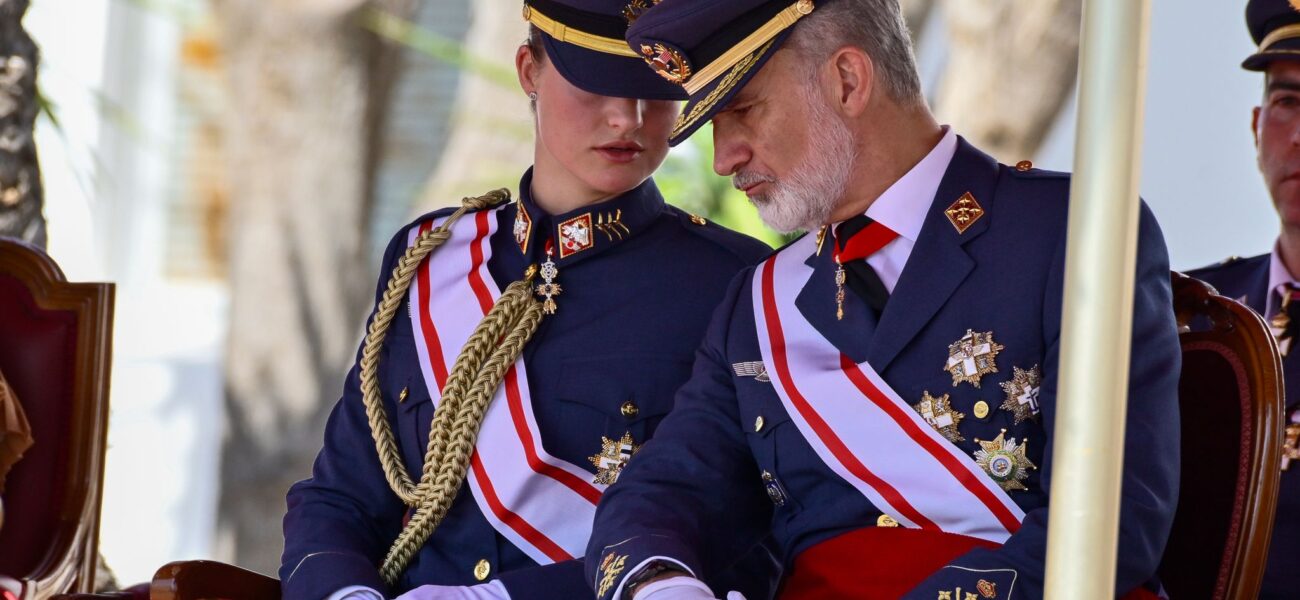
POLICY WIRE — Zaragoza, Spain — The crown, you see, isn’t just about jewels and ceremonial robes anymore. It’s about optics, — and perhaps more crucially, sweat. Young Princess Leonor, Spain’s heir apparent, just wrapped up her year of military drills, a neatly orchestrated dance of royal duty and public expectation. She’s shed the uniform of the General Military Academy in Zaragoza, traded the rifle for—well, not yet the scepter, but certainly a good photo op, complete with the Sword of Honor for her efforts. It wasn’t just a graduation; it was a carefully curated messaging event for one of Europe’s more, shall we say, pragmatic monarchies.
It’s a peculiar thing, watching a teenager, albeit one born into unimaginable privilege, endure the rigors of military training. And she didn’t just endure it; she apparently excelled. She’s slated for naval training next, then the air force. Because a future monarch, it seems, needs to be well-versed in all three. This isn’t some quaint historical re-enactment; it’s a cold, hard calculation of legitimacy. The monarchy needs to prove its worth, even if that means its future queen learns to navigate a tank.
Defense Minister Margarita Robles, ever the government’s reliable mouthpiece, was quick to praise. “Her Royal Highness has shown remarkable dedication and a true spirit of service,” Robles declared to reporters, her tone dripping with official satisfaction. “She understands that leading a nation means understanding the challenges faced by all its people, from the barracks to the palaces.” But that’s the point, isn’t it? The optics suggest an effort to bridge that very gap, a highly visible performance of solidarity.
And it seems to be working, at least on some levels. According to a 2023 Royal Institute Elcano study, public approval for the monarchy stands at 58% among younger Spaniards, a notable shift upwards after decades of questions surrounding royal conduct and financial opacity. These numbers aren’t a statistical blip; they’re a barometer. A successful future king or queen, apparently, needs to smell of gunpowder and salt, not just old velvet and dusty decrees.
But there’s a subtext here that many outside the Iberian Peninsula often miss. Spain’s relationship with its military, its past glories, — and its complex multi-ethnic identity is… textured. Spain, after all, once commanded an empire that touched virtually every continent, with lasting cultural and linguistic imprints, including deep historical ties to parts of the Muslim world—think centuries of shared heritage, from Cordoba to Granada. There’s a resonance there for how a young royal is perceived, not just within Europe but globally. Many nations, from Pakistan to Morocco, grapple with modernizing institutions while holding onto heritage, and Leonor’s carefully choreographed emergence as a military leader offers a curious, perhaps even applicable, template for some.
The whole exercise — sending a future head of state through basic training, getting her hands dirty — isn’t unique, but it’s done with a particular flair in Spain. It’s a statement: the Crown is preparing, adapting. It’s not just a ceremonial figurehead; she’s learning the hard realities of national defense, presumably to better fulfill her role as eventual Commander-in-Chief. This isn’t simply about a girl getting an education. It’s about brand management on a national scale.
📄 POLICY WIRE WHITEPAPER PUBLISHED: PAKISTAN'S NATIONAL SECURITY POLICY PRIORITIES
👉 READ BY CLICKING HERE“Look, modern monarchies can’t just exist as pretty ornaments,” scoffed Dr. Alistair Finch, a shrewd observer of European royalty at the London School of Economics, during a phone interview. “They need to justify their immense cost, their symbolic weight, every single day. Sending Leonor into the army isn’t just about making her competent; it’s about making her relevant. It’s an exercise in public relations disguised as education. The stakes are much higher than just passing a physical; it’s about ensuring the continuity of the institution itself.” And he’s right. The palace spin doctors didn’t miss a trick. The pictures of her in combat gear went viral—not a common sight for a future queen.
But the true measure won’t be in how many push-ups she can do, but how she carries the burden of a nation’s history and its very turbulent present. Because Spain’s future isn’t just about parades and salutes; it’s about navigating an increasingly polarized political landscape, economic anxieties, and the always-tricky question of regional identities. The boots might be new, but the inherited burdens? Those are ancient, and they’re heavy.
What This Means
Leonor’s military foray is more than just a royal coming-of-age story; it’s a strategic maneuver for the Spanish monarchy. Politically, it shores up the institution’s standing by presenting a future queen deeply embedded in national defense and disciplined service. This isn’t just for show; it’s an active effort to demonstrate her commitment to the state’s welfare, aligning the Crown with an institution still largely respected by the Spanish populace. For a country that has seen republican fervor ebb — and flow, this image of a prepared, dedicated monarch is invaluable. It’s about securing future legitimacy.
Economically, while direct benefits are hard to quantify, the visibility of a modern, capable royal family does contribute to Spain’s soft power and national branding. A strong, stable, and widely accepted monarchy can quietly assist in diplomacy and international relations, drawing interest and, indirectly, tourism or investment. The perceived stability Leonor’s role helps foster is an unquantifiable but tangible asset, a kind of raw calculus of talent for the country’s long-term image. The alternative—a shaky, controversial monarchy—could cast a chill over Spain’s image on the global stage. It’s also an important nod to women in leadership; while purely symbolic for now, her high-profile position sets a precedent. Andalusia’s scorched earth battles, for instance, remind us of the real, tangible threats a nation faces, underscoring the seriousness of her training.