


Germany’s Far-Right: AfD Surge Sparks National & Global Alarm
The AfD's rise sparks national alarm in Germany. Discover how the far-right surge challenges liberal democracy, ignites protests, and sends global ripples.

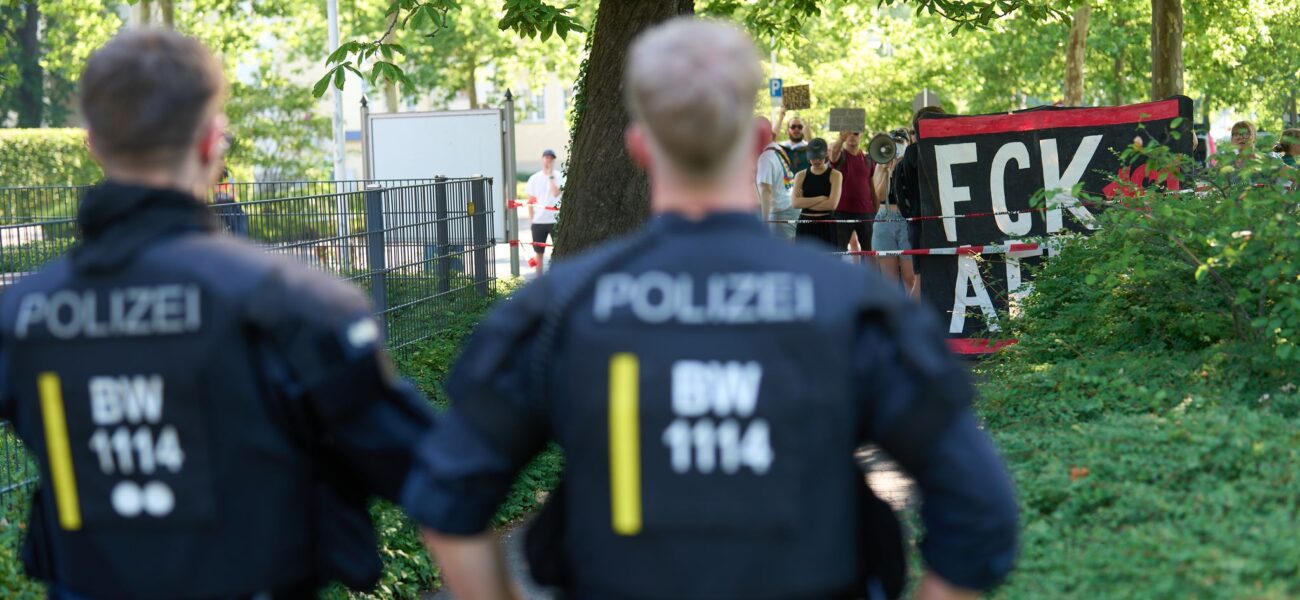
POLICY WIRE — Essen, Germany — The air in Essen wasn’t just thick with autumn chill this past weekend; it was heavy with contention. A palpable sense of dread, yes, but also fierce defiance, settled over the industrial city as Germany’s far-right Alternative for Germany (AfD) party convened its annual gabfest. Forget policy proposals for a moment—the real story wasn’t inside the exhibition hall. It was the vast, roiling human ocean outside, a furious repudiation that seemed to dwarf the very gathering it opposed.
Because, for many, this wasn’t just another party meeting; it felt more like a national reckoning. A chilling barometer for a society struggling to reconcile its liberal democratic ideals with an unsettling lurch to the right. Folks didn’t just show up to wave placards; they showed up to shout, to be heard, to make damned sure nobody forgot the historical baggage this kind of nationalist fervor carries. Tens of thousands of people took to the streets, far outnumbering the party delegates.
“Look, they can shout all they want,” declared Alice Weidel, co-leader of the AfD, her voice crisp and unyielding at a pre-convention press briefing. “But the simple truth is, we’re not just a party anymore; we’re the inconvenient mirror reflecting what millions of Germans genuinely feel. Their outrage only proves our relevance.” Weidel, ever the strategist, knows this political theater well. She thrives on it.
But the mirror, as she puts it, reflects more than just domestic anxieties. The party’s steadfast anti-immigration stance, its critique of Islam, — and its Euroscepticism ripple outward. Consider Pakistan, for instance, a nation grappling with its own internal instabilities, whose citizens, like so many others, once looked to European nations—Germany especially—as bastions of stability and opportunity. When Germany’s political discourse swerves so sharply right, fueled by a populist fervor that often casts immigrants as the ‘other,’ it impacts perceptions, policy, and lives halfway across the world. It’s not a stretch to connect the dots: fear-mongering here creates tougher asylum conditions there.
“This isn’t about protest; it’s about safeguarding democracy itself, a non-negotiable principle for our nation,” remarked Saskia Esken, co-leader of the center-left Social Democratic Party (SPD), her tone stark in a widely circulated social media post before the weekend. “What we’re seeing isn’t just legitimate dissent; it’s an attempt at eroding the very foundations of our pluralistic society.” That sentiment echoes loudly across the political spectrum, particularly among those who remember Germany’s darker chapters.
The AfD’s ascent isn’t some statistical blip, either. Recent polling from Infratest dimap, a respected public opinion research institute, has consistently shown the party hovering around 20-22% nationally. That’s a truly uncomfortable leap from its single-digit figures just a few years back. It’s also a sobering thought, particularly for the established parties, many of whom are still scratching their heads, wondering how to halt this momentum. It’s tough going.
📄 POLICY WIRE WHITEPAPER PUBLISHED: PAKISTAN'S NATIONAL SECURITY POLICY PRIORITIES
👉 READ BY CLICKING HEREThe party’s leaders, of course, presented a united, confident front inside the convention hall. They debated policy—European Union reform, climate change skepticism, traditional family values. All of it neatly packaged to appeal to a demographic feeling left behind by globalization, exasperated by energy transitions, and uneasy with a rapidly changing cultural landscape. And for better or worse, their message finds ears, — and more crucially, ballot boxes. It doesn’t matter what the protesters yell outside; those voters, they’re not listening. Germany’s fault lines are exposed, plain for all to see.
What This Means
The Essen convention, cloaked in controversy and street demonstrations, offers more than a glimpse into German domestic politics; it serves as a stark metaphor for broader European struggles. This isn’t just about the AfD flexing its muscles; it’s about the mainstream’s struggle to find a credible, compelling counter-narrative against populist surges. Economically, their policies could spell deep instability for a Germany deeply intertwined with European markets and global supply chains. A German pull-back from EU integration or an aggressive shift in trade posture would send shivers through economies from Budapest to Balochistan. And politically? Well, the normalization of the far-right in Europe’s largest economy empowers similar movements across the continent. It signals that certain previously unthinkable rhetoric is now not just acceptable, but politically potent. It suggests that foundational liberal values, once considered sacrosanct, aren’t immune to relentless erosion. We’re in for a bumpy ride, that’s for damn sure. What happens in Essen doesn’t stay in Essen—it reverberates through capitals and communities worldwide, especially those impacted by migration policies and geopolitical shifts.
The next general election might be some way off, but the battle for Germany’s soul, and perhaps Europe’s, is happening right now, out in the streets, in the polling numbers, and, unfortunately, within the unsettling echo chambers of populist rhetoric. It’s ugly. It’s loud. And it’s not going away quietly. This dynamic, incidentally, isn’t exclusive to Europe. Nations everywhere, from the Levant to Latin America, grapple with their own profound internal schisms and rising authoritarian currents, often ignited by similar sparks of economic grievance and cultural anxiety. It’s a messy global affair, truly.