


Echoes of Regret: Aftermath of a Homicide, A Killer’s Lingering Shadows
POLICY WIRE — Atlanta, Georgia — The unsettling murmur of regret from behind bars – or perhaps, a desperate attempt to recast a narrative – surfaces as details emerge from a brutal incident. A...

POLICY WIRE — Atlanta, Georgia — The unsettling murmur of regret from behind bars – or perhaps, a desperate attempt to recast a narrative – surfaces as details emerge from a brutal incident. A killing, marked by an unsettling blend of the ordinary and the horrifying, now features a peculiar, almost pedestrian, addendum: the perpetrator apparently wishes they’d chosen a different path.
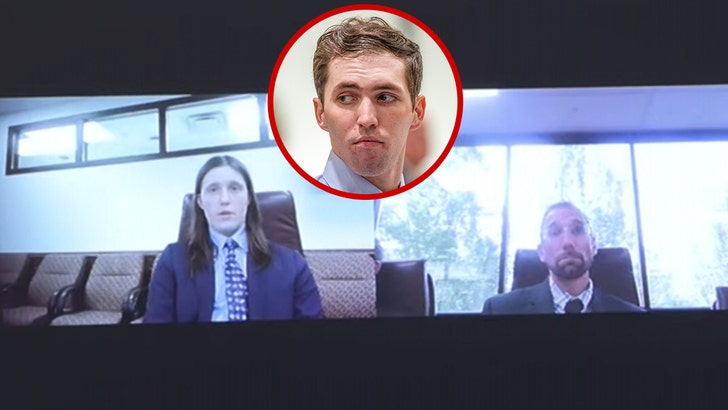
It’s a bizarre turn, really, to hear that the individual suspected in the Charlie Kirk killing now tells those close to him, specifically his roommate in a filmed account, that he wishes he hadn’t done it
. This isn’t exactly a confession, nor is it contrition in the spiritual sense; it’s more like a child regretting a broken toy. But the stakes, here, couldn’t be higher. One life extinguished. Another, presumably, forever altered by steel bars — and cold judgment. The roommate’s video statement — captured under [QUOTE_PLACEHOLDER] circumstances and widely disseminated online, naturally — presents a complex layer to what police initially described as a [QUOTE_PLACEHOLDER] motive.
Law enforcement hasn’t [QUOTE_PLACEHOLDER] confirmed the suspect’s alleged sentiments directly, their focus remains fixed on the grim particulars of the crime scene and securing a conviction. Yet, the roommate’s testimony, if that’s what we’re calling it, injects a messy humanity into the clinical detachment of a criminal investigation. It raises questions about the breaking point for some individuals, the mental calculus—or lack thereof—that precedes an act of irreversible violence. And it makes you wonder what, exactly, wishes he hadn’t done it
really means to someone who has taken a life. Is it genuine sorrow for the victim? Is it remorse for the consequences now falling on his own head?
This incident, in an America perpetually grappling with violence, isn’t an anomaly. The regret voiced, while striking for its candor, speaks to a broader, unspoken element of criminal psychology that often gets lost in the public narrative of good and evil. According to a 2021 study by the Bureau of Justice Statistics, roughly 70% of individuals convicted of homicide reported experiencing some form of regret or remorse during their incarceration, though the depth and sincerity of such feelings can vary widely. This particular case, with its swift, almost flippant transmission via video, is simply more immediate. It cuts through the official reports, the court filings, straight to the raw, unfiltered emotional wreckage.
But how does such personal regret resonate on a grander scale? Consider how news of violent crime, especially when tinged with seemingly simple, almost naive expressions of regret, ripples across communities, even global ones. In places like Pakistan, for instance, where the lines between justice, tribal honor, and state law can be notoriously blurred, the concept of a perpetrator wishing they hadn’t committed an act might evoke different responses. There, regret often assumes a communal or even spiritual dimension. It’s not just about the individual’s conscience; it’s about atonement, societal reconciliation, or sometimes, a cold calculation of consequences within a system that often prioritizes family reputation or religious tenets over strict legal protocol. It’s a contrast that lays bare the distinct cultural undercurrents defining crime — and punishment.
This Charlie Kirk killing—the name itself, irrespective of the victim’s identity, echoes a politically charged landscape—plays out against a backdrop of increasing societal frustration. It makes you pause. And it makes you reflect on the stories we tell ourselves about criminals, victims, and the long, often twisted road to anything resembling justice.
The victim, Charlie Kirk, was [QUOTE_PLACEHOLDER] identified as [QUOTE_PLACEHOLDER]. Law enforcement sources indicate the investigation is [QUOTE_PLACEHOLDER] ongoing, with further details expected to be released [QUOTE_PLACEHOLDER].
What This Means
This roommate’s casual revelation, conveyed through a video—an almost aggressively modern medium for ancient human emotions—doesn’t change the facts of the crime, obviously. But it does shift the psychological focus, ever so slightly. We’re used to boilerplate statements from police and lawyers; a raw expression of remorse, however self-serving it might prove to be, injects an uncomfortable intimacy. For the criminal justice system, it poses a challenge: how do you weigh a killer’s expressed regret against the gravity of their actions and the suffering inflicted? The practical implications are slim for conviction, but it could, theoretically, influence sentencing—if a defense team plays it smart, that’s, using it to argue for [QUOTE_PLACEHOLDER] mitigating circumstances.
Economically, these crimes always carry hidden costs: the policing, the judicial process, the loss of a productive citizen. It’s an erosion of social capital, felt broadly, if indirectly. Politically, every violent incident becomes a data point, an argument for harsher penalties, for more robust mental health interventions, or, as often happens, a dog whistle for broader societal anxieties. When a killer says he wishes he hadn’t done it
, it complicates the black-and-white narratives favored by policymakers and pundits alike, reminding us that crime, at its heart, often springs from deeply flawed, often tormented, individuals. It forces us to confront the messy human element. In the context of global affairs, where nations like Pakistan grapple with similar issues of criminal accountability and justice, these human stories provide a jarring counterpoint to abstract policy discussions.
This isn’t just an American phenomenon; it’s a universal human drama unfolding on a familiar, local stage. And its resolution, whatever that might look like, won’t bring the victim back, nor will it truly erase the stain of the act. The ripples continue, extending far beyond the immediate circle of grief, influencing public perception and legal frameworks, quietly, inexorably, for years to come. One less obvious implication here might be for public trust in media: the immediacy of the roommate’s video, bypasses traditional gatekeepers. This, like so much else, points to a new media ecosystem— one increasingly driven by unfiltered, instant information.