


Germany’s Soul at Stake: AfD Convention & Europe’s Future
Germany's AfD convention sparks national protests and exposes Europe's deep divides. Understand the rise of nationalism and its critical impact on the continent's future.

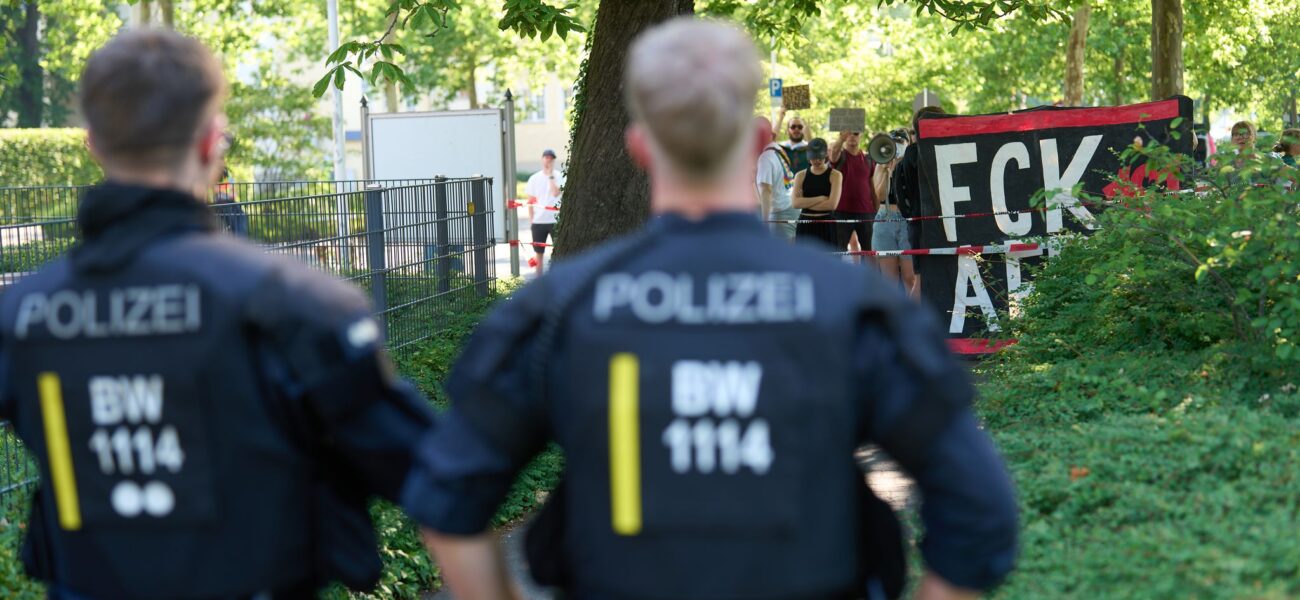
POLICY WIRE — Berlin, Germany — You know a political convention is going to be something else when the buildup features less chatter about policy platforms and more about the barricades. Forget your standard delegate speeches and carefully choreographed applause lines; Germany’s next big political showdown isn’t just happening inside a stuffy convention hall. Nope. It’s set to play out on the streets, an inescapable clash between those who believe they’re taking back their country and an incredibly broad, determined coalition that fears precisely what they’d take it back to.
It’s become a peculiar, almost theatrical tradition, hasn’t it? The further a political party veers right, the more certain you can be of two things: fervent support from one slice of the electorate, and an equally fervent, perhaps even desperate, rejection from another. And that’s precisely what we’re witnessing in Germany right now, where the AfD — the Alternative for Germany, folks who don’t exactly shy away from controversy — are gearing up for their national assembly. But, as seems to be the custom with these sorts of gatherings, it isn’t just their internal wrangling making headlines. It’s the promise of [QUOTE_PLACEHOLDER], which for some, is less a threat — and more a national civic duty.
Germany, with its not-so-distant memories, tends to view the rise of hardline nationalism with a certain trepidation, and honestly, for good reason. It’s not just a debate over taxes or environmental regulations; this stuff touches the very fabric of identity. The AfD, a party that began with skepticism over the Eurozone, has pretty swiftly pivoted to an agenda critics call anti-immigrant, anti-EU, and disturbingly exclusionary. They’ve managed to tap into a very real wellspring of public discontent, often framing it as a pushback against a perceived cultural erosion and economic uncertainty. Their ascent, especially in the country’s eastern states, has been stark. Recent polling suggests the party now commands around 18% of voter intentions nationally, according to a recent Forsa poll cited by Tagesschau. That’s a significant chunk, an uncomfortable reality check for Germany’s political establishment.
But this isn’t a one-sided story. Not by a long shot. The counter-movement, the throngs preparing to stand shoulder-to-shoulder against the AfD’s vision, are diverse. They include everyone from seasoned anti-fascist groups and student activists to concerned citizens, labor unions, and religious organizations. They’re planning to show up. They’re planning to make their voices heard. And they aren’t pulling any punches, claiming they represent the real Germany: a pluralistic, open society.
For nations watching from afar, particularly in the Muslim world, such as Pakistan, these developments aren’t just domestic German headlines. They carry weight. They spark conversations, often uneasy ones, about the future of multi-cultural societies in the West and the treatment of diaspora communities. When a party like the AfD gains ground on a platform that often includes strict immigration controls and rhetoric questioning the integration of Muslim communities, it sends shivers down spines globally. It’s a stark reminder for policymakers in Islamabad, for instance, of the potential fragility of acceptance and the constant battle against Islamophobia abroad—a narrative that’s never too far from home. And the perceived normalization of such ideologies in a powerhouse like Germany creates a global ripple effect, questioning collective commitments to diversity and human rights. It’s not just about one country; it’s about the future direction of a whole continent.
The AfD’s leadership, meanwhile, maintains their focus is simply on addressing what they consider mainstream public concerns. [QUOTE_PLACEHOLDER] they might declare, [QUOTE_PLACEHOLDER] as they’ve said before. Their strategy seems predicated on leveraging disaffection with the established parties, portraying themselves as the only authentic voice for German national interests. But for those on the other side of the protest line, that claim rings hollow. For them, the party’s proposals for restrictive immigration policies and an insular national identity sound less like a return to traditional values and more like a retreat from progress.
📄 POLICY WIRE WHITEPAPER PUBLISHED: PAKISTAN'S NATIONAL SECURITY POLICY PRIORITIES
👉 READ BY CLICKING HEREIt’s a struggle for the soul of the country, no less. You see, the demonstrations aren’t just against a single party. They’re a symbolic fight for what Germany should stand for in the 21st century. It’s easy to dismiss political protests as mere noise. But sometimes, they’re the guttural roar of a citizenry grappling with profound shifts. And for better or worse—mostly worse, I’d argue—the AfD convention is set to be the stage for precisely that kind of visceral national debate.
What This Means
This escalating confrontation in Germany isn’t an isolated incident; it’s a bellwether for wider European malaise. The AfD’s staying power, despite frequent controversies and accusations of extremism, indicates a persistent vein of anti-establishment sentiment. Economically, their policies — especially potential calls for a ‘Dexit’ or further EU disintegration — could introduce massive instability to the Eurozone, destabilizing markets far beyond Frankfurt. For businesses, this translates into an unpredictable regulatory and social environment, deterring investment and complicating workforce integration, particularly for skilled migrants whose contributions are increasingly vital for an aging population. The ripple effects could even touch global tech giants dependent on Europe’s stability.
Politically, the entrenched presence of the AfD forces mainstream parties into a defensive posture. It pushes the Overton window — that range of politically acceptable ideas — further right, making what was once considered fringe suddenly discussable. This ideological drift could make coalition building tougher, leading to more fractious governments and policy paralysis. It also emboldens similar nationalist and populist movements across the continent, creating a network of anti-democratic sentiment that poses a direct challenge to the European Union’s foundational values. Consider the historical parallels in Europe, the echoes of tensions between various Slavic states, now updated for the digital age but with the same core ingredients of nationalism and xenophobia. This isn’t merely an internal German squabble; it’s a test for Europe’s liberal democratic resilience. The outcomes, whichever way they swing, will inevitably reshape European integration, global migration policies, and perhaps even Germany’s standing as an anchor of stability.