


The Gridiron’s Shadow Play: Pittsburgh’s Receiver Riddle and the Cold Calculus of NFL Ambition
POLICY WIRE — Pittsburgh, USA — It’s July, and the gladiators haven’t even hit the sand, but the blood sport has already begun. Not on the field, not yet, but in the clandestine gyms and...

POLICY WIRE — Pittsburgh, USA — It’s July, and the gladiators haven’t even hit the sand, but the blood sport has already begun. Not on the field, not yet, but in the clandestine gyms and training facilities, where young men hone their craft with an intensity that would make a sovereign nation’s border patrol seem laid back. This year, for the venerable Pittsburgh Steelers, that arena of ambition centers on a seemingly modest prize: the third wide receiver slot.
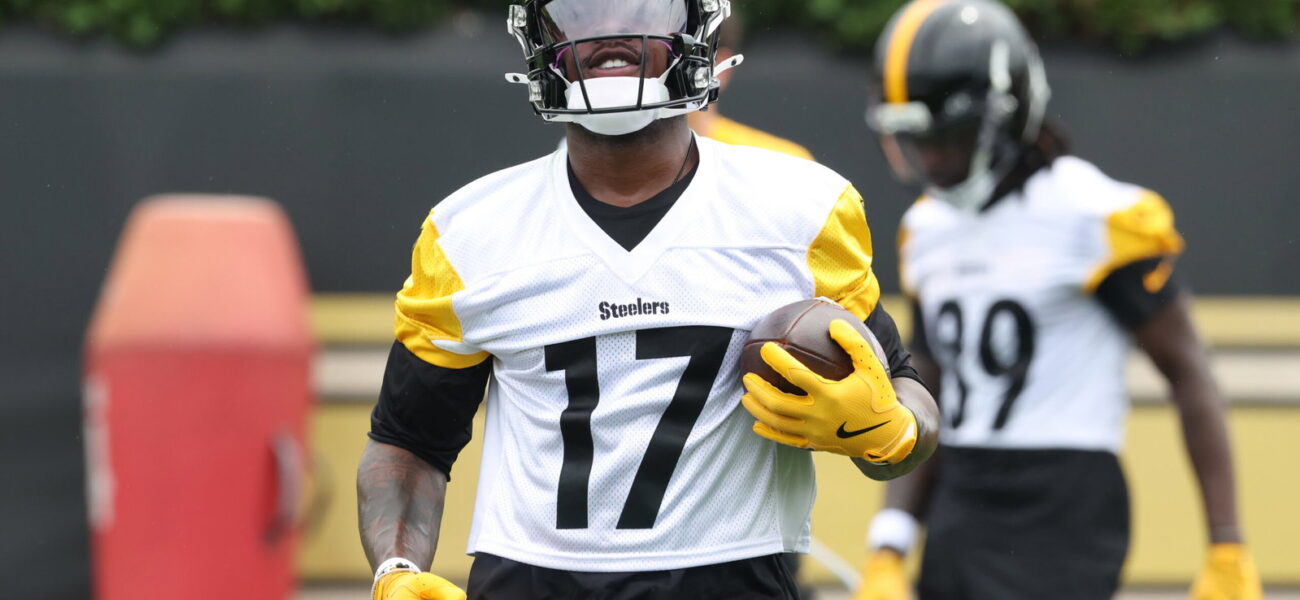
It sounds mundane, doesn’t it? Just another cog in the NFL’s perpetually turning machine. But here’s the rub: in a league where explosive offenses rule, that ‘third option’ is no longer a benchwarmer’s role. It’s a crucial node in a multi-million-dollar offensive ecosystem, often the difference between playoff glory and a disappointing winter. And because the Steelers, bless their traditionalist hearts, have limped through recent seasons with pass-catching rooms thinner than a diplomat’s excuse, this particular skirmish, between Germie Bernard and Roman Wilson, carries an unusual weight. It’s less a competition, more an existential struggle for one man’s career trajectory, another’s survival.
Bernard, the fresh face from Alabama, arrives draped in second-round draft capital—47th overall, mind you. The kind of pick that screams ‘future cornerstone’ on draft night but often ends up just screaming. He churned out 1,656 yards and nine touchdowns across two collegiate seasons, showing a reliable pair of hands and enough athletic wiggle to justify the early investment. The scouts love his tape; analysts have already slotted him into a long NFL career. But, talent on paper means squat when the pads come on. The league is littered with could-haves.
Then there’s Wilson. His story is decidedly grittier. He was a champion at Michigan, a big-play threat with 20 touchdowns over four years. Drafted in 2024, his rookie year dissolved into a single, injury-plagued appearance. Last season? A handful of decent outings before being unceremoniously — and healthily — benched by Coach Mike Tomlin. He did manage 74 yards — and two scores against Green Bay, a tantalizing flash of what might be. In total, he notched a meager 12 catches for 166 yards. So he’s not exactly brimming with a track record of reliability, is he?
But here’s a wrinkle: despite vying for the same, precious role, the pair aren’t throwing jabs in the press. Oh no, it’s far more civilized, far more modern than that. They’ve been spotted sweating together under the watchful eye of a ‘Route God’—James Everett Jr., a celebrity coach who previously shaped the serpentine paths of guys like Diontae Johnson and Antonio Brown. And I can tell you, the old guard would’ve had their gladiators keeping their training rituals secret, hoarding every single tactical advantage like a state secret. But this? This is all public, all carefully curated social media content, showing off their newfound explosiveness — and footwork. It’s a calculated gamble, showcasing improvement while acknowledging a shared grind.
Mike Tomlin, never one for expansive declarations, framed the situation with characteristic understatement. “We don’t coddle talent here,” he once quipped, possibly referring to a player with an entourage the size of a small congressional delegation, but it holds true for these young men. “The depth chart is a fluid document. The only thing that solidifies it’s consistent execution when it matters.” And his message is pretty clear, isn’t it? Don’t talk about it; be about it.
One veteran scout, speaking on background and clutching a stale coffee, laid out the stakes even more plainly: “Look, a kid like Bernard, second-rounder, he’s got at least a two-year leash because of the draft capital. Wilson? He’s playing for his life. This isn’t just about WR3 for the Steelers; it’s about earning that next contract in this league. They’ve spent almost 15% of their total cap this year on their top two wide receivers. The third guy, you get him cheap, — and you need him to produce like a much pricier option. It’s brutal economics.” That’s a stark contrast to how even middle-tier players are valued in the English Premier League, where salary growth continues to escalate dramatically, reshaping the financial landscape of European sports.
What This Means
This positional battle isn’t merely a football story; it’s a micro-drama reflecting larger tectonic shifts in both sports business and team-building philosophy. On one hand, you have the economics of scarce talent: an NFL roster spot is arguably one of the most exclusive commodities on the planet, contested with a ferocity few outside military or high-finance circles could comprehend. The ‘political’ aspect here is fascinating—how a coaching staff, driven by performance metrics and contract values, navigates loyalty, potential, and the harsh realities of a win-now league. There’s an undercurrent of, dare I say, almost diplomatic maneuvering, as the front office tries to balance the long-term investment in Bernard against the proven, albeit inconsistent, effort of Wilson. Who gets the resources? Who gets the trust?
Because, make no mistake, every single one of these professional sports sagas, even this one, eventually filters through to an audience, globally. Fans in Islamabad or Kuala Lumpur, often tuning into these games via sometimes questionable internet feeds, invest their hopes and frustrations in these narratives. They appreciate the gladiatorial contest just as much as a Pennsylvanian factory worker. It’s why global streaming rights for leagues like the NFL and NBA are becoming battlegrounds in their own right, generating billions. The competitive intensity of Pittsburgh’s internal jockeying for a WR3 spot isn’t just felt on American soil. And these players know it. This struggle defines their professional viability in a globalized sports market that ruthlessly prioritizes performance.
The Steelers, having seen too many seasons evaporate because of a receiving corps that couldn’t reliably haul in the pigskin, aren’t just looking for a WR3. They’re looking for a dependable insurance policy, a safety net. Whether it’s Bernard’s youthful exuberance or Wilson’s grit that eventually wins out remains to be seen. But what’s clear is that whoever earns that coveted slot will have done so through a grueling gauntlet, an internal contest reflecting the cutthroat nature of pro football, and the even colder logic of its finances. Pittsburgh’s training camp starts on July 28. The show’s about to begin.