


Mexico Drops Diplomatic Gloves: Sovereign Fury Over Migrant Deaths Ignites US Border Crisis
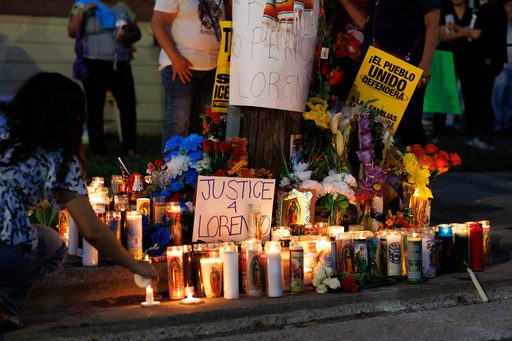
POLICY WIRE — MEXICO CITY, Mexico — When Lorenzo Salgado Araujo, a man who’d spent decades building a life north of the border, was shot dead in Houston, the measured tones of international...

POLICY WIRE — MEXICO CITY, Mexico — When Lorenzo Salgado Araujo, a man who’d spent decades building a life north of the border, was shot dead in Houston, the measured tones of international relations shifted. It wasn’t just another unfortunate incident; it was, for Mexico City anyway, the last straw—a crimson smudge across an already fraught diplomatic ledger. You see, after years of quietly lodging complaints, of polite notes sent winging their way to Washington, the Mexican government’s patience seems to have finally worn thin.
President Claudia Sheinbaum wasn’t playing nice anymore. On Thursday, she declared, in no uncertain terms, that Mexico would now “move beyond diplomatic channels.” That’s a diplomatic phrase that really means: [QUOTE_PLACEHOLDER] It marks a distinct, frankly aggressive, turn from an administration that has, to be fair, always walked a fine line. It’s got a complex relationship with its powerful northern neighbor, balancing trade deals with citizens’ rights. And this isn’t a gentle nudge; it’s a direct shove.
What’s spurred this sudden, dramatic escalation? The death of Salgado Araujo, allegedly at the hands of an ICE agent in Houston. Sheinbaum characterized the killing as something that “is not only sad and regrettable, but also appears to have been targeted.” The details are hazy, as they often are in such messy affairs. U.S. authorities claim the agent acted in self-defense, saying Salgado Araujo had been driving without authorization and then tried to ram an agent. Mexico’s version, implied in Sheinbaum’s sharp rhetoric, differs significantly. He was, after all, transporting a work crew, a perfectly normal day’s labor.
The core issue here goes much deeper than one tragic shooting, though. Mexico’s Foreign Minister Roberto Velasco laid it out Thursday: criminal charges against individuals and civil lawsuits against the private companies running US detention centers. This isn’t just about Salgado Araujo; it’s about a pattern. The Mexican government reports that 14 Mexicans have died while in ICE custody — and three more during ICE operations. Think about that for a second. For years, Mexico tried diplomacy, supporting families, dispatching consulates to check on detainees. It even complained to the U.N. High Commissioner for Human Rights. None of that really seemed to get through, did it?
Now, they’re taking it straight to U.S. state prosecutors — and the Department of Justice, asking for criminal charges against those responsible. And they’re going after the facility operators too, an attempt to dry up the profit motive for what they consider [QUOTE_PLACEHOLDER] It’s a bold move, maybe even a desperate one, to gain traction where traditional diplomatic routes yielded little more than sympathetic head nods.
This entire ordeal mirrors a sentiment familiar to many nations outside the traditional power blocs, nations that often watch helplessly as their expatriate citizens face often inhumane treatment in foreign lands. Think of countries in South Asia, like Pakistan, grappling with the dignity and rights of their laborers abroad, especially in wealthier, Western-aligned countries. They, too, face the conundrum of advocating for their people without completely alienating crucial economic partners. It’s a delicate diplomatic ballet, until, like Mexico, they decide they’ve had enough. There’s a certain, almost tragic, universal resonance here—the weaker nation trying to exert sovereign will over its citizens on stronger soil, often with minimal leverage.
And Sheinbaum’s government, you might remember, has already cracked down on organized crime quite fiercely, pushed by demands from Washington to stem the flow of drugs. So this isn’t just some abstract complaint; it’s personal for Mexico. It represents an acute challenge to national dignity and sovereignty, an almost painful reassertion of worth on the international stage. But you have to ask, what will this ultimately achieve? The requests for criminal charges, after all, carry [QUOTE_PLACEHOLDER] in U.S. courts.
Sheinbaum is under intense domestic pressure to deliver on a strong stance regarding her citizens’ rights. She vowed, “We are going to do everything in our power, because we cannot stand silent” in the face of deaths of Mexicans [QUOTE_PLACEHOLDER] That’s a pretty powerful statement, wouldn’t you say? It also, in its directness, signals a shift away from the traditional, often muted, discourse of international relations. The government’s approach indicates a fundamental disillusionment with the diplomatic framework that was supposed to protect its citizens.
What This Means
This isn’t just a squabble between neighbors; it’s a symptom of a larger, systemic frustration. Mexico’s decision to bypass customary diplomatic protocols isn’t just about a tragic death; it’s a declaration of impatience, a recognition that the conventional methods have failed. The political implications are immediate and sharp: a further erosion of trust between two critical partners, right as both sides are navigating complex economic renegotiations and trying to control chaotic border issues. It’s hard to imagine these aggressive legal maneuvers smoothing things over. They’re more likely to throw a wrench into existing agreements, particularly if the US sees them as an undue infringement on its own judicial sovereignty.
Economically, this escalation introduces uncertainty. Stability is currency in trade, — and increased diplomatic hostilities seldom foster it. Businesses and investors in both nations thrive on predictable relationships, something this latest move actively undermines. Could it impact future trade negotiations, perhaps leading to more contentious debates over labor practices or even border management costs? Absolutely. Such a breakdown of relations creates ripples—for instance, affecting migrant remittances back to Mexico or the labor pool for American agriculture and construction. if Mexico pushes civil lawsuits against detention centers, it could expose systemic vulnerabilities, setting a precedent for other nations to challenge the treatment of their citizens within the US correctional or immigration systems. It’s an inconvenient truth, isn’t it? When diplomacy stops working, the legal system becomes the new battleground, but it’s often a far more destructive one. The old playbook, it seems, has just been thrown out the window.