


Mexico’s Legal Gauntlet: Demands Criminal Charges for Migrant Deaths, Upping Ante with U.S.
POLICY WIRE — Mexico City, Mexico — Forget polite diplomatic notes. That era, it seems, has just evaporated like desert heat. Mexico, tired of what it views as a grim tally of ignored human rights...

POLICY WIRE — Mexico City, Mexico — Forget polite diplomatic notes. That era, it seems, has just evaporated like desert heat. Mexico, tired of what it views as a grim tally of ignored human rights abuses, has thrown a legal gauntlet across the Rio Grande. It isn’t just complaining anymore—it’s demanding criminal prosecutions against those allegedly responsible for the deaths of 17 Mexican citizens in U.S. custody or during aggressive immigration enforcement operations.
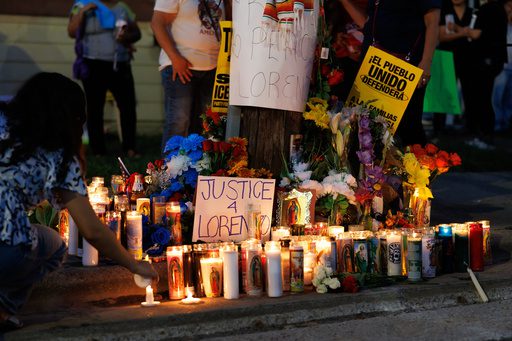
The latest, sharpest prick to an already frayed relationship? The recent, fatal shooting of Lorenzo Salgado Araujo, a Mexican national, by an Immigration and Customs Enforcement (ICE) agent in Houston. And that’s pushed Mexico right over the edge. It’s not just a sad story; it’s an incandescent outrage simmering, then boiling over.
Mexican President Claudia Sheinbaum didn’t mince words this week. “We’ve exhausted patience, haven’t we? This isn’t just about papers; it’s about people dying. Our people. And we won’t sit idly by while they’re targeted,” she declared, her tone unwavering. Her foreign minister, Roberto Velasco, added a slightly more measured, yet equally firm, assessment. “It’s an appeal to the rule of law, really—even if the channels are informal. The world watches how justice is dispensed, or denied, across borders, doesn’t it? This step is critical for sending a message about human dignity.”
For decades, Salgado Araujo called America home. He was doing honest work, ferrying a construction crew to a site, when his life abruptly ended. U.S. Department of Homeland Security claims he disregarded orders, even tried to ram an agent. The agent, they say, acted in self-defense. Mexico, though, hints at something darker, calling the killing “not only sad and regrettable, but also appears to have been targeted.” That’s a serious accusation, one loaded with potentially explosive implications.
The call for criminal charges, directed at state prosecutors — and the U.S. Department of Justice, certainly carries no binding legal weight in the U.S. — not directly, anyway. But its diplomatic and political punch? That’s substantial. Coupled with impending civil lawsuits against the private companies operating U.S. detention centers, this isn’t a mere suggestion; it’s a declaration of intent. Mexico means to disrupt business as usual.
Sheinbaum’s administration had, up until now, opted for conventional diplomatic maneuvers. They’d sent stern diplomatic notes, taken grievances to the Inter-American Commission on Human Rights, and even lodged complaints with the U.N. High Commissioner. But 17 lives—that’s a figure difficult to absorb quietly. According to official Mexican government figures, fourteen Mexican nationals have perished while held in U.S. Immigration and Customs Enforcement (ICE) custody, with an an additional three losing their lives during operational encounters. And when these deaths continue despite formal protests, well, what else is a government to do but try a different approach?
The timing is exquisite, or perhaps disastrous, depending on your vantage point. U.S.-Mexico relations under the Trump administration are, shall we say, a high-wire act performed over a vat of gasoline. President Trump has persistently threatened punitive actions against Mexico over everything from border security to drug cartels, even musing about military intervention. Sheinbaum, in turn, has ramped up her own government’s crackdown on organized crime. But she’s also navigated carefully, striving to maintain amicable ties amidst fraught negotiations over their bedrock free trade agreement.
This aggressive new stance adds another, fiery variable to that delicate calculus. It frames the entire migration issue not just as a border control problem but as a deeply rooted human rights crisis, placing significant pressure on both governments. Because at the end of the day, sovereign borders don’t somehow nullify human dignity. You just can’t say that enough, can you?
📄 POLICY WIRE WHITEPAPER PUBLISHED: PAKISTAN'S NATIONAL SECURITY POLICY PRIORITIES
👉 READ BY CLICKING HEREIt’s a situation that echoes far beyond the Americas. Nations worldwide, particularly those with vast diasporas, often grapple with the complex issue of protecting their citizens abroad when host country laws or enforcement practices fall short. Look at the thousands of South Asian and Pakistani laborers—sometimes facing dire conditions, even outright abuse—in the Gulf states. Governments, often powerless beyond diplomatic appeals, watch as their own face exploitation or worse, just as Mexico watches its citizens. It’s a common, infuriating theme in international relations: whose human rights truly matter beyond your immediate sovereign purview?
What This Means
This move is a sharp pivot for Mexico, moving beyond symbolic gestures to an explicit call for individual accountability. Politically, it signals a new resolve from Sheinbaum, a message delivered domestically and internationally that Mexico won’t simply accept the status quo. For the U.S., it creates an awkward diplomatic incident and public relations nightmare, forcing American officials to address specific allegations of misconduct rather than generic immigration policy. The legal pathway might be rocky—U.S. state and federal authorities are under no obligation to act on Mexico’s request—but the moral pressure is undeniable.
Economically, the impact could be subtle but insidious. Increased friction complicates ongoing trade negotiations and cooperation on transnational issues like drug interdiction, both of which have real-dollar consequences. A climate of perceived impunity for agents could also inflame sentiments within migrant communities, potentially leading to further social unrest and deepening the mistrust between enforcement agencies and the populations they police. It effectively weaponizes human rights in a way that’s much harder to ignore than traditional diplomacy. And that’s a gambit Mexico clearly feels is worth taking.