

Paper River: Bureaucracy, Drought, and a Deserted Rio Grande
POLICY WIRE — ALBUQUERQUE, N.M. — It’s more than just a lack of rain out here, folks. Much more. Down in New Mexico, where the sun beats down with unforgiving intensity, a desertified segment...

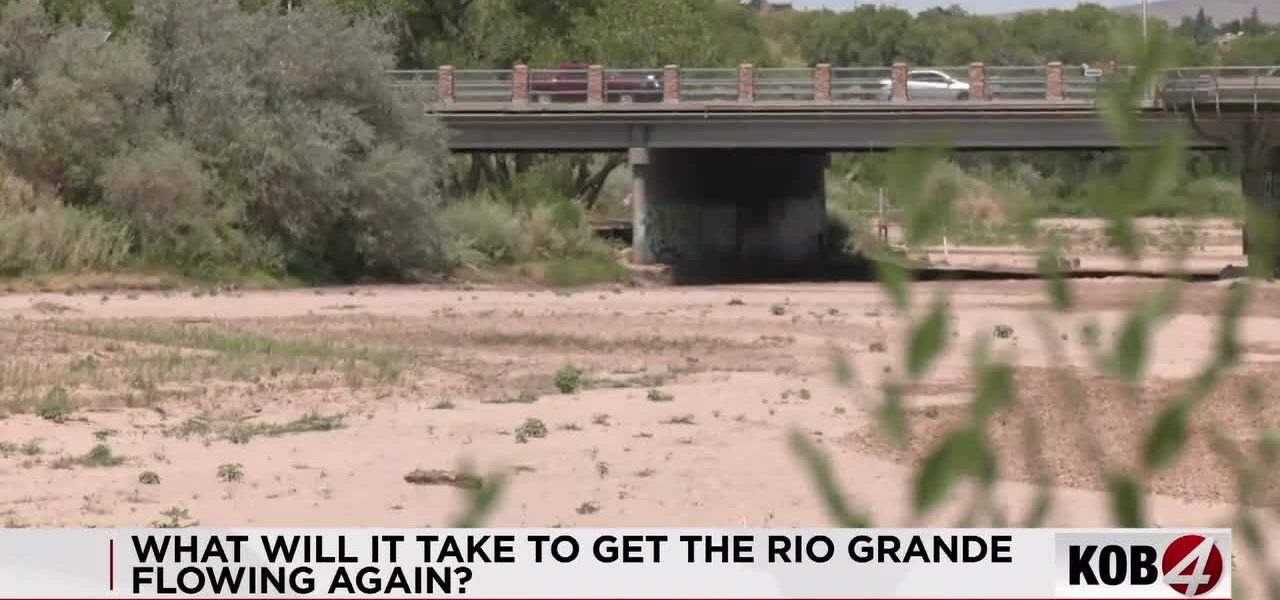
POLICY WIRE — ALBUQUERQUE, N.M. — It’s more than just a lack of rain out here, folks. Much more. Down in New Mexico, where the sun beats down with unforgiving intensity, a desertified segment of the Rio Grande—an 87-mile stretch, to be precise, according to the Middle Rio Grande Conservancy District (MRGCD)—has become a vast, dusty scar on the landscape. And while you’d think in the parched American Southwest, a river drying up is simply ‘nature’s course,’ the truth is far more complex, mired in decades-old agreements and the brutal calculus of interstate water law.
It’s a peculiar sight, isn’t it? A river, famously sung about, once the lifeblood of settlements for millennia, now reduced to cracked earth, walkable. You see folks strolling across its bed, shaking their heads, maybe even cracking a morbid joke about fishing for tumbleweeds. But for those who depend on it—the farmers, the ecologists, the native communities—it’s not funny. It’s a catastrophe playing out in agonizing slow motion. “I’d been here maybe a month ago, — and there was water,” recounted local resident Kat Walker, echoing the shock of many. “Then I came a week ago, and it was like, we literally can walk across the Rio Grande.” That sudden vanishing act, for many, underscores a growing, horrifying realization: this isn’t just a bad year; it’s a new normal.
Jason Casuga, the CEO of the MRGCD, pulls no punches. He suggests this year could be one of the very worst on record for water availability. “There are communities out there that are suffering to a degree that we haven’t seen in a long, long time,” he told reporters, a somber tone coloring his voice. Think about it: farmers north of Isleta Pueblo, sixty days—two entire months—without irrigation. Their livelihoods are withering, their crops failing. It’s not just abstract environmental policy anymore; it’s dinner on people’s tables.
But whose fault is it, truly? Well, certainly the climate plays a hand. But the real villain, in some ways, is bureaucracy itself. New Mexico is beholden to the Rio Grande Compact, an agreement struck back in 1938 with Colorado and Texas. It’s law, mind you, in all three states. This isn’t just some suggestion; it’s a federal mandate divvying up a shrinking pie. And because New Mexico owes water ‘debt’ to its downstream neighbors under this very compact, it’s blocked from storing what little water it gets in upstream reservoirs. Can you imagine? You have water coming in, but you’re legally forbidden from saving it for a rainy—or, rather, a *dry*—day. It’s almost satirical, isn’t it?
“We haven’t violated it yet. We just are behind on our responsibility to deliver water,” Casuga clarified, a touch of frustration detectable in his precise phrasing. Because of this debt, the state loses essential tools in its water management arsenal. It can’t squirrel away precious resources for drought years, leaving everyone — especially the agricultural sector — vulnerable. New Mexico’s Governor Michelle Lujan Grisham, never one to mince words when it comes to state resources, weighed in, though not directly on this story, on previous discussions about compact amendments. “The compact was written for a different century, under different environmental conditions,” she’d stated. “We must work together, but those discussions have to reflect current realities and our communities’ critical needs, not just historic apportionment that no longer fits the ecological facts on the ground.” She’s got a point. And federal inaction simply leaves states to fight among themselves.
It’s like an endless, slow-motion political — and environmental train wreck. Casuga sees glimmers of hope in modernizing the compact, making it more flexible, more responsive to extreme drought. But those changes? They’re like moving glaciers, even with the feds at the table. And as for now, well, it’s still dry. At least, meteorologists are forecasting a strong El Niño, which could bring better snowpack and precipitation later in the year. Because, really, at this point, what choice do we have but to hope for nature’s generosity?
What This Means
The drying Rio Grande isn’t just a local New Mexico story; it’s a bellwether, a stark warning shot across the bow for any region—indeed, for any nation—grappling with transboundary water issues amplified by climate change. Look across the globe to the Indus River Basin, for instance, where Pakistan and India, often at loggerheads, are bound by a treaty from 1960. That compact has, for the most part, held. But as glaciers recede and monsoon patterns shift dramatically, the pressures on that agreement will only mount, potentially sparking far wider geopolitical ramifications. Water, or the lack thereof, isn’t merely an ecological problem; it’s an economic, social, and eventually, a national security crisis. Here in New Mexico, we’re seeing a microcosm of that future, where human innovation struggles against bureaucratic inertia and nature’s relentless pressures. The economic hit to farming communities is direct — and devastating. The cost of failing to adapt these antiquated agreements will be measured not just in dusty riverbeds, but in lost livelihoods and deepening desperation, not just here, but potentially worldwide, from the American Southwest to the parched landscapes of the Middle East and South Asia.