


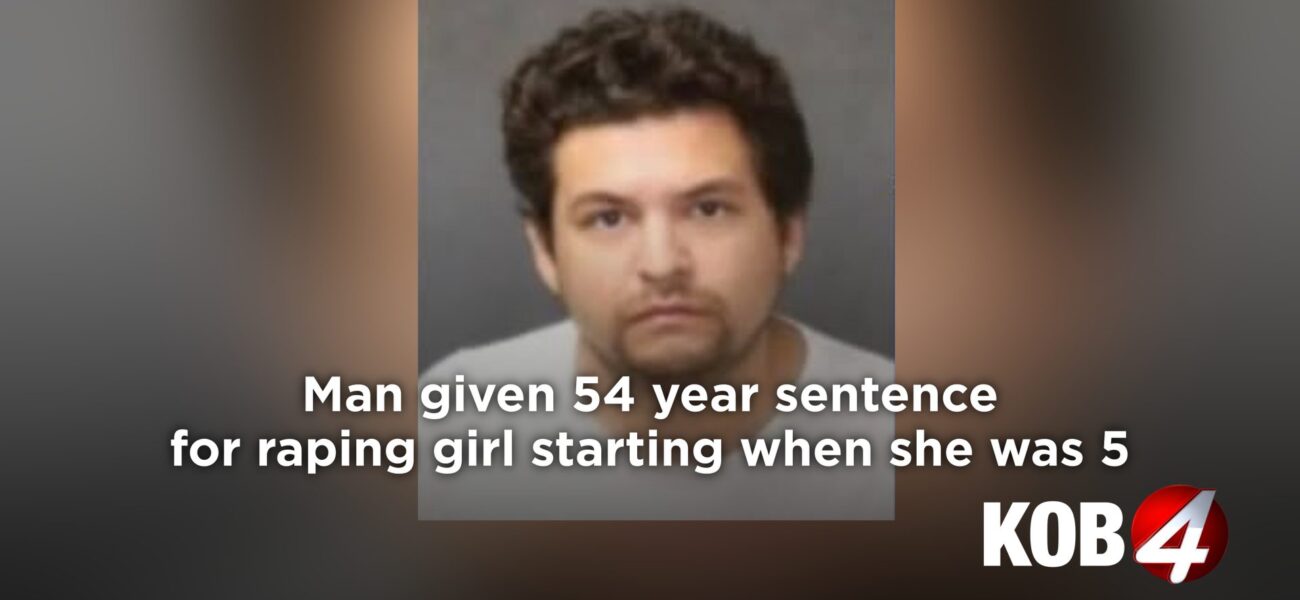
Fifty-Four Years for Shredded Innocence: A Hard Justice, or Just the Beginning?
ALBUQUERQUE, N.M. — For some traumas, there’s no real expiration date. They burrow deep, shaping futures, whispering their ugly truths for decades after the event itself. And while the gavel fell...

ALBUQUERQUE, N.M. — For some traumas, there’s no real expiration date. They burrow deep, shaping futures, whispering their ugly truths for decades after the event itself. And while the gavel fell with a decisive crack in an Albuquerque courtroom this week, consigning one Skye Balboa to 54 years behind bars for the repeated sexual penetration of a child under 13, the cold arithmetic of criminal justice often does little to mend a life so utterly shattered.
It’s a verdict, yes. A consequence for the grotesque violation of a little girl, starting when she was barely old enough to understand the world, much less its malevolence. Balboa, an acquaintance of the victim’s family, didn’t share a roof with his prey, which perhaps made his proximity all the more insidious – a wolf dressed in everyday familiarity. The jury had little trouble connecting the dots, convicting him in February on seven counts of criminal sexual penetration and a singular, but chilling, charge of witness intimidation. One can only imagine the additional layers of terror that implies.
Bernalillo County District Attorney Sam Bregman, who’d originally pushed for a sentence of up to 129 years—a number that certainly carries symbolic weight, if not practical longevity—sounded a weary note of resolution. “No sentence can undo the heinous acts perpetrated against this child,” Bregman stated, his voice likely resonating with the grim reality of such cases. “But we can and will ensure that predators like Skye Balboa are removed from our community for as long as the law allows. It’s a statement about what we, as a society, value.”
Because frankly, we don’t often talk enough about the reverberations, do we? Not just the courtroom drama, but the quiet, agonizing battles fought long after the headlines fade. This particular case, like far too many others, throws a harsh spotlight on the unseen warfare waged within homes and communities. And it’s a conflict that isn’t confined to New Mexico, or even America. From the dusty alleyways of Lahore to the bustling metropolises of Cairo, children remain startlingly vulnerable. Globally, an estimated one in ten children experiences some form of child sexual abuse before the age of 18, according to UNICEF reports, with many cases in countries like Pakistan going unreported due to profound social stigma and fear of reprisal, compounding the silent despair. They’re battles often hidden beneath layers of cultural taboo or systemic indifference, making justice a distant mirage for countless victims.
“Justice, in these situations, isn’t a single event; it’s a lifelong process for survivors,” remarked Dr. Aisha Khan, a global advocate for child protection policies with extensive work across South Asia. “While a lengthy prison term offers a measure of punitive closure, true societal progress comes from dismantling the very conditions that allow such abuses to fester, from bolstering protective nets to fostering environments where reporting isn’t met with additional harm. It’s a challenge that unites every corner of the world, from Albuquerque to Islamabad, even if the cultural context shifts.”
It’s heavy stuff, not for the faint of heart, but necessary. Policy Wire has covered the insidious nature of gender-based violence before, often highlighting the unspoken war many face within their own homes—a war whose earliest casualties are tragically often children. Balboa’s decades-long confinement offers a definitive end to one story, a brutal, hard-won victory. But it doesn’t mark the end of the wider struggle.
What This Means
This substantial sentence, handed down by District Judge Stanley Whitaker, sends an undeniable message to potential offenders within Bernalillo County: the justice system, however slow or imperfect, isn’t playing around when it comes to crimes against children. But let’s be real, a half-century behind bars for one man hardly erases the scar tissue from a child’s psyche, or the gaping wound it leaves in a family and community. This isn’t just about punishment; it’s a stark reminder of systemic failures.
Economically, the societal cost of child sexual abuse is staggering—from mental healthcare burdens to lost productivity, the ripple effects stretch across generations. Politically, such cases often reignite calls for stricter penalties, better reporting mechanisms, and more robust preventative education. The judicial process, while concluding Balboa’s immediate fate, opens conversations around how our institutions protect the most vulnerable. Are reporting systems user-friendly enough? Do law enforcement agencies have the resources to investigate complex, sensitive cases involving minors? And are our social safety nets strong enough to intervene early?
From an international relations perspective, this New Mexico conviction—while local—underscores a grim, shared global challenge. Nations with disparate legal frameworks, from common law to states like Syria under Assad’s rule, grapple with how to safeguard children and punish those who harm them. The universality of child protection issues means that a step toward justice in Albuquerque resonates with advocates pushing for reform and vigilance in countless other nations, where silence often reigns supreme and the justice system struggles under its own unique burdens.