


Fentanyl’s Shadow: Bureaucratic Turf Wars Blind Law Enforcement in Crisis
POLICY WIRE — Albuquerque, United States — It isn’t just the stark reality of fentanyl pills exchanging hands in plain view on Central Avenue, poisoning a city one street corner at a time. No,...

POLICY WIRE — Albuquerque, United States — It isn’t just the stark reality of fentanyl pills exchanging hands in plain view on Central Avenue, poisoning a city one street corner at a time. No, the grittier, more disturbing truth lurks not on the asphalt but within the sterile walls of law enforcement agencies themselves. There, amidst competing mandates and professional rivalries, decisions get hammered out—or punted—that dramatically shape who lives and who dies in America’s brutal opioid crisis.
See, for every public official who vows to combat this insidious plague, there’s an internal friction. It’s a contest, sometimes unspoken, between making immediate arrests and playing the long game to dismantle trafficking organizations. But what happens when the long game means letting untold quantities of a deadly drug saturate the streets, all in pursuit of a grander headline? That’s the unnerving question hanging heavy over the Drug Enforcement Administration (DEA) right now, sparked by whistleblower claims and a veteran’s blunt assessment.
Jerry Koppman, a retired narcotics detective with the Bernalillo County Sheriff’s Office, ain’t exactly new to the drug trade’s gritty realities. Years spent busting major cases taught him that sometimes, despite dotting all the i’s and crossing all the t’s, a bust yields nothing. Or, if luck’s on your side, [QUOTE_PLACEHOLDER]. He’s seen it all: piles of drugs, weapons, stacks of cash. And he knows this world—a shadowy dance of ambition, institutional politics, and personal ego. So, when allegations surfaced that DEA agents consciously let significant fentanyl quantities remain on the streets while chasing bigger fish, Koppman wasn’t surprised. [QUOTE_PLACEHOLDER] he quipped, a world of knowing cynicism in just five words.
This isn’t some new squabble, either; it’s an old one. Koppman characterized it as a long-standing tension between local and federal enforcement, a fundamental difference in philosophy. Local cops, they’re after the immediate win, the street-level arrest, building cases up from informants and undercover buys. Federals? They’re often on the hunt for grander quarry—entire trafficking organizations, which demands months of surveillance, wiretaps, and multi-jurisdictional coordination. But when immediate action could save lives, — and the feds are playing chess, frustration boils over. “It honestly annoys me that they turn everything into a wire when we can take law enforcement action,” Koppman vented, channeling the exasperation of many ground-level officers.
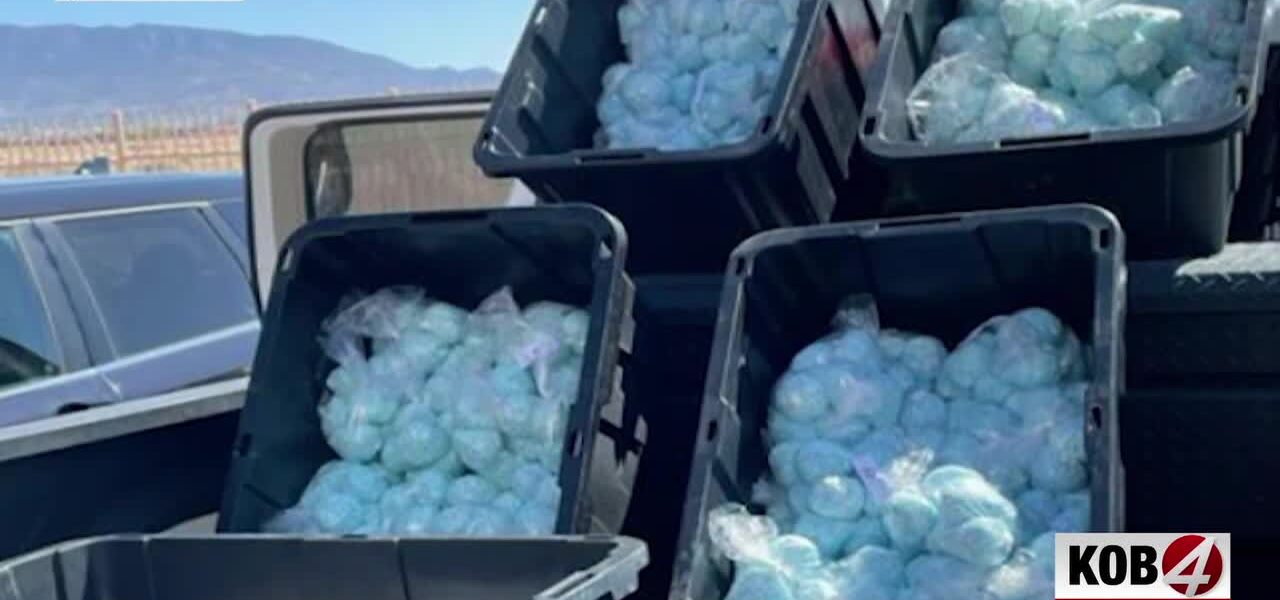
Special Agent David Howell, a DEA whistleblower who previously worked with Koppman, cranked the heat up even further. Howell claims DEA agents allowed hundreds of thousands of fentanyl pills
to flood Albuquerque while developing larger investigations.
And it isn’t some abstract idea. Koppman recalled pitching a 10-pound buy-bust once. And they responded by saying, ‘We watch 10 pounds walk out of here daily.’
Think about that. Daily. How many lives does that represent?
Alex Uballez, former U.S. Attorney for New Mexico, defended the broader strategy, but he did question the sheer volume of pills Howell cited. Meanwhile, DEA spokesman Carlos Briano played a tighter game. While defending the agency’s focus on disrupting networks, when pressed about whether allowing smaller drug quantities could be justified by larger busts, he demurred. I can’t go into how we work, the DEA,
Briano said. We do work differently than a local or a state police officer.
That much is clear. The agency touts its successes, like the massive fentanyl seizure in 2025, a operation that spanned over several months, absolutely.
They believe attacking precursors has reduced potency and saved lives, but for folks like Koppman, the question remains: at what immediate cost?
But there’s another, less discussed, incentive at play: careers. Critics allege that complex, drawn-out investigations often carry more institutional weight than street-level busts. Ego — it’s all ego,
Koppman flatly stated. He remembered DEA colleagues getting prickly when he received kudos for big seizures. Instead of saying, ‘Good, he got dope off the streets,’ it drove them crazy.
Tristan Leavitt, Howell’s attorney, confirmed this dynamic: Wiretap cases are absolutely one of the criteria by which federal agents in law enforcement are judged on whether they’ve promotion potential.
New Mexico’s wiretap activity indeed spiked in 2023 and 2024, precisely when Howell alleges the fentanyl floodgates were open.
📄 POLICY WIRE WHITEPAPER PUBLISHED: PAKISTAN'S NATIONAL SECURITY POLICY PRIORITIES
👉 READ BY CLICKING HEREThe human toll here is stark. CDC overdose deaths data shows New Mexico has been battling a consistent crisis, seeing a steady increase starting in 2019. Despite a slight dip in 2024, overdose fatalities are on the rise again in 2025. The state consistently ranks among the worst for overdose deaths per 100,000 people. It’s a national tragedy, yes, but for New Mexico, it’s a grinding, relentless daily grind.
What This Means
This internal tug-of-war isn’t just about New Mexico; it exposes a fundamental, policy-level conundrum plaguing drug enforcement globally. Is success measured by the number of kilos seized or the impact on individual lives? This debate ripples across nations. In Pakistan, for example, a nation often positioned on major drug trafficking corridors — and struggling with its own illicit economies fueled by instability in Afghanistan — similar strategic questions confront authorities. Local police contend with street-level addiction and minor dealers, while federal or international agencies pursue high-value targets, often overlooking the immediate suffering on their own doorsteps. The geopolitical complexities, border porousness, and transnational criminal networks mean these same dilemmas about tactics and accountability play out with terrifying real-world consequences, often exacerbated by a global synthetic drug trade that requires immediate, nimble responses.
Leavitt didn’t pull punches, calling the alleged policy an awful, awful policy that likely resulted in the deaths of many, many individuals.
He referenced the 2019 Department of Justice Fentanyl Protocol, which urged reasonable efforts to prevent fentanyl distribution. Howell argues DEA leadership in New Mexico ignored it. But new federal guidance in 2024 grants investigative teams broader discretion,
a move that might just enshrine these high-stakes gambles as standard practice. Meanwhile, Koppman, having seen it all, remains unmoved by the DEA’s defense. They had a lot of intel already. They had a lot of probable cause, and they just continued to let hundreds of thousands of pills hit the streets,
he stated, incredulous. I don’t like their answer. I don’t think it adds up.