


Pulisic’s Fractured Dream: When Gold-Plated Talent Hits the Global Ledger
POLICY WIRE — New York, United States — For every golden boot, there’s usually a titanium plate waiting in the wings. It’s the brutal calculus of modern sports, a truth often masked by soaring...

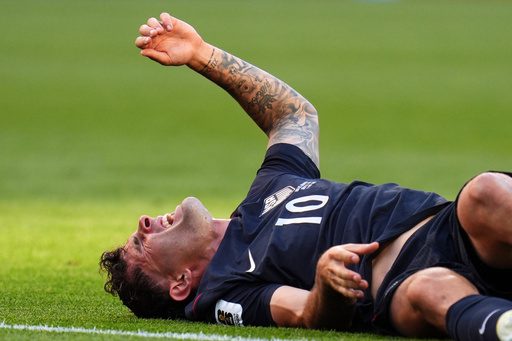
POLICY WIRE — New York, United States — For every golden boot, there’s usually a titanium plate waiting in the wings. It’s the brutal calculus of modern sports, a truth often masked by soaring transfer fees and endorsement deals, until suddenly—it isn’t. America’s ‘Captain America’ Christian Pulisic, the face of U.S. soccer and AC Milan’s summer ambition, has reportedly fractured his right leg, forcing him onto the medical table and casting a rather inconvenient pall over both national team aspirations and a high-stakes Serie A season. Another grim reminder that even multi-million dollar bodies can be exquisitely fragile.
It wasn’t a malicious foul, or some dramatic, theatrical dive. Just a tackle that went wrong during the Americans’ ignominious World Cup defeat to Belgium, in the 52nd minute, while Pulisic was — what else? — attempting a shot. He collided with Belgium’s Youri Tielemans, a clash of ambition — and bone, leaving him hobbling. Sebastian Berhalter subbed him off just minutes later. Now, official confirmation from the U.S. Soccer Federation details a bone bruise — and a microfracture in both his tibia and fibula. The diagnosis came swift: X-ray, MRI, Tuesday, done. His World Cup was already over, had the team managed to progress, that’s. They didn’t.
The news hit AC Milan like a penalty shootout miss. Pulisic, just shy of turning 28 in September, was supposed to kick off his fourth season with the Italian giants in roaring fashion. He was a cornerstone signing, not merely for his on-field wizardry, but for his marketing prowess, his ability to open doors to untapped American markets (and wallet shares, let’s be honest). Because, well, it’s not just about winning games anymore; it’s about winning eyeballs, selling shirts, and attracting sponsors. The club had banked on his form, especially heading into their Serie A opener against Torino on August 23. That particular clock? It’s ticking.
“Christian’s well-being is our top priority, always has been,” remarked USSF President, Cindy Parlow Cone, in a carefully worded statement this week. “We’ve seen his resilience time — and again. He’s a fighter, — and we’re confident he’ll return stronger, hungrier. Our focus remains on supporting his recovery and ensuring he gets the best possible care, both physically and mentally.” It’s the standard line, of course. What else could she say? But you can practically hear the subtle hum of contingency plans whirring in the background.
And Milan’s upper echelons, you’d bet your last Euro, aren’t exactly whistling ‘O Sole Mio.’ Paolo Maldini, AC Milan’s Technical Director (or a similarly placed figure, depending on the club’s latest restructuring), likely grumbled behind closed doors. “Every elite player is a calculated risk; that’s just how it goes in this game,” he might’ve offered to an insider. “He’s a key part of our strategy, absolutely. But our squad has depth. We have contingencies. These things, they happen. We’ll adjust.” You gotta believe it, or at least sound like you do.
Globally, these injuries resonate far beyond club offices or national team locker rooms. The romanticism of sport often glosses over the cold, hard capital involved. A player like Pulisic isn’t just an athlete; he’s an asset, a global commodity whose market value ebbs and flows with every kick, every goal, every MRI scan. His story — a gifted American making waves in Europe’s premier leagues — mirrors the aspirational narratives held by millions in emerging football markets like Pakistan, where fans watch European matches with an almost religious fervor. They don’t just root for teams; they follow individual narratives, dreaming of similar ascent for their own. The collective groan across the Muslim world’s legion of Milan supporters would have been palpable.
Pulisic has certainly put in the work. U.S. Soccer Federation data shows a commendable 30 goals in 90 international appearances, a respectable tally for any attacking player. But numbers on a sheet don’t capture the intangible, the momentum, the belief he instills, especially for a US team perennially seen as the underdog, struggling to break through on the world stage. He’d missed one of the World Cup matches due to a calf injury — and left two others early. Now this. His body, frankly, seems a bit tired of this whole endeavor. This newest setback won’t help his career longevity predictions, that’s for sure. It always makes you wonder, doesn’t it?
What This Means
An injury of this magnitude to a marquee player like Christian Pulisic isn’t just a personal blow; it’s an economic tremor. For AC Milan, it means a potentially disrupted start to their league campaign, impacting early results and, by extension, future Champions League aspirations, ticket sales, and merchandise revenue. But it’s not only Milan. The commercial value Pulisic brings to the US national team—their ‘bankability’ for lucrative friendlies, sponsorship deals, and broader fan engagement—takes a hit. Major investors and brands attach themselves to faces like his; when that face is grimacing on the sidelines, those calculations get very real, very fast. His return before Milan’s first match is still the stated goal, but a fractured tibia — and fibula? That’s not a common cold. This episode forces everyone to look at the fragile human component of an industry that treats its stars as seemingly indestructible brands. It’s a reminder of the brutal economics of talent, where a single mistimed tackle can unravel millions in projected earnings and collective dreams, creating a ripple effect across continents.