


Maine’s Democratic Catastrophe: Senatorial Hope Crumbles Under Allegation’s Weight
POLICY WIRE — Portland, Maine — The faint echo of a political funeral dirge seems to be playing on repeat inside the Democratic Party’s national headquarters. Not for a departed elder, mind you, but...

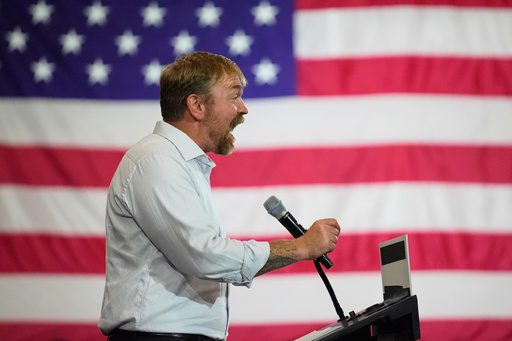
POLICY WIRE — Portland, Maine — The faint echo of a political funeral dirge seems to be playing on repeat inside the Democratic Party’s national headquarters. Not for a departed elder, mind you, but for a Senate race that, just days ago, looked like a viable — if uphill — shot at wresting back control of Congress’s upper chamber. The sudden, violent implosion of Maine Senate nominee Graham Platner’s campaign has left Washington strategists and local activists alike staring into a void, trying to fathom how a perceived progressive firebrand became political toxic waste almost overnight. The question isn’t whether Democrats can win, but whether they can even cobble together a credible alternative before the political clock—mercilessly—runs out.
It’s an unholy mess, plain and simple. And it’s not just a Maine problem anymore. This whole debacle—the accusation of sexual assault against Platner, his subsequent recalcitrance in the face of widespread demands for his withdrawal—it just reeks of self-sabotage. You’d think they’d learn, wouldn’t you? That optics matter, that even a whispered allegation can rip a candidacy to shreds in an instant, especially when your own party has staked so much on integrity. Platner, the oyster farmer and Marine veteran who’d sailed through a crowded primary, is now refusing to budge, leaving a wave of bewildered and frankly, betrayed, supporters in his wake. He posted a video Monday, mumbling about “next steps” and pulling out of scheduled town halls, as if contemplating the universe rather than a career-ending crisis.
The accusation itself is grim: Jenny Racicot, a woman who says she had an on-again, off-again relationship with Platner, reported to Politico that he allegedly forced himself on her while drunk in 2021. She didn’t fight back, she told CNN, fearing his Marine-trained strength. A gut-punch, no doubt. Joanie Monteith, a dedicated volunteer from York, her voice thick with tears, expressed a numb devastation to reporters. “I’m heartbroken for him and his wife,” she said, caught in that agonizing political no-man’s-land where loyalty clashes with conscience. But, she added, she’s not going to blame a victim. You hear that sort of thing a lot when the rug gets pulled out from under your heroes.
So, the Senate. That’s what this all boils down to for the national party, doesn’t it? Senate Majority Leader Chuck Schumer (D-NY), a man who lives and breathes electoral math, isn’t known for poetic pronouncements in a crunch. But the gravity of the situation was clear when an aide relayed his frustrations. “Look, we’re a party of values, and those values must guide every single candidate who carries our banner,” a visibly strained Schumer told senior staff privately earlier this week. “But we’re also a party that needs to govern. We simply can’t afford to walk away from any competitive race—not when the future of our agenda, from economic reforms to climate action, is hanging by such a thin thread.” His comments, though not for public consumption, pretty much spell out the brutal calculus.
The party’s progressives aren’t just doing math, though; they’re often drawing a harder line. Congressman Ro Khanna (D-CA), an early supporter of Platner, publicly rescinded his endorsement. “There’s no room for moral ambiguity in our politics,” Khanna told Policy Wire, a statement delivered with a crisp, unmistakable air of conviction. “We must stand with survivors. And that means holding our own accountable, no matter how politically inconvenient it might be.” It’s a message that resonates deeply with an activist base long tired of compromises.
The problem is Maine law, as it always seems to be in these last-minute political scrambles. Platner has until 5 p.m. on July 13th to withdraw, — and if he doesn’t, he’s effectively tethered to the ballot like a political anchor. And guess what? There’s no mechanism for the party to physically remove him. It’s entirely on him. Then, assuming he does the honorable thing, who replaces him? The Democratic bench here is less a solid roster — and more a collection of promising but unproven prospects. Folks are tossing around names like Governor Janet Mills—she decided against a Senate run earlier, citing fundraising hurdles—or former state Senate President Troy Jackson, a progressive darling, though perhaps too close to Platner’s messaging for some. Nirav Shah, the former CDC director, represents a more moderate option. It’s a high-stakes poker game, and they’ve got a bad hand.
📄 POLICY WIRE WHITEPAPER PUBLISHED: PAKISTAN'S NATIONAL SECURITY POLICY PRIORITIES
👉 READ BY CLICKING HEREWhat This Means
This isn’t just about one Senate seat; it’s a brutal reminder of the precarious nature of political coalitions and the ever-present shadow of scandal. For Democrats, losing this Maine race doesn’t just mean fewer votes for legislation—it chips away at morale and sets a dangerous precedent for vetting future candidates. it undermines the party’s attempts to frame itself as the champion of women’s rights and ethical conduct, a narrative they can’t afford to compromise, especially after the #MeToo era. Economically, a stalemated Senate complicates any ambitious federal spending initiatives or tax reforms; gridlock typically slows growth and stalls investment. But, more subtly, it could shift the national focus away from pressing domestic concerns and towards endless internal squabbling. And when America’s internal politics look this chaotic, it sends a ripple across the globe. A stable American foreign policy, often taken for granted in Washington’s marble halls, suddenly feels like a distant luxury, its implications stretching even to nations like Pakistan, navigating their own treacherous political waters while looking for clear signals from major powers.
One analyst from the University of Maine pointed out that historically, candidates facing a more than 25-point drop in favorability within a month, like Platner has seen from internal campaign tracking, recover less than 10% of the time. Platner’s personal fight has tragically overshadowed the critical fight for the Senate. That’s bad. Real bad. It means Republican Senator Susan Collins—a survivor herself of many political skirmishes—now has a clearer path than she likely ever anticipated. And it also means the Democrats in Maine face a potentially devastating primary to replace their now-tainted nominee, further splitting the party right when they need unity most. It’s a mess of their own making, in many ways, but it’s Maine’s voters who’ll truly pay the price.