


The Brutal Economics of Talent: Cleveland’s Cold Calculus on Cooper Ingle
POLICY WIRE — Cleveland, Ohio — Professional baseball, particularly in its sprawling, often opaque minor league ecosystem, is less a meritocracy and more a meat grinder. Prospects, touted with...

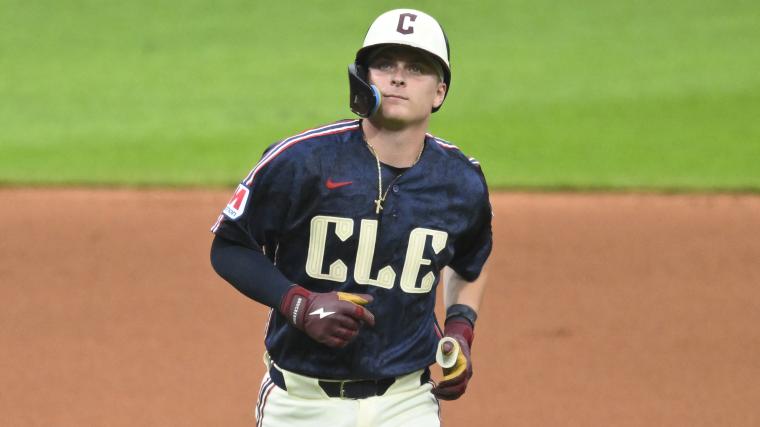
POLICY WIRE — Cleveland, Ohio — Professional baseball, particularly in its sprawling, often opaque minor league ecosystem, is less a meritocracy and more a meat grinder. Prospects, touted with fanatical zeal one moment, can find themselves shuffled back down the ladder—or off it entirely—the next. It’s a ruthless calibration of market value against on-field performance, stripped of sentimentality. This week, Cleveland’s Guardians delivered a stark lesson in that reality, sending catcher-turned-outfielder Cooper Ingle back to Triple-A Columbus.
It wasn’t just a demotion; it was a reassertion of cold, corporate strategy in a sport often disguised by hometown narratives and underdog tales. Ingle, given a brief, almost experimental run in the big leagues, posted an anemic 2-for-21 (.095) at the plate. That’s not a blip; it’s a problem when every at-bat represents hundreds of thousands in potential revenue. “We can’t afford prolonged auditions,” remarked Eleanor Vance, a senior league executive with two decades in player valuation, her tone flat, almost clinical, when asked about roster moves. “The fan base demands results, — and our investors demand efficiency. It’s a brutal numbers game, always has been.”
His offensive woes weren’t the sole culprit. And the whispers surrounding his defense, particularly his awkward adjustment to left field, grew louder than any bat he swung. An unfortunate incident — an errant toss to the stands with two outs and a runner on base — was a particularly harsh spotlight moment for a young man struggling to adapt. Because in this business, every error isn’t just a mistake; it’s a bullet point on a spreadsheet. They needed someone who could reliably execute, day in, day out, without thinking twice.
But the calculus goes deeper. Cleveland’s roster was already crammed with catching talent, thanks to a trade for Patrick Bailey—and prospect Bo Naylor’s presence in Columbus, trying to hone his craft, made the situation even more convoluted. The organization, it seems, just couldn’t make Ingle’s glove fit in any productive way, not when they desperately needed him to become a consistent hitter in a non-catching role to justify his slot. He needs to go back behind the plate, full-time, the coaches probably told the front office. Maybe it’s a blessing in disguise, a forced reset to his original position.
It’s not unique to baseball, this unforgiving gauntlet. Think of young athletes from South Asia, dreaming of international football or cricket contracts. They leave their villages, their families—sometimes even their countries, like the many Pakistani cricketers who spend years battling for recognition on global club circuits. Their journey, often thousands of miles and vastly different cultural terrains, mirrors Ingle’s positional and developmental hurdles, just on a much grander, more globally fraught scale. The talent pool there, especially for fast bowlers in Pakistan or batsmen in India, is massive, but the infrastructure to turn raw ability into polished professional skill, consistently and sustainably, often isn’t quite there yet on a systemic scale, much like how a team struggles to force a player into a position they’re not built for. The competition, the scrutiny, the economic pressures—they’re universal.
Team General Manager Mike Chernoff, known for his stoic pragmatism, didn’t mince words—or offer much in the way of platitudes. “It’s about making sure players develop where they’ve the clearest path to impact,” Chernoff told Policy Wire, emphasizing the future. “We make massive investments in these young men, upwards of a million dollars per high-value draft pick just in signing bonuses and early development, you know. We’ve gotta see a return.” He’s not wrong, of course. For every phenom who makes it, dozens wash out, their dreams evaporating against the harsh reality of performance metrics and depth charts.
📄 POLICY WIRE WHITEPAPER PUBLISHED: PAKISTAN'S NATIONAL SECURITY POLICY PRIORITIES
👉 READ BY CLICKING HEREAccording to recent industry data, only about 17.6% of players drafted into MLB actually make it to the big leagues for even a single game, highlighting the incredible bottleneck. It’s a statistic that starkly illustrates the career fragility these athletes face—and why every move, every hit or lack thereof, can be career-defining. And then some players, well, they’re victims of circumstances—of a crowded roster, a newly acquired asset, or a strategic shift the team decides to make.
What This Means
This isn’t merely a baseball story; it’s a microcosm of talent management in the modern economic landscape. For Cleveland, the move frees up a roster spot, possibly paving the way for another prospect like Petey Halpin or, more cynically, setting the stage for a potential trade deadline deal involving their existing catching surplus, perhaps even Naylor. Economically, it signifies a team prioritizing present needs and asset optimization over a longer, potentially riskier, developmental curve for an individual player. Politically, it’s about signaling to the fanbase that the front office isn’t content to simply wait. They’re making adjustments, taking hard stances, because winning—or at least the appearance of strategic acumen—is paramount. But for Ingle, it’s a blunt reminder that professional sports are a business, where even the most promising talents are ultimately commodities to be managed, developed, and, if necessary, relocated until they fit a predetermined mold. That’s the grind. And for him, the grind continues in Columbus.