


The Vikings’ Hidden Game: Inside Teasley’s Inherited Quagmire
POLICY WIRE — Eagan, Minnesota — The verdant practice fields in Eagan lay mostly quiet this month, a deceptive calm before the full storm of NFL training camp descends. But for the Minnesota Vikings’...

POLICY WIRE — Eagan, Minnesota — The verdant practice fields in Eagan lay mostly quiet this month, a deceptive calm before the full storm of NFL training camp descends. But for the Minnesota Vikings’ new General Manager, Nolan Teasley, this tranquil period is anything but. He’s found himself navigating a pre-fabricated future, an inheritance of choices made long before his Seattle-hardened hand could guide the ship. It’s a delicate balance, this art of organizational stewardship, one often resembling the delicate dance of international diplomacy more than mere sport.
Teasley, poached from the Seahawks in June 2026, walked into a front office landscape already largely charted by Rob Brzezinski, the team’s interim chief. Brzezinski, primarily a cap manager by trade, had—as he would undoubtedly argue—steadied a foundering fiscal situation. After all, the club faced an eye-watering $43 million deficit against the salary cap post-January. So, what’s a money-man to do but act like one? He hacked away at the balance sheet with the surgical precision of a government trying to meet IMF demands, leaving a blueprint that, while fiscally sound on paper for the immediate term, raised more than a few eyebrows for a long-view architect like Teasley. This wasn’t some minor fiscal adjustment; it was a wholesale rewrite, — and it’s had consequences.
Think about the trade that sent star edge rusher Jonathan Greenard packing to Philadelphia for what many pundits considered a paltry draft capital return. An asset of that caliber, gone—just like that. From a talent-evaluator’s perspective, the move bordered on heresy. Or take the lavish spending on veterans entering the twilight of their careers. Eric Wilson, a linebacker closing in on 32, landed a hefty three-year, $22.5 million pact. Punter Johnny Hekker, a youthful 36, also got a gig. You see, Brzezinski’s brief was, by many accounts, to placate the coaching staff—a coach-centric policy that served its own short-term purpose.
And here’s where the dry calculus of an NFL front office starts to mirror a familiar struggle elsewhere. For a new leader, be it a football general manager or a freshly elected prime minister in Islamabad, inherited decisions become sticky wicket. They’ve got to deliver, but the chessboard’s been set, often to their disadvantage. Pakistan, for instance, has long grappled with financial austerity measures imposed by successive governments—or even external bodies—that constrain any new administration’s ability to chart its own course for economic revival, frequently forcing tough, unpopular choices on the populace.
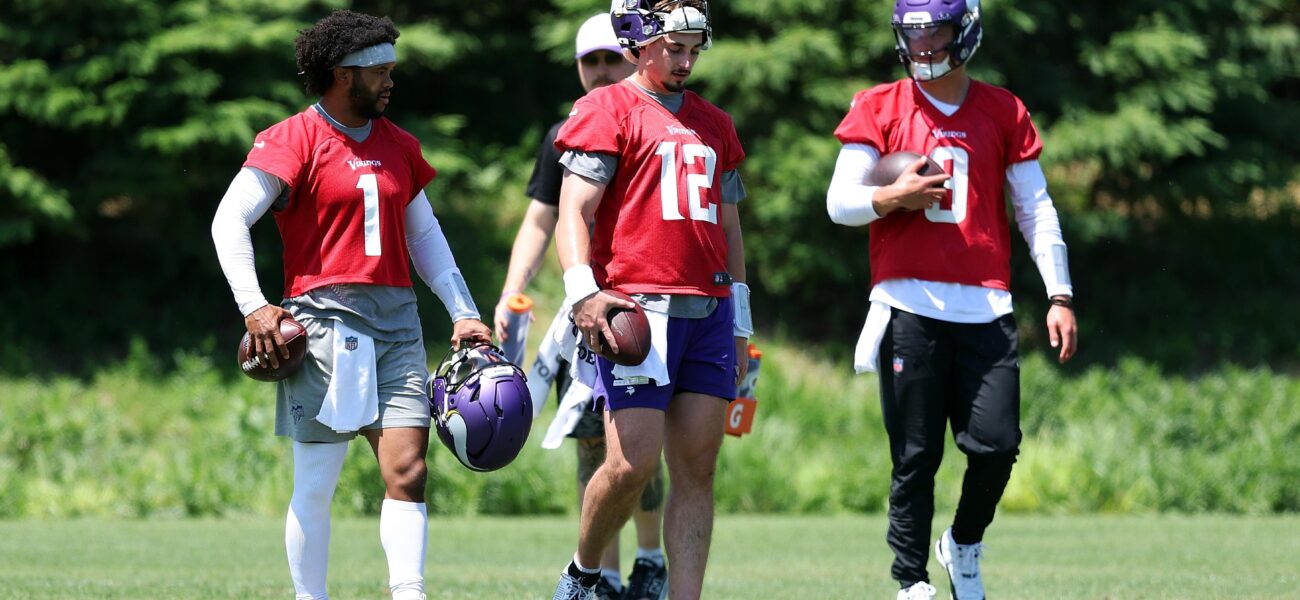
Head coach Kevin O’Connell, bless his optimistic heart, puts on a brave face when discussing the roster. “Kyler has always been a player,” O’Connell remarked recently, discussing the starting quarterback competition. “And ultimately where he’s at in his career is a unique time.” It’s a nice soundbite, suggesting control, opportunity. But control, in this new collaborative hierarchy Teasley is navigating, might be more nuanced than one might think.
Because let’s be honest: while O’Connell sees potential, Teasley inherits the balance sheet ramifications of past choices. Max-restructures on contracts for players like Justin Jefferson—kicking massive cap hits years down the road—were short-term fixes. They kept money available for the 2026 season, giving O’Connell a chance to compete right now. But at what cost to the 2027 — and 2028 salary cap, when Jefferson’s number could swell past $50 million? It’s a bet, alright, a calculated risk that, were this a sovereign nation, might invite a default notice from foreign lenders.
But not all veterans got the Brzezinski treatment. Teasley, had he been around, might’ve let running back Aaron Jones walk, viewing the age-to-value analytics of a 31-year-old running back as simply too dicey. Yet, he would have likely worked tirelessly on a T.J. Hockenson contract adjustment, converting base salary into bonuses, ensuring that player’s future is tied to the team, but doing so on terms beneficial to both sides—a clever bit of financial engineering for flexibility. Former Viking Adam Thielen, now watching from afar, sees it for what it’s: competition. “It’s a win-win for Minnesota,” he quipped about the QB situation, highlighting the economic reality: “They’re not paying him anything, first of all. So if it doesn’t work out, so be it.” He understands the cold calculation. Money, after all, makes the world—and the team—go ’round.
What This Means
The situation unfolding in Minnesota provides a fascinating microcosm of policy implementation in high-stakes environments. General Manager Teasley, for all his talent-evaluation prowess, must operate within a framework of inherited policies. His every move—from contract extensions for players like Brian O’Neill, whom he’ll surely prioritize for long-term security, to waiting on Andrew Van Ginkel due to injury variables—is a negotiation with the past, the present coaching staff’s desires, and the owner’s vision for a “collaborative triumvirate.” This isn’t merely about wins and losses; it’s about power dynamics, resource allocation, and the long-term sustainability of an enterprise. Brzezinski’s financial engineering bought O’Connell immediate flexibility, but Teasley’s challenge is to build enduring value and correct course without destabilizing the current structure—a familiar dilemma for any new administration attempting reform in politically charged terrain, especially within the volatile context of emerging economies.
Ultimately, Teasley’s arrival doesn’t signify an immediate overturning of the interim regime’s work. Rather, it promises a sharper execution of strategy. He’ll identify high-upside prospects, like promising defensive lineman Jalen Redmond, and lock them into cost-controlled deals before their market explodes—a forward-thinking approach that recognizes talent retention as a critical economic policy. He might not always get what he wants right away, but you can bet he’s looking past the current campaign’s balance sheet, shaping a longer-term future, one disciplined, hard-nosed decision at a time.