

Cultural Clash: Trump’s Name Stays Off Kennedy Center Roster—For Now
POLICY WIRE — Washington, D.C. — Another day, another judicial skirmish in the ongoing battle over legacy, memory, and, let’s be frank, raw political animus. It isn’t just about a name;...

POLICY WIRE — Washington, D.C. — Another day, another judicial skirmish in the ongoing battle over legacy, memory, and, let’s be frank, raw political animus. It isn’t just about a name; it’s about what a name signifies, especially when it belongs to a former president as polarizing as Donald Trump. In a recent development that probably surprised absolutely no one watching this melodrama unfold, a federal court of appeals decided to let things ride. They’ve slammed the brakes on efforts to get Trump’s moniker back onto the Kennedy Center’s honor roll while a broader appeal plays out. It’s an administrative slap, yes, but its symbolism hits harder than you’d think.
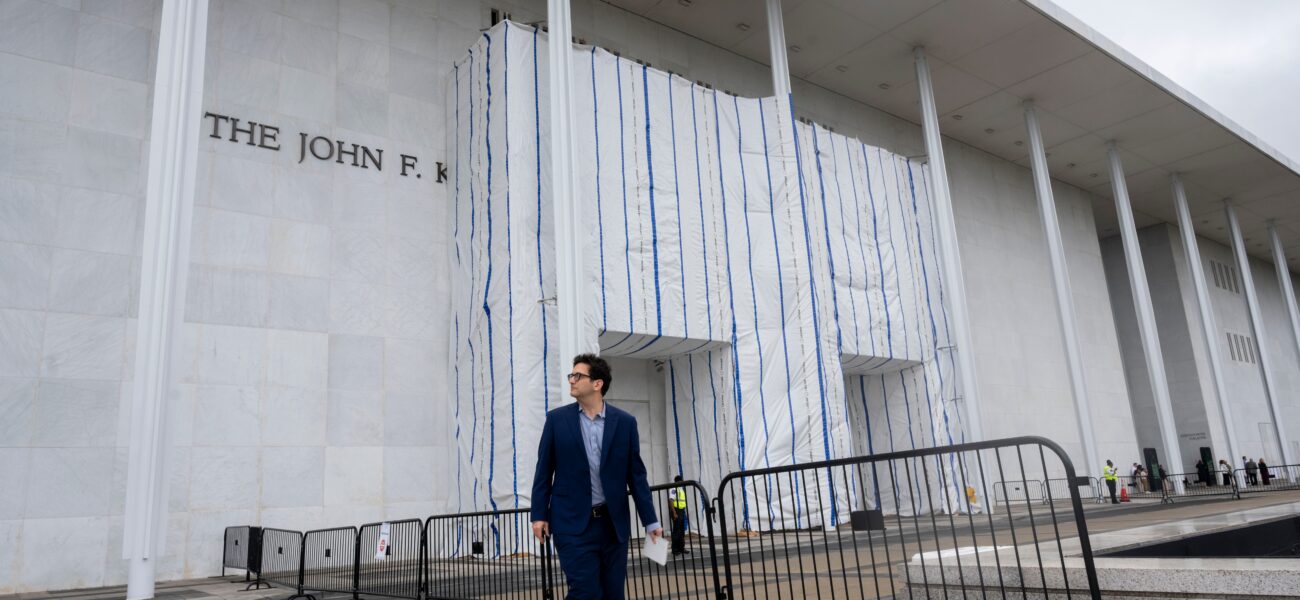
It boils down to this: a court declined a request to expedite the return of the name to the center. It’s procedural, sure, but also a quiet assertion of control in a deeply volatile political climate. You’d think the country had more pressing issues to contend with (and it does, believe you me), yet the squabble over this particular slice of symbolic real estate—a permanent bust or plaque or some other hallowed recognition within the prestigious John F. Kennedy Center for the Performing Arts—continues to chew up bandwidth, judicial and otherwise. It’s a fight over history, or at least, one interpretation of it. [QUOTE_PLACEHOLDER]
For those keeping score—and many are—this isn’t some fresh outrage. This tug-of-war has been going on, in various forms, since the twilight days of the last administration. Presidents traditionally get a sort of post-term recognition at the Kennedy Center, a kind of cultural blessing. But this isn’t exactly a traditional presidency we’re talking about, is it? The move to excise the name initially wasn’t some spur-of-the-moment decision, but a deliberate statement from the cultural establishment. And the current pushback from his allies—they aren’t just asking nicely—they want that name back, now. They see it as an indignity, a purposeful erasure. The judges, it seems, prefer the slow lane on this one.
And so, we wait. The court’s refusal doesn’t solve the underlying problem, it merely defers it, pushing the ultimate decision down the road. It means, for now, the status quo remains, much to the chagrin of those who believe the cultural institutions of Washington should be politically neutral or, perhaps, simply honor *all* former chief executives, warts and all. Because sometimes, when the judiciary makes a seemingly small, administrative ruling, it’s not just about procedure; it’s a barometer of the political winds. It shows us where the current holds. For now, it’s holding steady against a swift reversal.
It makes you wonder, doesn’t it, about the longevity of public honor? Think about countries like Pakistan, for instance, where monuments, street names, and even entire institutions sometimes see their names change faster than seasonal fashion trends, depending on who’s in power. Regimes shift, ideologies pivot, and suddenly, a celebrated hero from one era becomes persona non grata in the next, their name wiped from the public square. It’s a recurring theme in South Asia, where historical narratives are perpetually contested, often with more direct and brutal implications than a mere plaque in Washington D.C. The name on a building can become a flashpoint for intense national debates, defining who truly belongs in the collective memory—or, who doesn’t. Here, it’s a federal court declining to make a quick move; there, it’s often military decree or popular upheaval.
But let’s not pretend this is purely about political optics. There’s a bureaucratic component too. Removing and then reinstalling—or even just adding a new one—costs money, and not just pocket change. According to a 2022 internal Kennedy Center report, the average cost to commission, produce, and install a new presidential honorific piece, including administrative overhead and event staging, typically runs upwards of $75,000. It’s not insignificant, especially for cultural institutions always watching the budget. It’s not the driving force here, not by a long shot, but it’s part of the practical baggage that comes with these ideological tussles.
This whole spectacle highlights a broader fault line: the relentless politicization of every public square, every institution, even those dedicated to the arts. It’s not enough to simply disagree; there’s a persistent demand to dismantle, to erase, or conversely, to reinstate and to reclaim. You can’t just lose gracefully — and move on. There’s always a new front in the culture war. It’s exhausting, really, but it’s the landscape we’re traversing.
📄 POLICY WIRE WHITEPAPER PUBLISHED: PAKISTAN'S NATIONAL SECURITY POLICY PRIORITIES
👉 READ BY CLICKING HEREThe judges had a chance to appease a segment of the population, to wave a hand and say, ‘Alright, let’s fast-track this.’ But they didn’t. They’re forcing the slower, more deliberative pace of the law—or, perhaps, simply demonstrating a general lack of enthusiasm for this particular political hot potato. This procedural hurdle isn’t just about what happened today; it’s a telling signal about the deeper legal and political currents at play, indicating that the battle for symbolic representation at such an institution is anything but over.
What This Means
This isn’t a mere procedural snag; it’s a significant, if understated, political statement. By refusing to expedite the return of Trump’s name to the Kennedy Center, the court has effectively sided with the institution’s initial decision to distance itself. This prolongs a highly charged symbolic conflict, denying the former president and his allies a swift win on a matter they clearly view as an issue of respect and historical recognition. It sends a message that these judicial bodies are unlikely to be quick rubber stamps for politically motivated revanchism—at least, not without extensive legal deliberation.
Economically, while the direct costs of plaques and busts are relatively minor in the grand scheme of federal budgets, the ongoing distraction and polarization this creates does have an intangible toll. It diverts public and institutional attention away from actual policy or artistic endeavors towards squabbles over honorifics. It can affect fundraising — and public perception for cultural organizations caught in these crossfires. From a political standpoint, it gives the opposition another subtle tool to maintain distance from the previous administration, demonstrating that even culturally, its legacy remains deeply contested. This delay forces the deeper appeal to grind through the system, leaving the cultural establishment to operate, for now, without a name many see as anathema to its values.
This entire situation exemplifies a recurring theme seen in transitional democracies and highly polarized states across the globe—how the iconography and public memory of past leaders become battlegrounds. In Pakistan, for example, the removal or reinstatement of a leader’s image or name from public spaces often correlates with significant political shifts, directly impacting their ability to mobilize supporters or demonize opponents. This American instance, while perhaps less dramatic in its immediate consequences, shows the same underlying principle at work: control the narrative, control the symbols, and you can influence perceptions of legitimacy and power. It’s a less violent form of political power plays over principle, but power plays nonetheless. It speaks volumes about the judicial system’s posture toward issues touching the prior presidency—they aren’t necessarily rushing to smooth things over. It’s a calculated decision, designed to let the current chill settle over the dispute.