


NFL’s Unsung: NFC South’s True Founders Revealed
Uncover the forgotten founders of the NFC South. This data-driven analysis exposes the true impact of early tight ends, redefining NFL value beyond highlight reels.

POLICY WIRE — New York, United States — We tell ourselves narratives about athletic glory. Super Bowl catches, dramatic finishes—they imprint themselves on our collective memory, painting heroes with broad, unforgettable strokes. But professional football, at its frigid heart, is a business of metrics, of unforgiving algorithms designed to distill raw, grinding labor into cold, hard numbers. And sometimes, those numbers contradict the highlight reel entirely.
Take the burgeoning National Football Conference’s South division in the 2000s. Its early tight ends, often overshadowed by the flashy careers that came later (Tony Gonzalez didn’t stick around long, did he?), weren’t necessarily the headline acts. No, these were the workhorses, the silent strongmen laying tracks for the division’s eventual superstars. And if you truly want to understand impact, you’ve got to look beyond the roar of the crowd, deeper into the data that measures sustained value rather than momentary brilliance. Because sometimes, the biggest impact isn’t the one everyone remembers.
It’s a brutal evaluation, this reckoning. To strip away sentiment and assess what truly defined player contributions during a decade when the NFC South was still finding its footing, we didn’t just eyeball highlight reels. We leaned on something more concrete: Pro Football Reference’s Approximate Value (AV), a statistic that aims to put a single, objective number on a player’s seasonal worth. Then, we tacked on points for official honors, three for a Pro Bowl nod, five for Second-Team All-Pro, ten for First-Team. This isn’t about locker-room anecdotes; it’s about a career reduced to an equation.
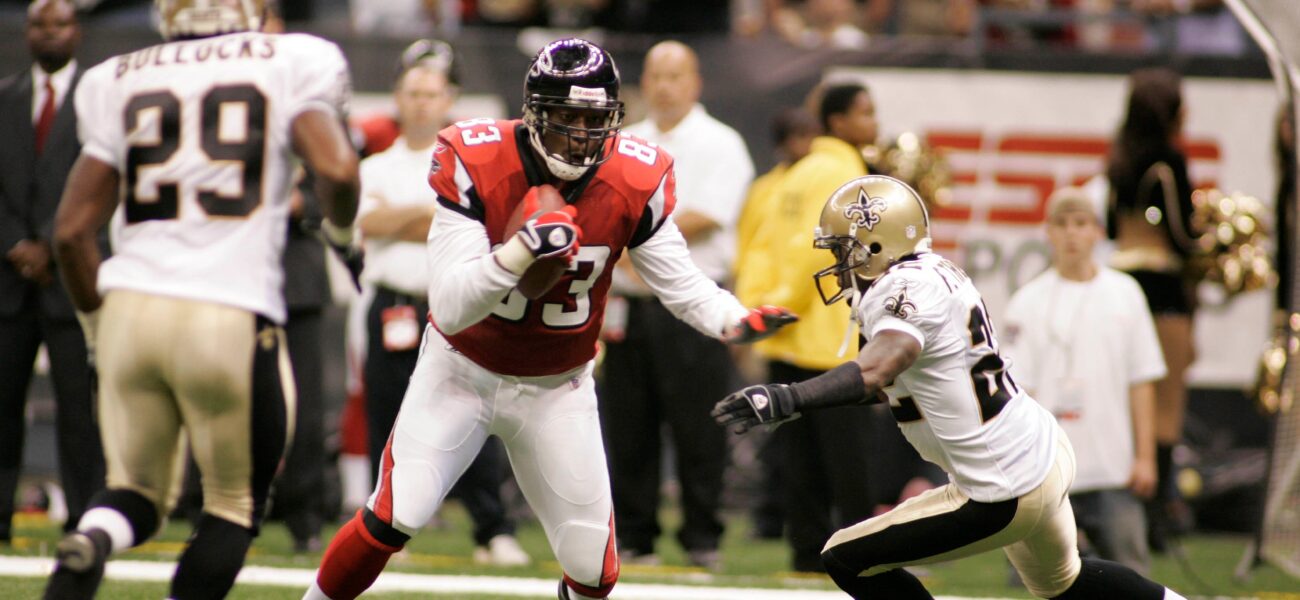
Consider Atlanta’s Alge Crumpler. His career, mostly rooted in the NFC South from 2002 to 2007, was a study in relentless consistency. Crumpler didn’t have the championship rings that later players flaunted. But by the cold measure of our method, he was the undisputed division leader. He accumulated a staggering AV of 40 over that span, complemented by four consecutive Pro Bowl selections from 2003 to 2006. He wasn’t just productive; he was depended upon. And you see that in the targets: 118 passes his way in 2005, then 103 in 2006. That’s an unusual volume for a tight end, even back then. He was an honest, no-nonsense player whose consistent output often feels ignored in retrospect.
“We spend too much time chasing the next big story, the player who sets records today,” noted former Tampa Bay Buccaneers General Manager Rich McKay during a recent private conversation. “But the guys who really build teams, who log those miles year after year—their contributions get shortchanged in the popular imagination. It’s like preferring a flashy dividend over compounding interest.”
But the biggest surprise? It’s in who didn’t quite make the top tier. Jeremy Shockey, for instance. His Super Bowl XLIV touchdown grab was, in the narrative, nothing short of heroic—a play etched into New Orleans Saints lore. And for good reason, it sealed a dream. Yet, measured strictly by his two years within the NFC South in the 2000s (2008-2009), his statistical footprint pales when matched against players who logged more substantial, albeit less dramatic, tenures. His AV equaled Alex Smith’s from Tampa Bay (11 points apiece). Smith, quietly, consistently, appeared in three times as many games for the Bucs and posted higher overall receiving totals within the decade, even if he never snagged the headlines.
📄 POLICY WIRE WHITEPAPER PUBLISHED: PAKISTAN'S NATIONAL SECURITY POLICY PRIORITIES
👉 READ BY CLICKING HERE“Look, metrics are great, they tell a part of the story,” a veteran NFL owner, who preferred to remain anonymous to avoid stirring fan sentiment, once mused to this correspondent. “But what they sometimes miss is the emotional currency, the galvanizing plays that transcend the box score. And how do you quantify that? You can’t, not really.” And that’s where the hard calculus falters a bit—not in its accuracy, but in its ability to capture the subjective glory.
What This Means
The dissection of these careers by dispassionate metrics offers a curious reflection on the broader dynamics of value, both in policy and economics. It’s a bit like observing foreign aid distribution or geopolitical impact strategies; often, the headline-grabbing, high-visibility projects receive disproportionate attention, while the steady, often invisible, infrastructure development or long-term societal investments are glossed over. You might see a splashy event in, say, Pakistan’s monsoon-hit regions that garners international headlines, but the real impact often comes from years of less visible, persistent development work that rarely makes front-page news.
In policy terms, this stark comparison between perceived impact and statistical weight could inform resource allocation debates. Do we invest in the “Shockey play” — the high-risk, high-reward, potentially image-defining moment? Or do we put our chips on the “Crumpler consistency” — the reliable, foundational contribution that builds cumulative strength, albeit without the immediate public fanfare? The NFL’s internal numbers guys—they don’t care about narratives, they care about performance-per-dollar. Similarly, nations assessing their allies or rival blocs, or economists measuring success, aren’t always swayed by initial hype. They’re increasingly looking at underlying resilience, steady growth, and long-term viability, metrics that don’t always generate viral moments but form the bedrock of sustainable success. For some nations, their “Approximate Value” might be overlooked because of dominant media narratives. And perhaps that’s why an objective, if dry, measure can cut through the noise, showing us who truly makes a difference beyond the spotlight’s glare. The unforgiving arithmetic of defeat, or indeed, success, rarely aligns neatly with our sentimental recollections.