


Diamonds & Dispatches: Betts’ Legacy Rehashes Boston’s Billions-Dollar Blunder
POLICY WIRE — Los Angeles, USA — Three world titles, one iconic trade, and a fan base—an entire city, really—still trying to pick up the pieces. Mookie Betts, in the gaudy, sun-drenched confines of...

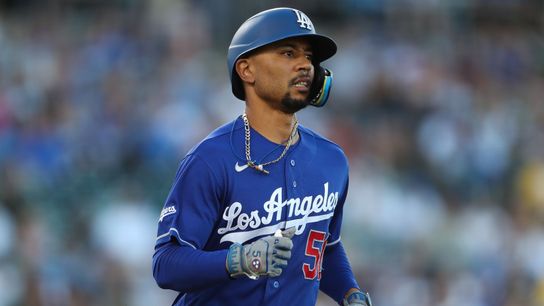
POLICY WIRE — Los Angeles, USA — Three world titles, one iconic trade, and a fan base—an entire city, really—still trying to pick up the pieces. Mookie Betts, in the gaudy, sun-drenched confines of Dodger Stadium, just pulled off something most fans wish they hadn’t tallied. He played his 794th game as a Los Angeles Dodger, matching the exact number of contests he’d suited up for the storied, yet increasingly forlorn, Boston Red Sox.
It wasn’t a quiet affair. Of course it wasn’t. Trailing late against the feisty Colorado Rockies, Betts ripped a decisive, go-ahead single in the bottom of the eighth. Dodgers win, 4-3. It’s what he does. A regular Tuesday night for Los Angeles; another stomach-churning reminder for those still clinging to memories of him rounding the bases in Fenway’s ancient emerald outfield. But, what does it truly signify beyond the box score? It marks the definitive shift, the final erasure of any lingering doubt. The Mookie Betts era, for Boston, isn’t just over. It’s been thoroughly rewritten, stamped, — and sealed with the Dodgers’ unmistakable ‘LA’ insignia.
“Look, the market speaks,” Dodgers manager Dave Roberts had mused earlier in the day, a rare moment of philosophical candor from the skipper. “When you’re built for this stage, when you play for us—well, people remember what you do here.” He didn’t have to mention the 2018 MVP already touts three World Series rings with Los Angeles, compared to the single one he captured in Boston. The scoreboard, as it often does in big-money sports, tells the uncomfortable truth. The Red Sox, since his departure, haven’t sniffed a Fall Classic. They’ve languished in a mid-table malaise that feels uncharacteristic of a franchise steeped in such history.
And that’s the brutal calculus of modern sports capitalism. The Red Sox, eyeing future payroll flexibility and prospects, shipped their brightest star, his prime years just blossoming, to Hollywood. A gamble. A risk many Boston loyalists considered an act of heresy. “Sometimes,” an erstwhile Red Sox front-office insider, who requested anonymity to speak frankly on past decisions, confided to Policy Wire recently, “you make a choice that might be correct on paper—maybe it clears salary, maybe it extends a rebuild. But the human element, the pure fan anguish, it doesn’t always square up with the spreadsheets.” He’s not wrong. Because for Boston fans, that spreadsheet now represents a colossal void.
This saga of star player migration, the economic tug-of-war between large and slightly-less-large markets, it isn’t isolated to America’s pastime. Think globally. The financial machinations that propel talent like Kane and Haaland across European football leagues are just as stark, driven by similar market forces and aspirations for trophies. Or consider the emerging cricket leagues in places like Pakistan and other parts of the Muslim world—they eye global talent, but often struggle to compete with the sheer economic firepower of established giants. It’s a fundamental disparity that ensures elite athletic prowess will almost always gravitate toward the deepest pockets, leaving lesser-funded entities to innovate or simply despair.
And this isn’t just about winning titles. It’s about perception, about brand equity, about cultural ownership of an athlete. Betts’ 794th Dodger game isn’t merely a statistic; it’s an institutional claim. The Red Sox’s decision, rationalized at the time by cold financial logic, now serves as a cautionary tale of how quickly a dynasty can unravel when a franchise prioritizes future cost-cutting over retaining generational talent. According to the latest figures from Forbes, the Los Angeles Dodgers boast a valuation north of $4.8 billion, dwarfing the Red Sox’s respectable but comparatively modest $3.9 billion. This disparity informs everything, doesn’t it?
📄 POLICY WIRE WHITEPAPER PUBLISHED: PAKISTAN'S NATIONAL SECURITY POLICY PRIORITIES
👉 READ BY CLICKING HEREWhat This Means
The Mookie Betts phenomenon—or more accurately, the Red Sox’s post-Betts reality—illuminates a broader political and economic narrative shaping professional sports. Organizations, especially those in markets with traditionally deep-pocketed owners, possess an almost insurmountable advantage in a free-market system where talent is a fungible commodity. This creates an oligarchic structure within professional leagues, where the rich generally get richer, and the cycle of athletic exodus from less affluent teams becomes perpetual. It puts intense pressure on smaller-market teams to become player development farms, essentially cashing out their homegrown stars before they reach their true earning potential and become unaffordable. The Red Sox’s plight becomes a microcosm of talent migration challenges seen globally, where aspiring regions grapple with retaining skilled professionals lured by more robust economic ecosystems. It cements LA’s reputation as an unshakeable empire, built on strategic acquisition rather than painstaking development alone, demonstrating how shrewd financial maneuvers can reshape a franchise’s destiny.
For fans, the economic arguments ring hollow. They’re buying into loyalty, into local heroes. But that loyalty, it turns out, often plays second fiddle to a balance sheet in the ruthless world of billion-dollar enterprises. Mookie Betts isn’t just a former Red Sox player; he’s now the embodiment of Boston’s organizational introspection. And LA, well, they’re just enjoying the show.