


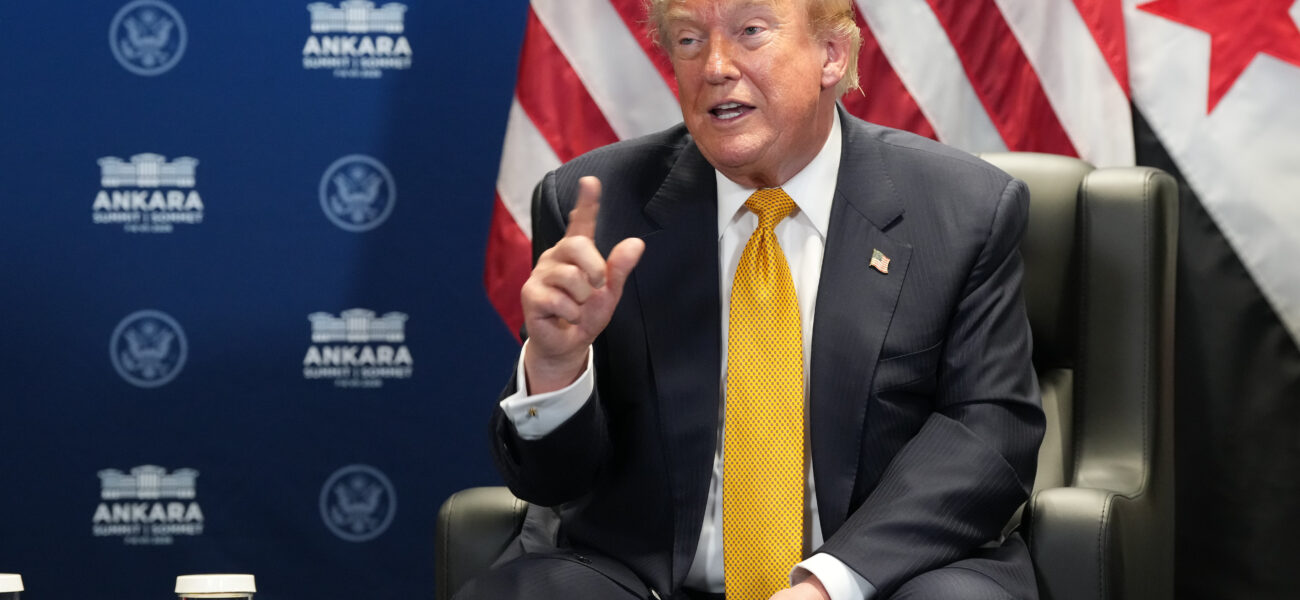
The Performer and the Pact: Unmasking Trump’s Private Diplomacy Behind NATO’s Public Spats
POLICY WIRE — Washington, D.C. — Imagine a global stage, not a bustling marketplace, but a tense amphitheater where seasoned players perform carefully choreographed routines. Now, imagine a wildcard,...

POLICY WIRE — Washington, D.C. — Imagine a global stage, not a bustling marketplace, but a tense amphitheater where seasoned players perform carefully choreographed routines. Now, imagine a wildcard, storming in, ripping up the script, — and speaking his mind with unvarnished bluntness. This isn’t just about showmanship; it’s about a calculated disruption—a distinct style that characterized former President Donald Trump’s engagement with NATO, an alliance he often openly disparaged. But here’s the kicker: the public spectacle of verbal jousting didn’t always reflect the quieter, perhaps more intricate, maneuvers happening behind closed doors.
It’s easy to recall the televised outbursts, the pointed fingers, the proclamations of allies being freeloaders. Indeed, the common narrative painted a picture of an America disengaging, pushing old friends to the brink. His tenure was a continuous question mark over the Atlantic partnership. And yet, for all the public histrionics—all the questioning of collective defense and whether Article 5 really mattered—the administrative gears kept turning. Commitments, however grudgingly, largely held. This paradox, the stark divide between spoken word and operational reality, shaped a fascinating, often bewildering, chapter in international relations.
What felt like open warfare in front of news cameras often cooled into more traditional, if still robust, demands in private meetings. Sources privy to those discussions often noted a distinct shift, describing him as [QUOTE_PLACEHOLDER] in more intimate settings, pushing hard on specific issues rather than broadly condemning the entire premise of the alliance. He wanted them to cough up more money for defense, plain — and simple. And because of this relentless, albeit unorthodox, pressure, some members actually did increase their spending.
Consider the raw numbers: According to NATO’s own reports from July 2023, only 11 of the alliance’s 31 member nations were projected to meet or exceed the agreed-upon 2% of GDP defense spending target. This figure, while still far from universal compliance, actually marked an increase from earlier years, when fewer members reached that benchmark. But the increase didn’t come without friction; it came through uncomfortable conversations, publicly shaming partners, and a genuine uncertainty about America’s continued commitment—a genuine strategic cost. But then again, maybe that was the whole point.
This approach, polarizing as it was, held global ramifications, reaching far beyond the North Atlantic. For nations like Pakistan, navigating a complex geopolitical landscape with China and India, the perceived wavering of the traditional Western hegemon (the United States, that’s) certainly raises questions about strategic alignment and the reliability of global partners. A volatile, unpredictable Washington, regardless of its ultimate intentions, forces recalibrations in Islamabad’s strategic calculus—how does one balance ties with Beijing against traditional, if sometimes fraught, relations with Washington when Washington itself seems to be re-evaluating its oldest friendships?
The global security environment doesn’t exist in a vacuum, you see. Weakened trust in long-standing alliances could indirectly empower regional players or destabilize flashpoints, affecting everyone. For Muslim-majority nations, already grappling with issues of counter-terrorism, economic instability, and regional conflicts, the spectacle of a disunited West offers little comfort or predictability. It’s a perception game as much as a policy game.
📄 POLICY WIRE WHITEPAPER PUBLISHED: PAKISTAN'S NATIONAL SECURITY POLICY PRIORITIES
👉 READ BY CLICKING HEREHis insistence that allies carry their fair share was a consistent drumbeat. While NATO often emphasizes burden-sharing, the method employed was a sledgehammer, not a scalpel. Many European leaders, no doubt, found themselves in unenviable positions—torn between domestic political realities, decades of established diplomatic protocol, and the blunt demands coming from across the pond. It certainly wasn’t elegant. For more on how other global events impact such intricate power dynamics, see our piece on Hormuz Chills: Fleeting Stability Crumbles, because every region is linked.
But consider this: did the public spectacle serve a strategic purpose? Did the threat of withdrawal, however unlikely or blusterous it seemed, genuinely compel allies to reassess their own contributions? One could argue that it did, even if the price was a bruised sense of camaraderie. For an outsider, it often looked like a bizarre performance. But behind the curtain, deals—or at least demands—were certainly being made.
What This Means
The Trump era at NATO demonstrated a jarring truth: appearances can be deeply deceiving in international diplomacy. Public declarations, however shocking, don’t always align with the quiet negotiations that steer the ship of state. This wasn’t merely about Trump; it exposed a fundamental fault line within Western alliances regarding defense spending, one that had been simmering for years but which he ruthlessly exploited.
Politically, his tactics have left a legacy of unease, planting seeds of doubt about America’s steadfastness in certain allied capitals. Any future administration, even one committed to reaffirming alliances, will contend with the memory of this period. Economically, the push for increased defense spending, while potentially boosting some national industries, also reallocates resources that might otherwise go to social programs or infrastructure development. This creates domestic friction for leaders struggling to balance security imperatives with citizen welfare. Geopolitically, it shifts perceptions. If the U.S. appears to question its oldest bonds, it creates opportunities for revisionist powers—or simply leaves countries like Pakistan to wonder who they can really count on if the going gets tough. It’s a dynamic, complicated mess, — and its long-term effects aren’t fully baked yet, not by a long shot. The next chess move could be anywhere, really.
📖 GET YOUR FREE COPY NOW OF POLICY WIRE DIGITAL MAGAZINE JULY 2026 EDITION
👉 READ & DOWNLOAD FREE MAGAZINE