

New Mexico’s Hazy Holiday: A Global Climate Warning
New Mexico's holiday haze and storms are a stark reminder of global climate change. Learn how these local events signal wider impacts on economies & policy.

POLICY WIRE — Santa Fe, USA — So, you thought you were getting a nice, clear holiday weekend in New Mexico? A pleasant escape from the grind? Maybe firing up the grill, splashing in a pool? Well, nature, as it often does, appears to have other plans for swathes of the Land of Enchantment. But, it’s never just about the local forecast, is it? These seemingly isolated weather events — a smoky sky here, a thundershower there — are, frankly, becoming mundane harbingers of a far more chaotic global tableau. The irony isn’t lost: we plan festivities while the planet sends us smoke signals.
Look, the immediate prognosis for much of the state, especially its southern and central reaches, is quite a bit less postcard-perfect than usual. It’s Friday night, — and the sky’s already got that tell-tale tint. Why? Well, blame it on nature’s persistent endeavors. We’re told that [QUOTE_PLACEHOLDER] It’s an almost poetic way of saying your backyard barbecue might just acquire an authentic, unwanted campfire aroma. Another plume, from the Pocket Fire near Sedona, Arizona, may also drift in—just in case one wasn’t enough, right?
This drifting particulate matter—it’s not just a visual inconvenience. [QUOTE_PLACEHOLDER] We’re talking skies that [QUOTE_PLACEHOLDER] Granted, the good news, if you can call it that, is that [QUOTE_PLACEHOLDER] Small mercies, eh? Still, it’s a persistent, unwelcome guest, hanging around like an uninvited cousin at the family gathering. And speaking of guests, an isolated shower or thunderstorm may linger over the Sacramento and Capitan mountains Friday evening. [QUOTE_PLACEHOLDER] It’s hardly the gentle drizzle you’d wish for, more like a fleeting temper tantrum from above.
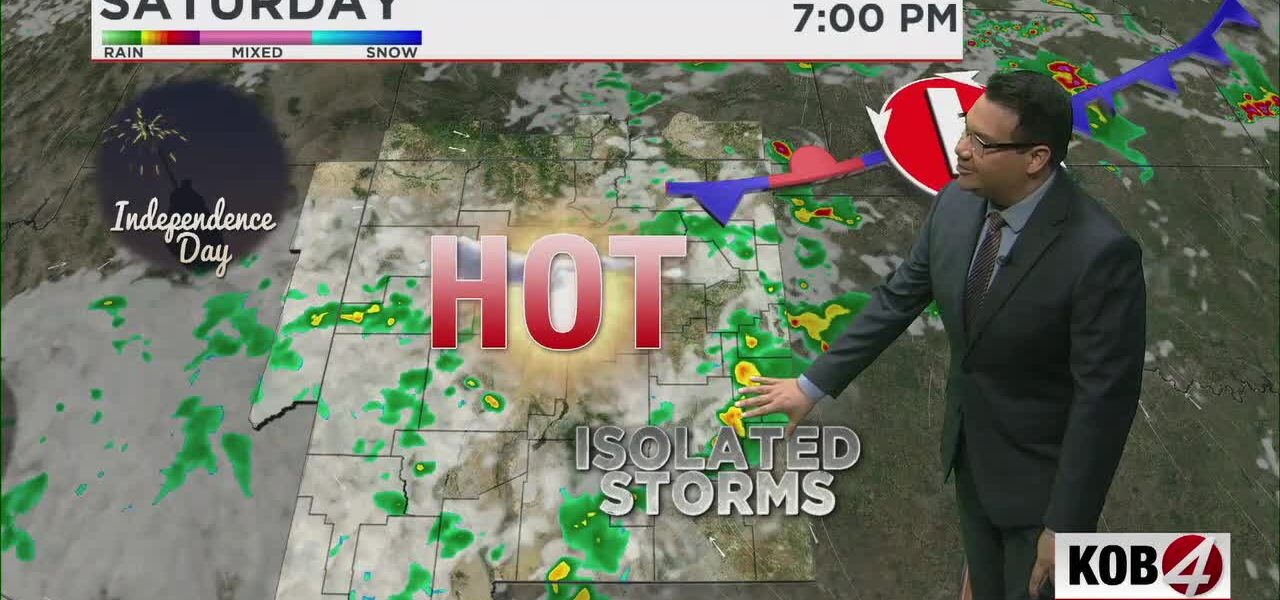
Then comes Saturday, — and the dreaded holiday outlook begins to take shape. The monsoon, that life-giving but occasionally menacing force, is making its way back, but not in a hurry. Much of western New Mexico [QUOTE_PLACEHOLDER] Virga—the rain that vanishes before it even hits the ground—feels like a particularly cruel joke sometimes. But here’s where it gets interesting, at least for weather watchers. [QUOTE_PLACEHOLDER] As Saturday afternoon melts into evening, a front [QUOTE_PLACEHOLDER] You can almost hear the low rumble, can’t you? [QUOTE_PLACEHOLDER] Sunday? Ah, Sunday. We’re told, mysteriously, that [QUOTE_PLACEHOLDER] We’ll see what that brings, won’t we?
These atmospheric events, they’re not just local curiosities; they’re part of a larger, global narrative. Consider how rising global temperatures are fueling an increased intensity and frequency of wildfires across arid regions, making once-rare phenomena a seasonal staple. The UN Environment Programme reported in 2022 that the likelihood of extreme wildfires globally is projected to increase by 14 percent by 2030, and a staggering 50 percent by the end of the century. And, if you think New Mexico’s smoke is a problem, cast your mind toward places like Pakistan, where the changing monsoon patterns—historically a vital lifeblood—now bring catastrophic, unpredictable deluges or extended droughts, displacing millions and ravaging infrastructure. It’s a mirror image, isn’t it, this struggle between humanity’s need for normalcy and nature’s increasingly wild temperament?
We’re looking at a state grappling with the persistent, unsettling backdrop of environmental shift. Fires, once perhaps confined to isolated wilderness, now loom larger, sending their byproducts—smoke, ash, a lingering sense of dread—into our supposedly sacred holiday weekends. This isn’t just about meteorology anymore. This is about living in a new normal where celebratory moments are frequently tinged with the smoke of distant fires, or the ominous rumbling of storms that are just a little too fierce, a little too frequent.
📄 POLICY WIRE WHITEPAPER PUBLISHED: PAKISTAN'S NATIONAL SECURITY POLICY PRIORITIES
👉 READ BY CLICKING HEREWhat This Means
This seemingly innocuous weather forecast for a U.S. state’s holiday weekend, when viewed through a wider lens, speaks volumes about the creeping ubiquity of climate change as a political and economic force. What you’re witnessing in New Mexico isn’t just bad luck; it’s the operationalization of global climate shifts at a micro level. The immediate political implication is increased pressure on local and state governments for better disaster preparedness and more proactive environmental policies, which is always a tough sell when you’re dealing with immediate economic concerns. These fires and erratic weather patterns don’t just clear the air; they clear budgets, demanding resources for emergency services, health impacts, and infrastructure repair that could otherwise go to schools or social programs. But, that’s how the cookie crumbles, isn’t it?
Economically, for communities reliant on tourism—and New Mexico certainly is—these hazy skies and stormy forecasts hit directly at their bottom line. Who wants to plan a hiking trip when you’re inhaling an uncontrolled wildfire? Or spend time outside under skies that look, frankly, apocalyptic? The loss of a single holiday weekend’s revenue, multiplied across various small businesses, compounds quickly. In places like Pakistan, it’s far worse; erratic monsoons don’t just damage property, they obliterate livelihoods, force mass migrations, and fundamentally reshape agricultural cycles, sparking potential geopolitical instability and further burdening an already strained global aid apparatus. So, while New Mexico residents might just grumble about their disrupted holiday, the undercurrent of these climate phenomena is truly global, affecting everything from insurance rates to food security in Karachi and beyond. It’s never just rain or smoke. It’s everything. These aren’t just isolated incidents; they’re symptoms of a systemic planetary fever, impacting economies, straining political will, and frankly, changing the way we live and celebrate everywhere.