


Hormuz Chills: Fleeting Stability Crumbles, Unleashing Oil Price Dread
POLICY WIRE — New York, United States — It wasn’t the direct skirmish, nor the bombastic presidential declaration, that truly sent shivers through the oil markets. No, it was the quiet, almost...

POLICY WIRE — New York, United States — It wasn’t the direct skirmish, nor the bombastic presidential declaration, that truly sent shivers through the oil markets. No, it was the quiet, almost unnoticed halt in commercial shipping traffic through the Strait of Hormuz—a choked artery for a third of the world’s seaborn oil—that spoke volumes. This unexpected stillness, more than any pronouncement from Washington or Tehran, telegraphed just how thin the diplomatic ice had become, pushing already volatile crude futures into a fresh spasm of anxiety. A collective sigh of global relief, barely exhaled after weeks of uneasy calm, abruptly became a gasp.
President Donald Trump, with his customary flair for the dramatic, pulled the plug on the supposed US ceasefire with Iran Wednesday, an abrupt reversal following what he termed Iranian attacks on commercial ships navigating the Strait of Hormuz and on American military outposts in other Gulf nations. Almost instantly, oil prices rocketed to their highest point in weeks. It’s a bitter pill, considering consumers across multiple nations were just starting to feel a bit of slack from the wallet-squeezing prices that defined much of the recent conflict. [QUOTE_PLACEHOLDER]
The messaging couldn’t be clearer: if tankers can’t pass without fear, the oil won’t flow. That’s the bottom line. Jorge Leon, head of geopolitical analysis at Rystad Energy, nailed it in an email, observing, “Tanker traffic through the Strait of Hormuz has essentially stopped, which tells you more about risk perception right now than any statement from Washington or Tehran.” He didn’t pull punches: “Oil markets reacted quickly to the renewed geopolitical risk.” That reaction hits hard and fast.
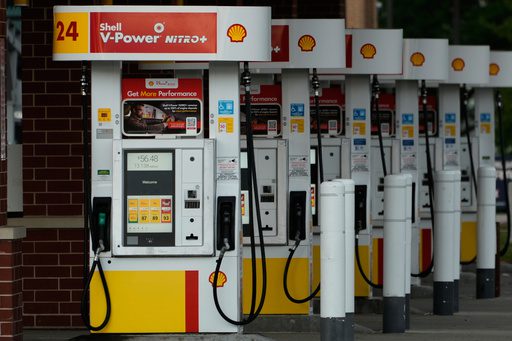
Here in the U.S., gas pump prices edged up slightly Wednesday, with regular gasoline ticking to an average of $3.80 a gallon from $3.79 the previous day, according to the motor club federation AAA. Still, it’s nowhere near the $4.16 average from just a month prior. But don’t get too comfortable. Crude oil dictates the bulk of gasoline’s price tag; when crude shoots up, pump prices follow suit, though it can take weeks for the full punch to land. Because, you know, refineries use oil bought ages ago, and that finished fuel has to travel through a whole logistical labyrinth before it ever reaches your tank.
It gets worse. To cushion the blow of high oil prices during the war, countries like the U.S. had been draining their strategic oil reserves. This isn’t a limitless well. The U.S. Strategic Petroleum Reserve, for instance, held 319.5 million barrels as of July 3, according to publicly available data, the lowest tally since 1983 when the reserve was initially being filled up. Michael Lynch, a distinguished fellow at the Energy Policy Research Institute, puts it plainly: “Unfortunately, the drawdown of strategic stocks means that there’s a lot less ammunition in Trump’s holster.” You’re on your own now, buddy. And that’s not exactly what you want to hear when the Middle East is simmering again.
Brent crude, the international benchmark, scraped near $79 per barrel, its priciest since June 19. American benchmark crude wasn’t far behind at $75.80. The simple fact that a spat near a shipping lane can drive prices up this fast, this far, “highlights how sensitive prices remain to any escalation around the strait, given its role as a critical transit route for global oil flows,” as Leon correctly observed. It’s less about grand geopolitical strategy — and more about crude economics, plain and simple.
With three commercial vessels allegedly hit, the U.S. stripped Iran of its ability to openly peddle its crude globally, effectively tightening the noose. Maritime authorities are now sounding the alarm. International Maritime Organization Secretary-General Arsenio Dominguez publicly “condemned attacks on ships in the strait.” And he didn’t stop there. He bluntly urged, “As long as the safety and security of crews cannot be assured, I urge flag states, shipowners, operators and all relevant authorities to avoid exposing seafarers to unnecessary danger by transiting the strait.” Because, yes, “The situation in the region remains volatile.” Ships are even reportedly going “dark”—turning off transponders—just to sneak through, making accurate tracking next to impossible.
📄 POLICY WIRE WHITEPAPER PUBLISHED: PAKISTAN'S NATIONAL SECURITY POLICY PRIORITIES
👉 READ BY CLICKING HEREThis re-ignited flashpoint directly threatens broader global supply chains already under stress, not just in the Persian Gulf but farther afield. Just days ago, two of the world’s shipping behemoths, Maersk and Hapag-Lloyd, had announced plans to cautiously resume operations through the Suez Canal via their joint venture, Gemini Corporation. That decision followed a brief period of perceived stability in the Red Sea, which had been plagued by attacks from Yemen’s Houthis. “The recent deterioration could put this resumption in jeopardy once again,” noted Judah Levine, head of research at Freightos. Because of course it could. It’s like some cosmic joke, isn’t it?
What This Means
The unraveling of even a flimsy US-Iran truce throws a long shadow over already jittery global markets and policy desks. Economically, this isn’t just about higher prices at the pump for Western consumers. It’s a disproportionate gut-punch to developing economies, particularly across South Asia — and the Muslim world. Nations like Pakistan, heavily reliant on imported energy to fuel their industries and keep the lights on, face immediate currency depreciation and inflationary pressures. When crude barrels tick up by mere dollars, their trade deficits expand, draining precious foreign reserves and pushing them closer to a precipice, potentially exacerbating social unrest already simmering beneath the surface. It also complicates regional stability. Saudi Arabia, Iran’s traditional rival, watches keenly, possibly recalibrating its own strategies. A sustained spike means more difficult aid packages, more desperate debt negotiations, and ultimately, greater political fragility in places that can least afford it. And that instability, like a house of cards beginning to sway, could echo outwards, creating something akin to a broader, systemic implosion. Ben May, a director at Oxford Economics, still holds out hope, suggesting this could just be “a bump in the road” rather than fully “emerging from the ‘eye of the storm,’” citing Trump’s acknowledgement of continued talks. But for those watching the charts — and the cargo ships, the storm just picked up. One doesn’t simply wave away geopolitical headwinds, not when they hit with this kind of economic force.