

Fed’s Tightrope Act: Divisions Deepen as AI, Consumer Moods Threaten Inflation Calm
POLICY WIRE — WASHINGTON, D.C. — Even as the dust from a recent Middle Eastern flare-up begins to settle, casting a hopeful—if temporary—spell over global energy markets, the guardians of...

POLICY WIRE — WASHINGTON, D.C. — Even as the dust from a recent Middle Eastern flare-up begins to settle, casting a hopeful—if temporary—spell over global energy markets, the guardians of America’s economy are, in private, deeply conflicted. They’re watching the rearview mirror, certainly, but it’s the looming windshield that really has them fretting. Turns out, peace in the Strait of Hormuz might not be the panacea for domestic financial angst. That’s the unsettling takeaway from newly released Federal Reserve minutes, where policy titans can’t quite agree on what’s next.
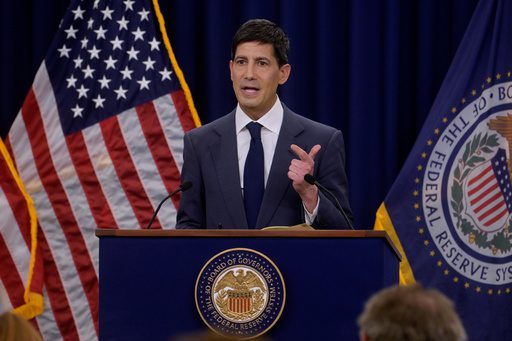
It’s a peculiar moment, isn’t it? The Iran war, which sent gas prices soaring, seems to be cooling down. This should mean softer inflation, right? Not so fast. The unease inside the Fed’s rate-setting committee, particularly in this first batch of minutes under new chair Kevin Warsh, signals a far more intricate, more insidious problem brewing. It isn’t just about geopolitics anymore; it’s about silicon, gigawatts, and the sheer human will to believe prices will stay high. And frankly, that’s a tough beast to tame.
“Many” of the Fed’s 19 officials voiced quite different expectations for where the key interest rate will land by year’s end. One camp thinks it’ll remain stable or even dip a tad below its current 3.6%. The other? Well, “many” also reckon it’s likely to be higher. Imagine running the world’s most powerful central bank with that kind of internal discord. Forecasts laid bare after the mid-June meeting illustrate the split perfectly: half of the 18 policymakers submitting projections felt rates would rise, while the other half thought they’d hold steady or go down. Warsh himself sidestepped the forecasting game, perhaps—a subtle nod to his conviction—because committing too early can box policymakers in. Good instincts, that, given the shifting sands.
This internal rift isn’t just some academic squabble; it cuts right to the heart of what’s driving prices. Policymakers largely pinned hopes on falling gas prices — and fading tariff effects to cool inflation. But a shadow persists, growing longer by the day. They’re genuinely worried that the gargantuan sums being poured into the artificial intelligence buildout—the insatiable demand for cutting-edge chips and vast data centers—will keep prices stubbornly high. This isn’t theory; Apple just hiked laptop — and iPad prices because memory chips got pricier. That’s a direct consequence, isn’t it?
And then there’s the human element. Inflation soared to a three-year high of 4.2% in May after the US — and Israel attacked Iran. Now, with tensions easing, gas prices have fallen back, — and folks expect June’s numbers to look better. But the Fed can’t shake a deeper worry: Are Americans just assuming high prices are here to stay? If consumers and businesses psychologically lock into the idea that inflation won’t recede, it becomes a self-fulfilling prophecy. Businesses then feel justified jacking up prices, and workers—rightly so—demand more pay just to keep pace. It’s a vicious circle. The Federal Reserve Bank of New York reported that consumer expectations for inflation one year from now climbed to 3.7%, the highest in nearly three years. That number isn’t just a statistic; it’s a red flag. But a few officials also believed there was “a case for raising” the Fed’s rate at that meeting, though they agreed to keep it unchanged by unanimous vote.
📄 POLICY WIRE WHITEPAPER PUBLISHED: PAKISTAN'S NATIONAL SECURITY POLICY PRIORITIES
👉 READ BY CLICKING HEREWarsh, appointed by President Trump earlier this year to replace Jerome Powell (who’s still kicking around on the policymaking committee, by the way), has kept things ambiguous. Trump lambasted Powell for not cutting borrowing costs fast enough, yet there’s no strong signal Warsh is rushing to snip them either. He’s been clear on one thing, though: the Fed *will* drag inflation back to its 2% target, a goal it’s missed for over five years. Wall Street heard that — and figured rate hikes were back on the table. And why wouldn’t they?
The supply chain tremors that ripple through tech sectors often echo far beyond Silicon Valley. Think about it: a hike in semiconductor prices isn’t just about a new iPhone. Nations like Pakistan, navigating their own tricky economic waters and already battling double-digit inflation, find themselves directly in the crosshairs. Their ability to import essential goods—even something as fundamental as the technology for infrastructure or education—becomes critically dependent on the global cost of these AI-fueled components and, implicitly, on the US Fed’s moves. When America’s rates rise, capital often flees emerging markets for safer havens, leaving nations like Pakistan grappling with a tougher fight against their own soaring prices and currency devaluation. It’s a cascading effect, subtle but punishing. More on global market dynamics can be found in our recent piece, Beijing’s Perilous Towers: A Whirlwind, a Man, and Asia’s Fragile Urban Dream.
What This Means
This deep division isn’t just Beltway gossip; it’s a big deal. For one, it tells us the Fed’s traditional playbook might be out of date. It used to be, you look at commodity prices, employment figures, — and make a call. Now? You’ve got an AI boom eating up power and chips— “many participants noted that ongoing strong demand for AI infrastructure would likely sustain upward pressure on prices for technology products and electricity”—and the squishy, unpredictable realm of public psychology distorting everything. It suggests that economic policy is becoming far more psychological than purely mathematical. Politically, if Warsh fails to rein in inflation, despite the Iran war winding down, the opposition will hammer the administration for mishandling the economy. The president’s appointment of a new chair will be scrutinized not just for loyalty but for competency. This isn’t a tidy picture, — and it’s certainly not business as usual. And we’re all watching to see who’s right—the optimists banking on cooling conflict or the realists who see new monsters under the economic bed.
📖 GET YOUR FREE COPY NOW OF POLICY WIRE DIGITAL MAGAZINE JULY 2026 EDITION
👉 READ & DOWNLOAD FREE MAGAZINE