


Beijing’s Perilous Towers: A Whirlwind, a Man, and Asia’s Fragile Urban Dream
POLICY WIRE — Chengdu, China — A solitary human figure, caught in the unthinkable grip of an anomalous mid-city tempest, was ripped from a twelfth-floor residence and plunged into the churning chaos...

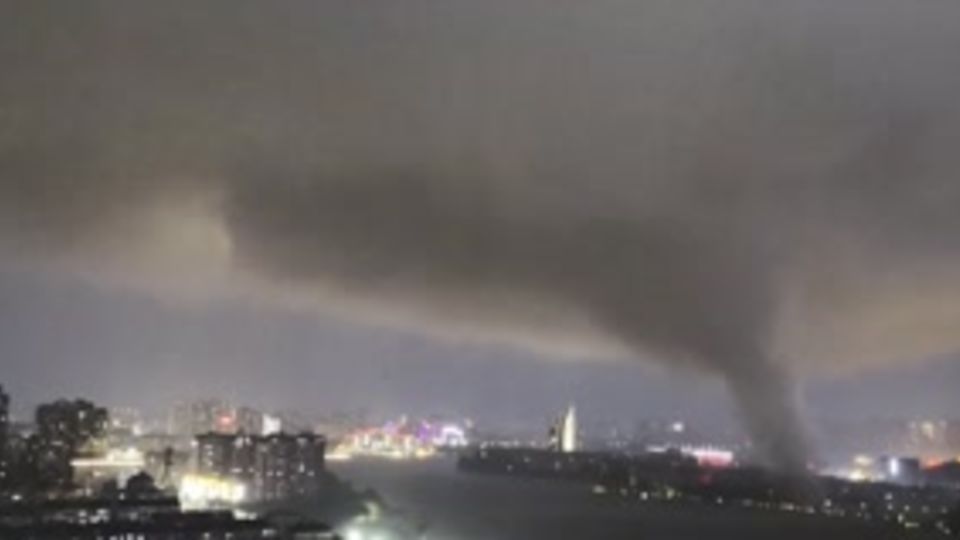
POLICY WIRE — Chengdu, China — A solitary human figure, caught in the unthinkable grip of an anomalous mid-city tempest, was ripped from a twelfth-floor residence and plunged into the churning chaos below. That startling, gut-wrenching image—more nightmare than newsreel—didn’t merely capture the fleeting horror of a tornado in central China; it inadvertently exposed the deep, almost existential unease simmering beneath Asia’s breakneck march toward urban modernity. The spectacle, brief — and brutal, was less about the individual calamity, and more about the collective precariousness. One minute you’re safe, supposedly, within reinforced concrete walls; the next, you’re merely a statistic, a piece of detritus against an indifferent, rampaging sky.
Weather patterns are morphing, — and that’s not really news. But when an F3 equivalent — what experts now term a high-end violent atmospheric phenomenon — carves a path of destruction through a densely packed metropolis, rather than rural farmlands, well, that’s something else entirely. Chinese meteorologists, for all their sophisticated tracking systems, were scrambling to make sense of what many characterized as an unusually ferocious event for a region not typically accustomed to such cyclonic fury. It wasn’t merely the velocity of the winds, or the sheer destructive force. It was the fact that a system, which generally requires certain topographical conditions, materialized with such savage intent right where millions lived and worked in towering steel and glass cocoons. [QUOTE_PLACEHOLDER]
And so, we get a story of raw human vulnerability, played out against a backdrop of national aspiration. China has lifted millions from poverty, a monumental feat often seen through the lens of gleaming skyscrapers and interconnected infrastructure. But those very symbols of progress, the high-rise apartments, the office blocks, stand as increasingly exposed targets to what climate scientists euphemistically call ‘extreme weather events.’ It makes you wonder, doesn’t it, if the speed of development sometimes outpaces the necessary resilience, the foresight, the unsexy details of building codes and urban planning. It’s a question many nations grapple with, including those on China’s western flank.
Look across the border to Pakistan, or even deeper into the South Asian subcontinent. Their cities, too, have grown at dizzying rates, driven by internal migration — and economic opportunity. Yet, these urban centers often remain acutely susceptible to the raw power of nature—from devastating floods that displace millions in Karachi and Lahore, to earthquakes that can level entire districts. The sheer density of human life, packed into infrastructure that sometimes lacks adequate bracing for climate shocks, presents a haunting parallel. China’s experience, visceral as it was with the man from the twelfth floor, isn’t unique; it’s a stark reminder that even the most formidable economies can find their foundations rattled by forces beyond immediate control. Beijing might boast a robust disaster response apparatus, but you can’t really negotiate with a vortex, can you?
One grim data point underscores this: global economic losses from natural disasters have more than tripled since the 1980s, escalating from roughly $50 billion per year to well over $150 billion in recent years, according to figures compiled by the United Nations Office for Disaster Risk Reduction. Much of that escalating cost is tied directly to urbanization—more assets, more people, in harm’s way. The Chengdu tornado, therefore, isn’t just a localized tragedy. It’s a chilling portent for mega-cities worldwide, from Jakarta to New York, particularly those built on shaky geologic foundations or in nascent disaster corridors.
📄 POLICY WIRE WHITEPAPER PUBLISHED: PAKISTAN'S NATIONAL SECURITY POLICY PRIORITIES
👉 READ BY CLICKING HEREThis incident—a vivid, terrifying example of urban fragility—will undoubtedly spark conversations, if not concrete policy shifts, within the Communist Party’s planning committees. How do you square an ethos of absolute control — and stability with phenomena that are fundamentally uncontrollable? It’s a prickly problem. But they’re a practical bunch, aren’t they? They’ve shown a capacity to adapt, albeit on their own terms. And this kind of public, highly visible human drama? It forces uncomfortable questions into the spotlight.
What This Means
The image of a life suspended, then extinguished, high above a bustling Chinese city offers a stark, unflinching look into the political economy of climate vulnerability. It’s not just about rising global temperatures; it’s about how rapid development interacts with those shifts. For the Communist Party of China (CPC), maintaining social stability — and economic growth are twin imperatives. An event like this, where modern urban infrastructure visibly fails to protect its inhabitants, chips away at the carefully constructed narrative of invincibility. It signals that even the nation’s celebrated progress isn’t immune to primal forces. The economic implications are multifaceted, too. Insurers will certainly re-evaluate risk profiles for high-rise residential areas. Property values in storm-prone regions, even within China’s tightly managed housing market, could experience subtle shifts. More critically, it pushes the CPC to consider further investment in resilient infrastructure and early warning systems. But because these improvements are costly and often less visible than grand infrastructure projects, they compete for precious resources. For similar fast-developing nations, like those across the Muslim world—think burgeoning cities in Turkey or Indonesia—China’s grim lesson serves as a reminder of their own exposure to unpredictable environmental wrath. The pressure is on not just to build big, but to build smart. After all, the cost of overlooking nature’s whims can be tallied not just in damaged buildings, but in unimaginable human cost, with significant impacts on public health infrastructure and the social safety net, echoing issues globally.
The subtle irony, of course, is that in their pursuit of economic might, nations often concentrate their populace into environments increasingly vulnerable to the very phenomena exacerbated by industrial growth. It’s a cyclical, almost poetic tragedy. We’re witnessing the unintended consequences of grand ambition. What the central government decides next, how it recalibrates its development priorities, will be keenly observed, not just by its own citizens but by any nation balancing progress with perilous climate realities. These are global games, played on ever more precarious fields. And this time, a brutal storm played out its own rules.
📖 GET YOUR FREE COPY NOW OF POLICY WIRE DIGITAL MAGAZINE JULY 2026 EDITION
👉 READ & DOWNLOAD FREE MAGAZINE