


Shadows of Persuasion: New Mexico’s Latest Murder Trial Echoes Universal Deceptions
POLICY WIRE — Santa Fe, N.M. — It’s a chilling reminder that beneath the calm desert skies of New Mexico, human depravity can manifest with a casual cruelty that belies its horrific nature. Not...

POLICY WIRE — Santa Fe, N.M. — It’s a chilling reminder that beneath the calm desert skies of New Mexico, human depravity can manifest with a casual cruelty that belies its horrific nature. Not merely a domestic dispute gone sideways, but an alleged premeditated act of manipulation that ultimately cost a young woman her life, now being dissected under the stark fluorescent lights of a courtroom.
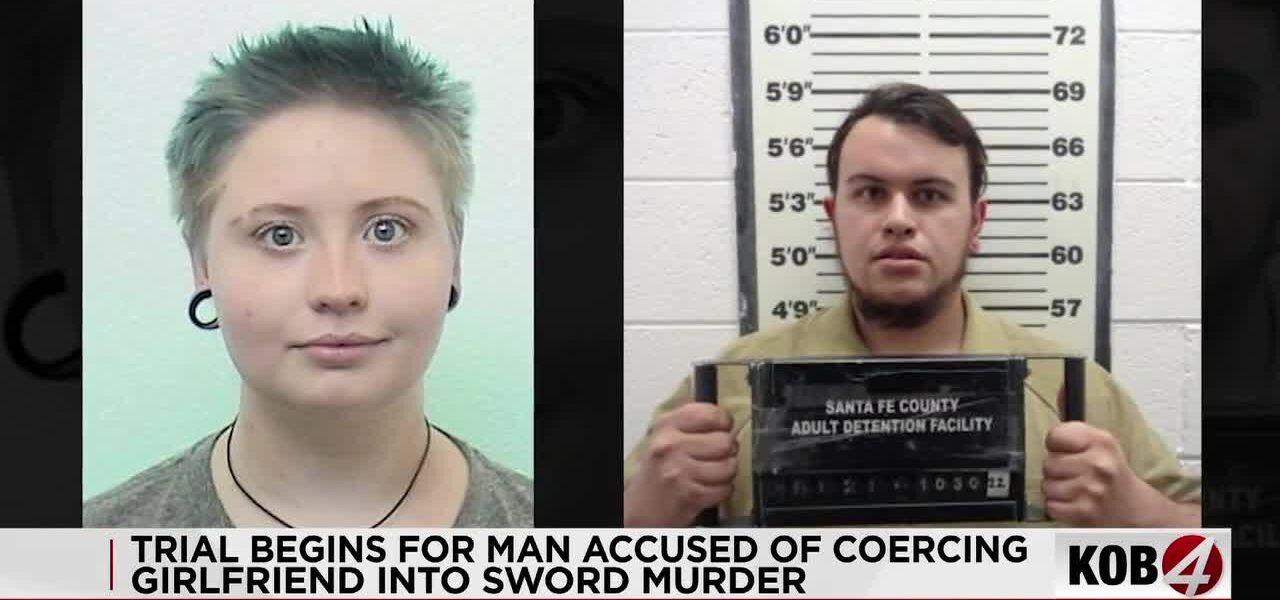
The machinery of justice has whirred into action this week, focusing on Isaac Apodaca, who faces a formidable array of charges. He’s accused of literally “coercing his girlfriend into killing and nearly decapitating a woman in Santa Fe in October 2022”—a phrase that rips through the sanitized language of legal filings with grotesque force. This wasn’t some impulsive flash of rage, mind you. It was a methodical descent, as “investigators who allegedly found text messages discussing a plot to kill Jennings” have indicated. [QUOTE_PLACEHOLDER]
The victim, Grace Jennings, was only 21. Her accused assailant, Kiara McCulley, was 19 at the time, — and Apodaca himself a mere 25. An intricate, ugly triangulation emerges: Apodaca and McCulley were “romantically linked to Jennings.” Such entanglements—youth, proximity, fatal attraction—create a crucible for events that can shatter lives. But coercion? That’s where the legal thicket truly begins.
McCulley, already locked into a future of penitence, will “testify against Apodaca.” She “pleaded guilty in February 2025 to aggravated second-degree murder and conspiracy to commit murder,” and her deal means “at least 30 years in prison.” It’s a significant sentence, meant to reflect the gravity of her actions. Yet, the prosecution’s framing paints her not as the primary architect of death, but as a tool wielded by another. And that other, Apodaca, faces a “first-degree, willful and deliberate murder charge and an associated conspiracy charge.” There’s no small difference in culpability between carrying out a deed and orchestrating it—a distinction the courts are now tasked with untangling.
Because, really, how does one even begin to quantify the psychological weight of such influence? To what extent does a person—particularly a young, impressionable one—retain agency when another, older individual systematically chips away at their autonomy? These are not academic questions for the courts. They’re about life, death, — and decades behind bars. We’re talking about a cold, deliberate plan where a sword was wielded — quite literally — against someone’s life, in a residential garage “on the 5000 block of Jaguar Drive.” This wasn’t happenstance. It was an outcome.
The very fabric of society depends on the notion that individuals are responsible for their actions. But what happens when those actions are allegedly the product of sustained psychological pressure? It becomes a murky gray area. And these cases — ones involving significant age gaps and power imbalances — tend to draw more scrutiny for that very reason. But folks wonder if true justice can be served when the puppeteer and the puppet are tried separately, with different degrees of accountability. It’s a riddle, frankly. One the state of New Mexico is currently attempting to solve.
📄 POLICY WIRE WHITEPAPER PUBLISHED: PAKISTAN'S NATIONAL SECURITY POLICY PRIORITIES
👉 READ BY CLICKING HEREWhat This Means
This macabre Santa Fe trial is far more than local news; it’s a policy litmus test, a chilling microcosm of the profound vulnerabilities within human relationships and our justice system’s attempts to navigate them. From a societal standpoint, the allegations against Apodaca lay bare the insidious potential of manipulation — not just in romantic contexts, but in broader social and political spheres too. Think about the recruitment tactics of extremist groups, or the power dynamics within corrupt political establishments; the principle of exploiting individual weaknesses for a nefarious end isn’t geographically bound.
For instance, in some parts of South Asia or the broader Muslim world, discussions around collective responsibility versus individual culpability in the context of criminal conspiracy are regularly re-examined, particularly when elements of persuasion or undue influence are alleged, often within highly structured family or social units. The notion of “honor” crimes, though starkly different in motive, sometimes introduces complex debates about the extent to which individuals are coerced by familial or community pressures. This case, though thousands of miles away and culturally distinct, taps into that universal dilemma of how societies assign guilt when agency itself is clouded.
Economically, prolonged trials involving complex psychological elements and multiple defendants become drains on public resources. The cost to New Mexico taxpayers for managing the entire judicial process — from investigation through conviction and incarceration for even a single capital murder case — can run into the millions, as estimated by the ACLU of New Mexico for similar cases. That’s a considerable burden, particularly for states wrestling with tight budgets, and it sparks ongoing debates about judicial efficiency and resource allocation. But justice — however convoluted — remains, or should remain, non-negotiable. Or so we hope.
Politically, cases like this invariably fuel public discourse about legal precedents for coercion and the efficacy of plea bargaining. The perception of justice often hinges on whether the primary instigator, rather than just the direct perpetrator, receives appropriate accountability. It makes you wonder what kind of systemic improvements, if any, can really safeguard vulnerable people from becoming unwitting instruments in another person’s horrific agenda. And it makes you pause — how many such situations simmer unseen, until tragedy rips the cover off? — for a moment of quiet introspection about the darkness people harbor, and the capacity for others to fall under its spell. We’re watching to see how Santa Fe writes the final chapter here, but the lessons are global. And they aren’t pretty.
📖 GET YOUR FREE COPY NOW OF POLICY WIRE DIGITAL MAGAZINE JULY 2026 EDITION
👉 READ & DOWNLOAD FREE MAGAZINE