


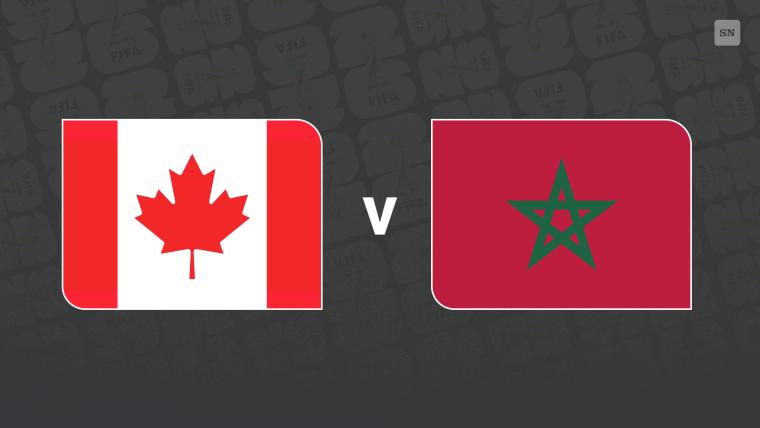
Canada vs. Morocco: Global Power Play at World Cup
The Canada-Morocco World Cup clash is more than a game. Unpack its geopolitical undercurrents, revealing shifting global influence, national identity, and rising powers.

POLICY WIRE — Houston, USA — The global spectacle of football, for all its dazzling footwork and stadium roar, rarely sheds its political skin entirely. Not when Canada, the seemingly perpetually chilly underdog, and Morocco, a resurgent force from the Global South, are slated to collide in a World Cup Round of 16 clash. Forget the tactical formations for a moment; this Saturday, NRG Stadium isn’t just hosting a game, it’s staging a potent — if unspoken — narrative about shifting global influence and the intoxicating power of shared triumph.
It’s easy to dismiss it as ‘just sports.’ But don’t. Canada, co-hosting the sprawling 2026 tournament, scraped by their last opponent with a heart-stopping, 91st-minute strike that left their coach looking less like a strategist and more like a lottery winner. Stephen Eustáquio, bless his timely boots, delivered their first-ever knockout round victory, sending the nation into an unfamiliar, ecstatic delirium. They’ve got something to prove, you see, a chip on their shoulder as they step up for their turn on the international stage.
And then there’s Morocco. The Atlas Lions, they call them. They clawed their way past the formidable Netherlands in a penalty shootout, a truly agonizing affair that lasted 120 minutes of gut-wrenching play. Ismael Saibari, the penalty hero, secured a victory that reverberated far beyond Rotterdam, sending ripples of pride across the Arab and African worlds. His goal didn’t just knock the Dutch out in their earliest tournament exit ever; it broadcasted a clear message: Don’t sleep on us. Not anymore.
For nations like Pakistan and those across South Asia, North Africa, and the broader Muslim world, Morocco’s journey has taken on a particularly charged significance. It’s a victory by proxy, a collective cheer for a shared identity finally punching above its weight on a truly global platform. Every touch, every pass, every save carries the hopes of millions who don’t often see themselves reflected at the pinnacle of international sports. Dr. Fahmida Rahman, a political sociologist based in Islamabad, noted, “When Morocco excels, it isn’t just about football in Pakistan; it’s a profound cultural moment. It reminds us of our own potential, our collective identity in a world too often focused on divisions.” That’s a powerful undercurrent, wouldn’t you say?
Prime Minister Justin Trudeau, ever keen to leverage national moments for domestic unity, offered a carefully worded sentiment on the eve of the match: “This Canadian team embodies the spirit of our country – resilient, diverse, and never counting ourselves out. They’ve shown what’s possible, — and we’re all watching, immensely proud of their journey so far.”
FIFA confirmed that the 2026 World Cup, jointly hosted by Canada, the United States, and Mexico, will expand to feature a staggering 48 teams, a statistical leap reflecting football’s ever-widening embrace. This expansion, it’s worth noting, allows more of these compelling underdog narratives to emerge, pushing once-peripheral nations into the international spotlight.
📄 POLICY WIRE WHITEPAPER PUBLISHED: PAKISTAN'S NATIONAL SECURITY POLICY PRIORITIES
👉 READ BY CLICKING HEREMorocco’s Minister of Sports, Rachid Talbi Alami, meanwhile, didn’t shy away from the broader implications of his nation’s stunning progress. “Our team’s performance isn’t just about wins and losses; it’s a declaration of our nation’s vitality and a testament to the immense talent blooming across our continent,” he asserted, undoubtedly with a glint in his eye.
This match, set to kick off at 1 p.m. ET on Saturday, July 4, from Houston – an American city teeming with its own diverse populace – is accessible across the U.S. on FOX, with streaming options aplenty on fubo — and Fox’s dedicated platforms. Because, honestly, you’d be a fool to miss this one. It’s more than a game; it’s a pulse check on who truly holds power on the world’s grandest sporting stage.
What This Means
The geopolitical stakes inherent in this Canada-Morocco showdown are significant, if largely unstated. Canada’s performance, as a co-host for 2026, directly impacts the perception of its organizational capabilities and national sporting prestige. A strong run amplifies national pride, translating, perhaps, into broader economic benefits through tourism and global attention. It’s soft power in action, essentially a public relations masterclass without the ad spend. For Morocco, however, the implications are arguably more profound. Their success challenges established hierarchies, not just in football, but subtly in perceptions of capability and global relevance for Africa and the broader Muslim world. It fosters solidarity, ignites nationalistic fervor, — and serves as a powerful symbol of rising influence. In regions often associated with conflict or underdevelopment, a football team’s triumph can rewrite headlines, even if temporarily. The match is also a microcosm of the changing landscape of global sport itself—more inclusive, more competitive, and ever more entwined with identity politics.