


Oakland’s Slow Demise: Another A’s Game, Another Chapter in a Franchise Adrift
POLICY WIRE — Detroit, Michigan — Forget the box score; the true narrative unfolded not on the emerald field, but in the dugout, in the strained expressions of a manager, and in the unsettling rhythm...

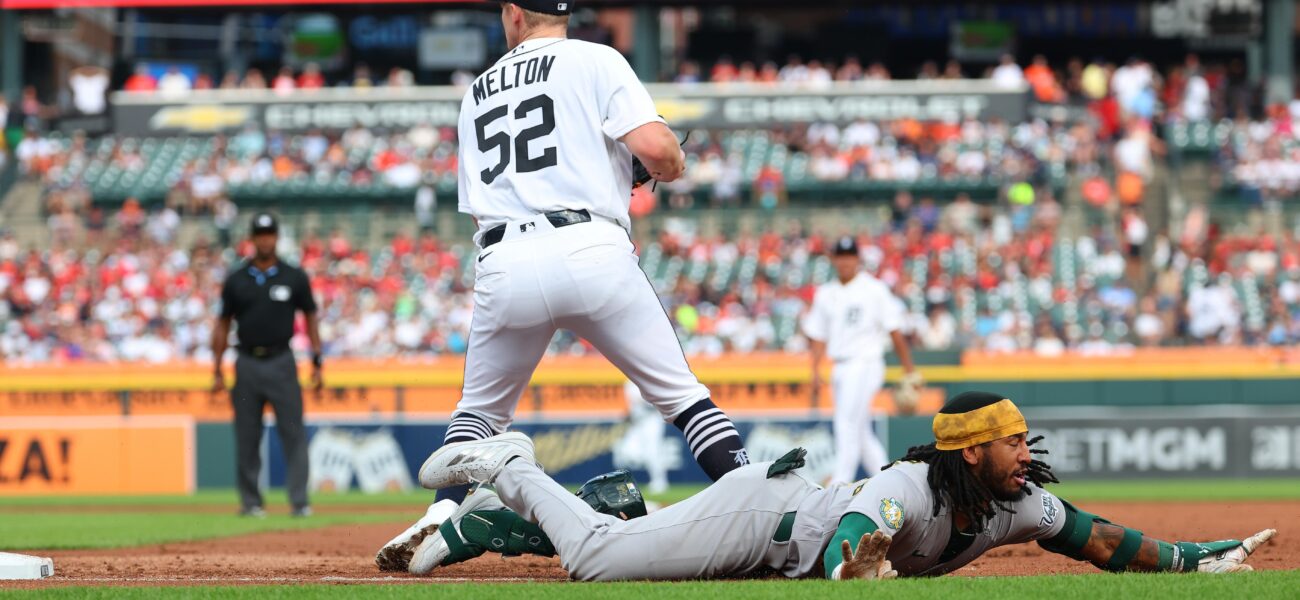
POLICY WIRE — Detroit, Michigan — Forget the box score; the true narrative unfolded not on the emerald field, but in the dugout, in the strained expressions of a manager, and in the unsettling rhythm of a team that increasingly resembles a political metaphor for managed decline. This wasn’t just a 6-1 drubbing by the Detroit Tigers on Wednesday; it was another chilling exhibition of the Oakland Athletics’ systematic unraveling, a saga playing out across American sports pages and, indeed, boardroom battlefields. The score is merely a footnote to the deeper structural fissures.
But the real kicker came from within. The A’s clubhouse, it seems, isn’t just battling opponents. It’s fighting a bug, too. Nick Kurtz, a first baseman, had to bow out early for the second straight day, an ill omen suggesting a larger, unseen affliction spreading through the ranks—a poignant parallel to the organization’s persistent struggles off the field. It’s hard to win when your soldiers are sick, literally — and figuratively.
Manager Mark Kotsay, accustomed to managing a perennial rebuild, tried to project resolve post-game, even as his rotation resembled a turnstile. “It’s a tough stretch, no doubt. But these young men, they don’t quit,” Kotsay told Policy Wire, his voice perhaps a touch wearier than usual. “We’re battling every single day, trying to find our rhythm. That’s all you can ask for.” One wonders if he truly believes that, or if it’s the standard talking points issued from a bunker under siege.
Jeffrey Springs, the A’s starting pitcher, served up batting practice, not professional heat. He logged only 4 1/3 innings, giving up six runs — and four walks, capped by two moonshot home runs. This wasn’t an anomaly. The guy’s sporting an ERA north of 6.00 and, according to internal team analytics, has surrendered more home runs over his last 15 starts than any other A’s pitcher in recorded history. That’s a statistic that doesn’t just sting—it implies a fundamental flaw in the foundational pillars of the pitching strategy. And it’s led the team to employ an MLB-high 4.2 pitchers per game, a frantic dance on the mound born of desperation, not design.
Then there’s the broader issue, the 800-pound gorilla in the room, if you will: a franchise in existential transit. A senior league executive, speaking anonymously due to ongoing negotiations, articulated a stark economic reality. “Look, no one likes where we’re at, but we’ve got a plan. You’ve got to invest in the future, even if it hurts right now. This market—it’s got its own challenges, always has.” He, of course, referred not just to player payrolls, but the public funding wrangles that have long defined Oakland’s contentious relationship with its athletic tenants. It’s a classic struggle for scarce resources, much like how fledgling industries in South Asian nations like Pakistan grapple with infrastructure deficiencies and an unstable talent pool. The Athletics, in this context, are effectively operating like a distressed asset.
Joshua Kuroda-Grauer, a rookie infielder, provided the solitary flicker of competence, chalking up three hits. But his efforts were, for the most part, wasted. The A’s went a miserable 2-for-10 with runners in scoring position, leaving nine stranded—ghosts haunting the bases. This isn’t simply bad luck; it’s a failure of execution, a testament to a collective breakdown when pressure mounts.
What This Means
The plight of the Oakland Athletics has long transcended mere sport. It’s a textbook study in asset stripping and a fascinating case study in how municipalities engage, or fail to engage, with their sports franchises. The ongoing relocation saga to Las Vegas has created a psychological free-fall for players and fans alike. Economically, the A’s become less a cultural institution and more a transient corporation seeking the best deal—a reflection of wider market forces. This transactional approach to team ownership invariably siphons away loyalty and community capital, leaving behind a legacy of cynicism. Politically, the situation lays bare the brutal choices local governments face between funding schools and hospitals versus stadiums. The ripple effect, an underperforming team bleeding fan interest and local revenue, just perpetuates a cycle of despair, an ongoing question mark hanging over the idea of sports as a public trust. They’re not just losing games; they’re losing their narrative, piece by painful piece.