


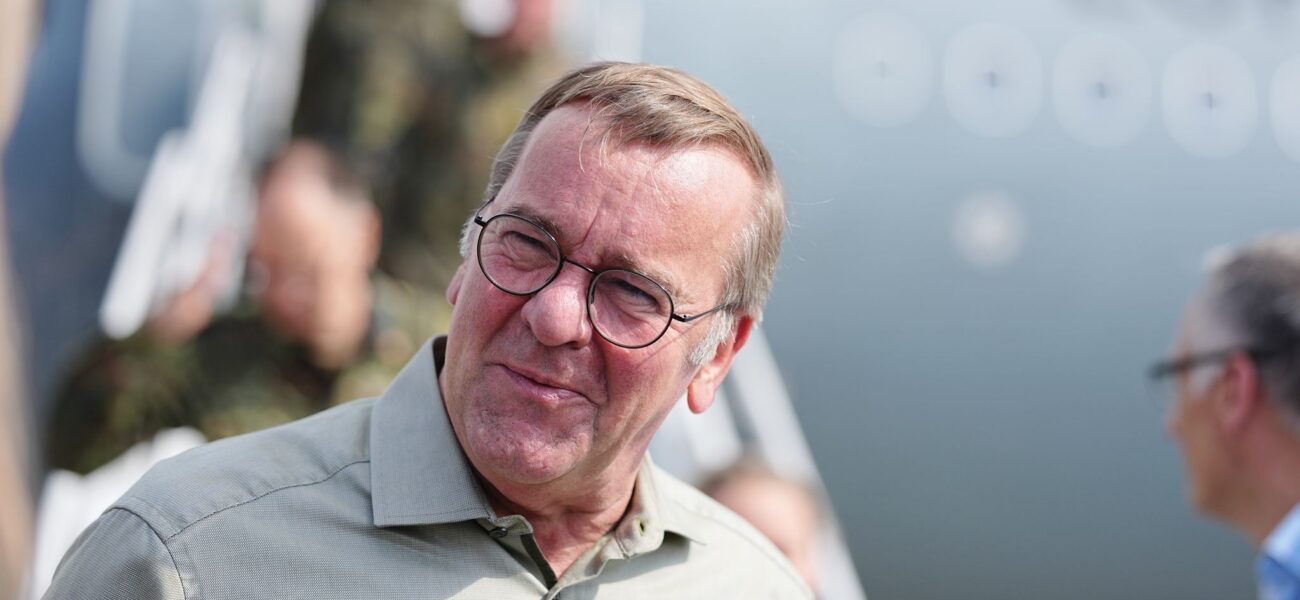
Germany: AfD is Moscow’s ‘Pawn,’ Says Defense Minister
German Defense Minister Pistorius labels the far-right AfD as Moscow's 'unwitting pawns,' warning their actions threaten national security and Western unity. Learn more.

POLICY WIRE — Berlin, Germany — Sometimes, the quiet threats speak the loudest. It ain’t often you hear a top defense minister lay out the nation’s political landscape like it’s a field manual for geopolitical survival, but here we’re. Boris Pistorius, Germany’s man in charge of defense, just dropped a hammer. His latest broadside against the far-right Alternative for Germany (AfD) isn’t about their local gripes or their domestic posturing; it’s about Moscow. And that—that’s a whole different kettle of fish.
It’s not just a political jab; it’s a direct accusation of potential, albeit perhaps unintentional, collaboration with an adversarial foreign power. Pistorius didn’t mince words, painting a stark picture of a party he sees as playing right into the Kremlin’s hands. He basically said they’re doing Russia’s dirty work, weakening Western unity from the inside. But, then again, what do you expect when you’re dealing with the defense chief of Europe’s economic powerhouse? He’s not exactly known for flowery language, is he?
This isn’t some backroom whisper either. It’s an open challenge, tossed right into Germany’s boiling political stew. The AfD, which has seen its support surge—a recent survey by the German Political Barometer pegged their approval rating at a shocking 22%, making them the second strongest party—doesn’t just threaten established parties; it shakes the very foundations of how Berlin operates on the global stage. We’re talking about a party that has, let’s say, a rather relaxed view on Vladimir Putin’s Russia, even as war grinds on in Ukraine.
Because, see, this isn’t merely about ideological kinship. It’s about how that kinship translates into policy—or, worse, inaction—that benefits Moscow. The insinuation is clear: by echoing certain narratives, by pushing for a softening of sanctions, or by generally sowing discord within the EU and NATO, the AfD inadvertently (or not) serves as a force multiplier for Russian influence. It’s a chilling prospect for a country that spent decades painstakingly building bridges in Europe after its own dark history. Pistorius, he sees the pattern. He’s saying, clear as a bell, that this alignment isn’t good news for anyone, not least Germany itself.
The minister’s remarks have, of course, kicked up a storm. It’s hard to imagine they wouldn’t. The AfD’s predictable retort was swift: [QUOTE_PLACEHOLDER]. They often cast themselves as the only true voice of German national interest, sometimes by attacking perceived globalist elites and, yes, that often includes the EU and NATO—institutions which, coincidentally, Russia wouldn’t mind seeing weakened. It’s all very neat, isn’t it?
And let’s be honest, it puts Chancellor Olaf Scholz’s government in a bit of a bind. How do you govern effectively when your primary opposition, which has significant electoral momentum, is being publicly branded as a potential national security risk? It makes every domestic debate about foreign policy—every euro sent to Kyiv, every NATO exercise, every diplomatic overture—fraught with deeper implications. It’s a delicate dance, trying to keep a lid on this while still maintaining an image of a unified front against external threats. Germany’s internal wrangling often has external consequences, reverberating through allied capitals.
📄 POLICY WIRE WHITEPAPER PUBLISHED: PAKISTAN'S NATIONAL SECURITY POLICY PRIORITIES
👉 READ BY CLICKING HEREJust look at how such narratives can get spun — and twisted. In countries like Pakistan, for instance—a nation often navigating its own complex geopolitical currents, balancing relations with China, the US, and a historically distant but not irrelevant Russia—the idea of Western unity fracturing from within by parties aligned with Moscow isn’t just an abstract concern. It’s an example, perhaps, of how Western internal political instability can become a broader strategic consideration for nations further afield. They watch this stuff, believe me. It might be Germany, but the implications for the global balance of power, even for states with their own concerns about regional hegemony, aren’t lost on them.
The AfD’s ascent also challenges Germany’s commitment to multilateralism, something it’s been championing fiercely for decades. A less reliable, internally divided Germany is a less effective partner, full stop. Its leadership role in European security, its economic influence, its moral authority—all could face erosion if a significant chunk of its electorate swings toward a party perceived to be, wittingly or not, aiding geopolitical rivals. The stakes, then, are rather high. You’ve gotta wonder, how many times can a country absorb these kinds of blows without fracturing a bit?
What This Means
Pistorius’s direct broadside against the AfD marks a significant escalation in how mainstream German politics views and confronts its far-right populist opposition. It moves beyond standard political sparring and positions the AfD’s Moscow sympathies as a national security concern, full stop. Economically, this narrative, if it gains traction, could deter foreign investment—businesses tend to shy away from nations seen as politically volatile or vulnerable to foreign interference. Think about it, who wants to build factories if the next government might flip-flop on core alliances? Politically, it empowers more centrist parties to form broader, if unwieldy, coalitions aimed at isolating the AfD, potentially shaping upcoming regional and federal elections in surprising ways. We could be looking at an era of uncomfortable alliances in Berlin, all in the name of containment. For Pakistan — and other South Asian nations, Germany’s internal cohesion matters more than some might realize. A weakened, inward-looking Germany means a less robust EU, potentially less influence pushing back on things like energy market destabilization or global supply chain disruptions that directly impact their economies. A stable, assertive Berlin contributes to a more predictable global order. A fragmented one? That’s a free-for-all, — and nobody needs that kind of chaos right now.