


Albuquerque’s Cool Comfort Under Threat as PNM Hints at Voluntary Sacrifices
POLICY WIRE — Albuquerque, New Mexico — There’s a certain casual arrogance in expecting air conditioning on blast, icy drinks at the ready, all through the summer’s most brutal stretches. It’s the...

POLICY WIRE — Albuquerque, New Mexico — There’s a certain casual arrogance in expecting air conditioning on blast, icy drinks at the ready, all through the summer’s most brutal stretches. It’s the invisible hand of modern convenience, the humming assurance of an uninterrupted lifestyle. But that hand, it seems, can occasionally wobble—or at least ask you nicely to take yours off the thermostat.
Down in the heart of New Mexico, PNM, the power behemoth, recently dropped a little bombshell, cloaked in bureaucratic civility, right onto the far northeast residents of Albuquerque. They’re not cutting power, mind you; not yet, anyway. They’re simply reserving the right to *ask* for it. It’s a subtle nudge, isn’t it? A corporate plea to voluntarily curb that electricity habit as temperatures surge. What a picture: thousands of air conditioners collectively sighing. [QUOTE_PLACEHOLDER]
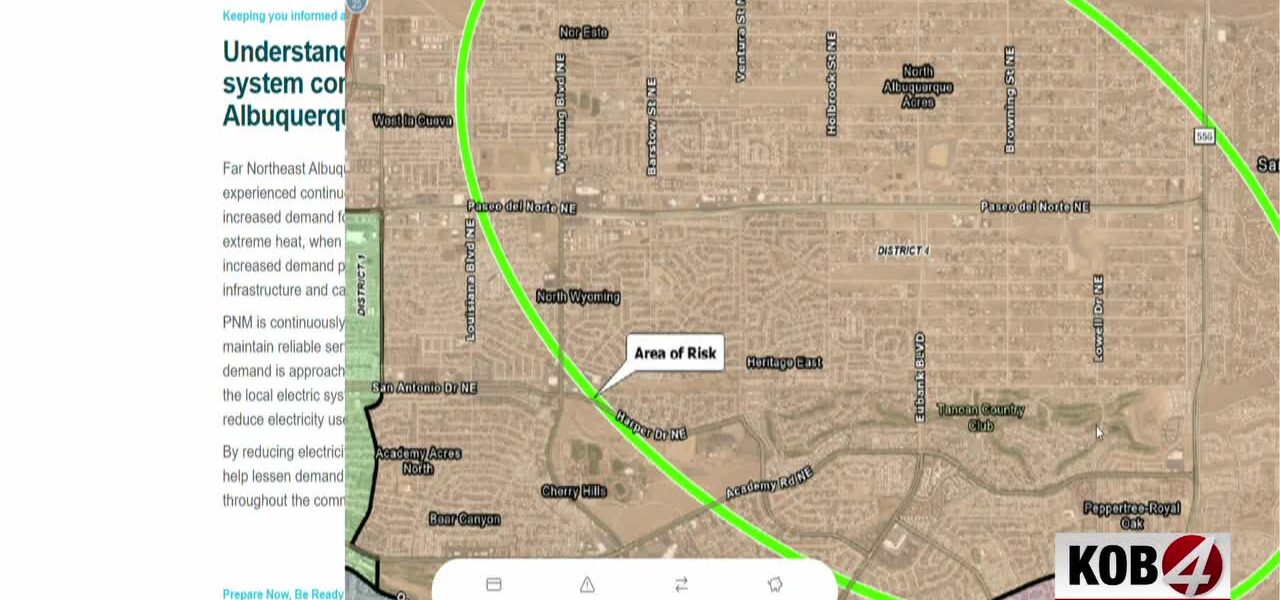
On Wednesday, the utility announced a quiet contemplation: it may ask far northeast Albuquerque customers to voluntarily reduce power usage as heat keeps demand high. You know, because it’s hot, — and everybody’s trying to keep their home from becoming a Dutch oven. The core message, however, was meant to be reassuring. And it was this: the utility says it won’t shut off electricity. That’s something, at least, isn’t it?
But how does one voluntarily reduce an essential commodity during peak need? It’s a paradox baked into the grid itself. The promise of unceasing, on-demand power has built a modern existence, from refrigerators to life support systems. And now, under the stress of a relentless summer sun, that promise comes with an asterisk. PNM said it’s monitoring the system in far northeast Albuquerque, a careful watch on a delicate balance. The unspoken reality is, they may ask customers to reduce their usage if demand reaches a point that affects the electric system. Imagine being on the receiving end of that particular corporate outreach: an email, maybe a text, kindly suggesting you suffer a little less comfortably for the greater good.
The ask, if it materializes, would be strategic: any request would apply during peak hours from 4 to 9 p.m. in that part of the city. That’s prime time for dinner prep, evening Netflix binges, — and generally escaping the day’s retained heat. It’s not just an inconvenience; it’s an interruption of the domestic rhythm. It’s a sign that the very foundation of our climate-controlled lives is, perhaps, not as unshakeable as we’d prefer to believe. PNM, ever the courteous entity, says it will contact customers directly if it asks for voluntary power reduction. They’ll give you a heads-up before you’re subtly guilt-tripped into a dimmer living room.
Contrast this subtle diplomacy with, say, the power situation in Karachi, Pakistan—a metropolis of over 16 million people. There, during punishing summer months, planned and unplanned load shedding can mean hours-long, routine outages, a stark, often brutal, fact of daily life, not a gentle suggestion. Residents there don’t get a text message; they get darkness — and sweat. The expectation is not continuous power, but intermittent bursts. But here in Albuquerque, even the whisper of a voluntary cut feels like a major development, a subtle crack in the facade of perpetual comfort.
Nationally, air conditioning accounts for nearly 12% of all household electricity use, a figure that surges exponentially during extreme heat events, according to the U.S. Energy Information Administration. That’s a staggering draw on the system, one that our existing infrastructure wasn’t exactly designed to handle indefinitely, particularly as climate change cranks up the thermometer year after year.
What’s unfolding in Albuquerque is a microcosmic lesson in how global climate patterns, consumer expectations, and aging infrastructure are colliding. It’s not a dramatic blackout, but a polite, preemptive plea. That politeness, though, carries a heavy weight—it’s an acknowledgment of system stress, a whisper of vulnerability beneath the concrete and steel. And we’ve all grown accustomed to that smooth, unquestioning hum of the grid, haven’t we? Perhaps a bit too accustomed. For more on the hidden vulnerabilities beneath our high-tech facades, one might consider the broader discussion on digital vulnerabilities in a connected world here, and the tenuous grip of essential services.
What This Means
This PNM announcement, even with its emphasis on voluntary compliance and a no-shutdown policy, points to a brewing storm in infrastructure reliability, not just for Albuquerque but for numerous American cities facing increasingly brutal summers. Politically, this puts utility companies—and by extension, the regulatory bodies overseeing them—in an uncomfortable spotlight. They’re trying to walk a tightrope: ensure public safety and comfort without alienating ratepayers or admitting to systemic vulnerabilities.
The economic implications are insidious. What begins as a voluntary request can quickly morph into an unwritten social contract, or worse, a prelude to more stringent measures. Businesses, especially those reliant on cooling or constant power, face efficiency dilemmas. Do they invest in backup generators, adding to operating costs, or simply endure reduced productivity during peak hours? And what about the everyday household? The elderly, the infirm, young children—for them, air conditioning isn’t a luxury; it’s a medical necessity. The subtle pressure to conserve puts an undue burden on those least able to cope with heat.
The broader takeaway for policy-makers is clear: climate change isn’t just about rising sea levels or extreme weather; it’s also about the mundane yet essential mechanisms of daily life—the power grid, our water systems—coming under sustained pressure. And frankly, the financial structures supporting these vital networks weren’t built for a world where voluntary conservation during a heatwave is considered headline news. It means we’re all dancing on the edge of a new normal, where even basic expectations of consistent power could, ironically, become the ultimate luxury. It also serves as a sharp reminder of the delicate global market fragility, where environmental stressors can quickly translate into economic jitters.