


Beijing’s Bill Shock: China’s Industrial Fire Ignites Global Price Alarms
POLICY WIRE — Washington D.C., USA — That brand-new gadget or appliance you’ve been eyeing? It’s probably getting pricier, — and not just because of the shipping squeeze. Deep...

POLICY WIRE — Washington D.C., USA — That brand-new gadget or appliance you’ve been eyeing? It’s probably getting pricier, — and not just because of the shipping squeeze. Deep in the heart of China’s sprawling industrial complexes, something’s boiling—a cost contagion, if you will—that’s quietly working its way through global supply chains, threatening to put a fresh dent in your wallet. It’s not front-page news every day, but this quiet rumbling out of Beijing could shake up more than just quarterly earnings reports. Because, when the world’s factory floor gets more expensive, everyone eventually feels the pinch.
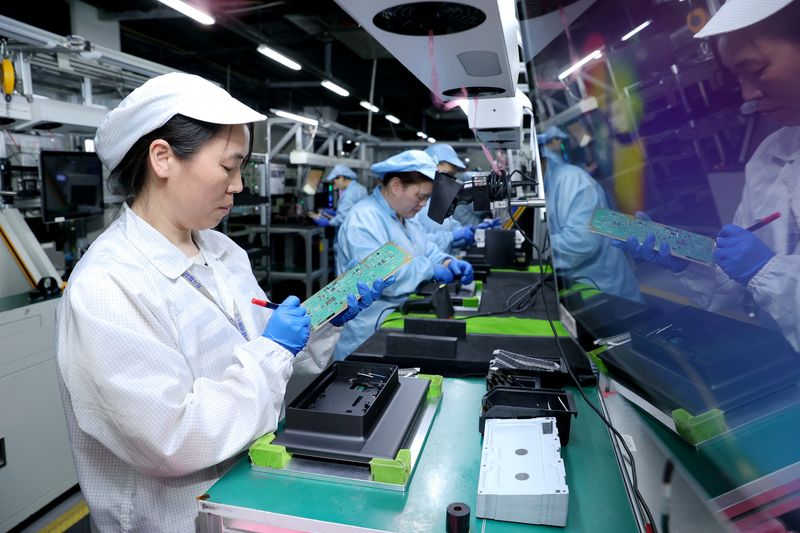
The National Bureau of Statistics quietly dropped the numbers last week: China’s Producer Price Index (PPI) surged to 6.4% year-on-year in June, its highest level since July 2020. That’s a sharp climb. And it’s not just a statistic; it reflects raw material costs—iron ore, copper, oil, plastics—making everything from semiconductors to sneakers pricier to produce. Companies like Foxconn or Hyundai aren’t just absorbing this; they’re passing it on, straight to the folks buying their stuff, or to the businesses stocking those shelves.
Mr. Liu Wei, a senior economist with the Ministry of Commerce, offered a typically measured assessment from Beijing’s Great Hall of the People. ‘These fluctuations are a natural consequence of global commodity price movements,’ he reportedly told state media, always maintaining that careful, official calm. ‘Our domestic market retains strong resilience, and we remain confident in managing any temporary external pressures.’ Don’t panic, basically, is the message.
But trade envoys elsewhere aren’t quite so sanguine. ‘When China sneezes, the global economy often catches a cold,’ remarked Eleanor Vance, the U.S. Trade Representative for Asia, in a rather candid briefing to reporters in Brussels. ‘This isn’t just about steel — and coal anymore; it’s about the everyday goods that fill our stores. We’re keeping a very close watch on how Beijing intends to cool this furnace, because ultimately, consumers worldwide are the ones who pay the price.’ It’s the brutal logic of economics.
Consider Pakistan, for instance. A nation already grappling with its own debt load and a seemingly unending inflation problem—its Consumer Price Index (CPI) hovered around 12% in recent months, a persistent, uncomfortable reality for its 220 million citizens. They’re heavily reliant on imports of Chinese machinery, electronics, — and even components for their textile industries. Higher PPI in China translates almost directly to higher import bills for Islamabad, further straining its foreign reserves and aggravating local inflationary pressures. It’s an unavoidable economic reality, really. The China-Pakistan Economic Corridor (CPEC) may be a grand vision, but if the materials to build it get costlier, so does the debt.
📄 POLICY WIRE WHITEPAPER PUBLISHED: PAKISTAN'S NATIONAL SECURITY POLICY PRIORITIES
👉 READ BY CLICKING HEREPolicymakers in Beijing are staring down a dilemma. If they crank up stimulus measures to boost economic activity, they risk fanning these inflationary embers even hotter. But if they pump the brakes too hard, that might imperil their growth targets—and nobody in the Communist Party wants to miss those. It’s a tricky balance act, particularly when local governments are already swamped with debt and the property sector is still wobbly. And frankly, the ripple effect on emerging markets—countries that depend on affordable Chinese inputs—could prove unsettling, if not outright destabilizing. See also: Diamonds & Dust: Athletic Fortune Hinges on Single Swings, Global Market Fragility for a related dive into market fragilities.
What This Means
The implications here aren’t confined to balance sheets and economic reports; they hit pocketbooks and political stability. For ordinary folks outside of China, it means persistent price hikes on everything from plastic toys to solar panels. Think slower global recovery. Central banks worldwide, already navigating a labyrinth of their own inflationary woes, will face renewed pressure to tighten monetary policy, which could cool economies that aren’t quite ready for a deep chill.
Economically, it underscores China’s outsized role in setting global pricing benchmarks. A sustained uptick in China’s PPI puts the onus squarely on other manufacturing nations to find cost efficiencies or face becoming less competitive. It’s a strategic challenge. Politically, if Western economies see their post-pandemic recovery eaten away by China-sourced inflation, expect louder calls for supply chain diversification—moving away from Beijing’s industrial embrace—a geopolitical chess move that’s easier said than done. But don’t dismiss it. Because global trade isn’t just about profit anymore; it’s about strategic leverage. The costs out of Chinese factories aren’t just numbers; they’re a barometer of the entire global economic climate, and right now, the reading is warm. It’s got everyone wondering when, or if, it’ll cool down. And who ultimately pays the tab.
📖 GET YOUR FREE COPY NOW OF POLICY WIRE DIGITAL MAGAZINE JULY 2026 EDITION
👉 READ & DOWNLOAD FREE MAGAZINE