


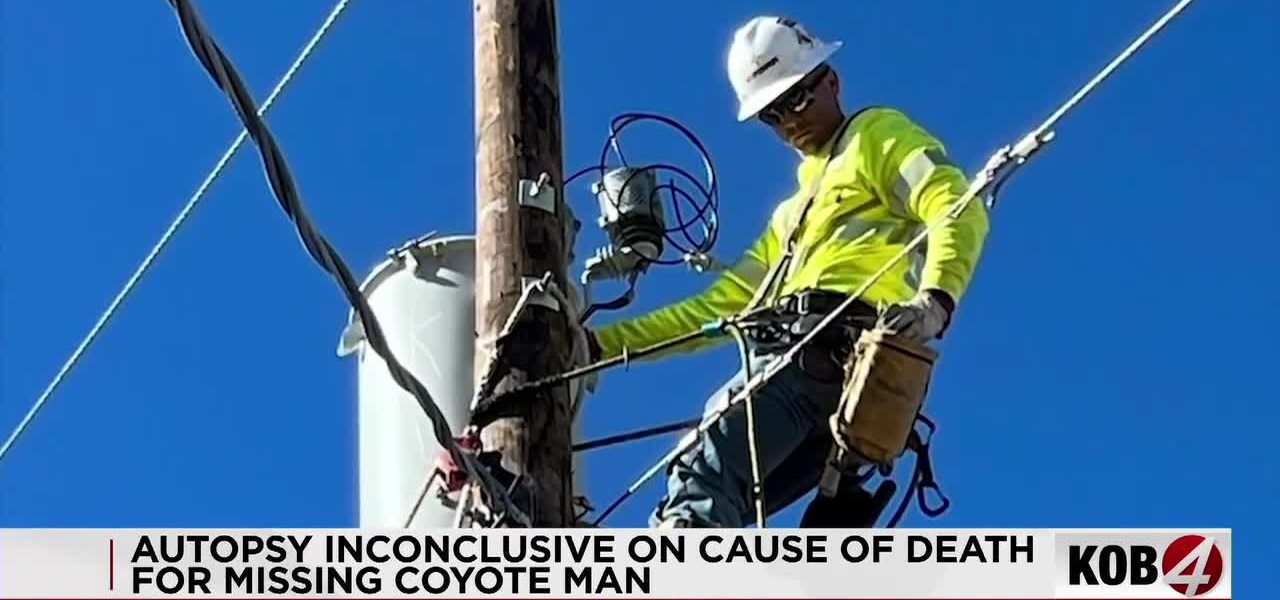
Fentanyl Fog shrouds Deano Valdez’s demise, family cries foul in Santa Fe
POLICY WIRE — Santa Fe, N.M. — It’s a macabre riddle etched into the arid New Mexico high desert: high levels of a potent synthetic opioid, a body found months after disappearance, and a cause of...

POLICY WIRE — Santa Fe, N.M. — It’s a macabre riddle etched into the arid New Mexico high desert: high levels of a potent synthetic opioid, a body found months after disappearance, and a cause of death that remains stubbornly out of reach. We’re talking about the bewildering case of Joel “Deano” Valdez, whose demise has settled into the unfortunate purgatory of unexplained circumstance—a modern-day puzzle with profoundly human consequences.
See, for all the scientific advancements, all the intricate forensic tools at the disposal of modern medicine, sometimes the answers simply aren’t there. Fentanyl, that silent killer that has reshaped America’s public health narrative, indeed turned up in Valdez’s system. It’s a fact. Joel “Deano” Valdez’s autopsy found high levels of fentanyl in his system
. But what exactly does that tell us?
Not enough, apparently. medical investigators still couldn’t determine how he died.
That’s the official word, delivered with bureaucratic precision by the same systems meant to bring closure. Think about that for a second. The presence of a deadly substance, the grim reality of a recovered body—and still, an investigative cul-de-sac. It’s like finding a bullet but never learning who fired the gun. This particular bit of news, you should know, emerged after The Santa Fe New Mexican obtained Valdez’s full autopsy report
, shedding light onto details that public agencies, sometimes, prefer to keep close to the vest. That’s how these things often go, isn’t it?
Valdez had vanished last September. Six agonizing months later, investigators found his body six months later in Santa Fe County
. Imagine the dread, the creeping uncertainty, that must have clung to his loved ones during those long months. And now, the revelation that even a substance like fentanyl can’t provide a definitive narrative—it leaves a void. This vacuum of official explanation is ripe for speculation, for human instinct to fill in the gaps where facts refuse to coalesce. And, you wouldn’t be wrong to think the family is feeling a certain way about it.
But Valdez’s family, they’re not content with a shrug from the medical examiner’s office. His family has said they suspect foul play in his death.
Not surprising, given the gaping holes in the official account. Where do you even begin to reconcile [QUOTE_PLACEHOLDER] with a suspected crime? It implies a complicated intersection, perhaps the forced ingestion, perhaps a lethal dose administered by another party, or maybe, just maybe, an accidental overdose whose circumstances scream suspicion.
The broader context here, naturally, includes the unrelenting national opioid crisis. Synthetic opioids, particularly fentanyl, now account for the vast majority of overdose deaths in the U.S. As per the Centers for Disease Control and Prevention (CDC), New Mexico alone reported an estimated 798 drug overdose deaths in the 12-month period ending in February 2024. A sobering figure, but it doesn’t clarify individual cases of dubious origin. These statistics don’t often distinguish between intentional and unintentional exposure, or whether the fentanyl was simply a byproduct of a more sinister act. The numbers are often stark; the stories, like Valdez’s, are anything but simple.
For context, consider the challenges in nations like Pakistan, where drug trafficking routes intersect with systemic vulnerabilities. While Afghanistan’s opium production has historically fueled the regional heroin trade, the global surge of synthetic opioids presents new headaches for law enforcement and public health officials in South Asia, often compounding issues of corruption, cross-border crime, and inadequate forensic capabilities. Just as in Pakistan, where narratives surrounding disappearances or suspicious deaths often intertwine with allegations of extrajudicial activity or a powerful illicit underworld, the public’s trust in official explanations—or the lack thereof—can erode rapidly when details remain stubbornly obscure. These sorts of open-ended investigations breed conjecture, irrespective of geography, whether it’s a desert county in New Mexico or a sprawling metropolis in the Muslim world. It’s a fundamental challenge to legitimate governance.
📄 POLICY WIRE WHITEPAPER PUBLISHED: PAKISTAN'S NATIONAL SECURITY POLICY PRIORITIES
👉 READ BY CLICKING HEREWhat This Means
The curious case of Joel Valdez speaks to a growing fragility in what we expect from our public institutions—the ability to provide definitive answers, especially in matters of life and death. When medical investigators cannot — or won’t — pinpoint a cause even with forensic evidence like high fentanyl concentrations, it cracks the foundation of public trust. For policymakers, this isn’t just a local tragedy; it’s a warning shot.
It means current investigative protocols for fentanyl-related deaths might not be fit for purpose, particularly when foul play is suspected. If medical experts can’t discern if a death was an overdose or something far more nefarious, then we’ve got a serious problem. It enables potential perpetrators to operate within an ambiguous zone, and it denies families like Valdez’s even the meager solace of a clear narrative. Economically, this lack of clarity can exacerbate the already staggering costs associated with the opioid crisis, diverting resources into endless, inconclusive investigations.
Politically, it feeds into the broader skepticism citizens harbor about transparency — and accountability. An inability to explain a death, particularly when a body has been discovered under suspicious circumstances and with a potent drug in its system, leaves a vacuum. And in that vacuum, rumor, mistrust, — and anger tend to flourish. The subtle erosion of confidence in the legal and medical establishment — where facts refuse to line up neatly — has long-term implications for social cohesion. It implies that justice, even basic closure, is not guaranteed, even in ostensibly advanced systems.