


Sri Lanka’s ‘Deadly Sunday’ Exposes Deeper Rot Behind Prison Walls
POLICY WIRE — Colombo, Sri Lanka — The initial screams have long faded from Mahara Prison, replaced by a suffocating quiet. But for the 26 families now sifting through the bureaucratic indignities of...

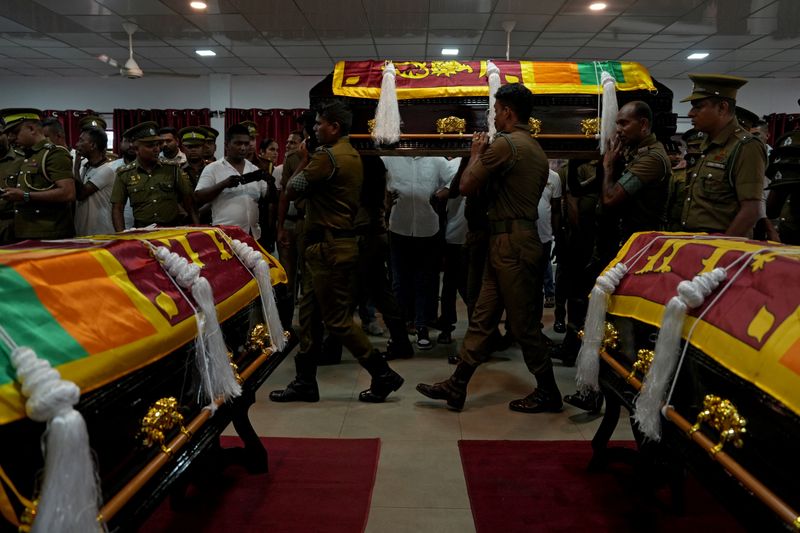
POLICY WIRE — Colombo, Sri Lanka — The initial screams have long faded from Mahara Prison, replaced by a suffocating quiet. But for the 26 families now sifting through the bureaucratic indignities of claiming their dead, the echo of that deadly Sunday is a permanent scar. Nobody really thought much about Sri Lanka’s packed detention centers until bodies started piling up. It’s an inconvenient truth that governments generally prefer to keep out of the spotlight.
Mahara, nestled just north of the capital, became a brutal stage for what was ostensibly a protest over rising COVID-19 cases inside its crumbling walls. That quickly—some might say inevitably—devolved into utter chaos. Prison guards opened fire. Inmates, it’s understood, were desperate, unarmed in any conventional sense. Now, officials are offering carefully worded condolences while simultaneously defending a response that left two dozen people fatally wounded, plus many more nursing bullet holes and other sundry injuries. It feels less like an investigation — and more like an exercise in damage control, frankly. [QUOTE_PLACEHOLDER]
It’s always the same story, isn’t it? Crowding. Contagion. Complaints about basic human decency unmet. When detainees began expressing terror about contracting the virus within their cramped confines—some housing four times their intended capacity, mind you—the state’s answer was not, apparently, to find more space or accelerate testing. It was to tighten the screws, creating precisely the pressure cooker environment that eventually blew. And it did, spectacularly. This isn’t just about Mahara; it’s a reflection of penal systems across South Asia that view detention not as rehabilitation, but as a conveniently out-of-sight repository for society’s problems.
The tragedy—and make no mistake, it’s a tragedy regardless of the circumstances that triggered the guards’ reaction—has spotlighted Sri Lanka’s burgeoning prison population. A government report from 2018 indicated that the island nation’s prison system was operating at roughly 220 percent of its intended capacity, making outbreaks like COVID-19 almost a statistical certainty, and unrest a foregone conclusion. But numbers sometimes gloss over the visceral fear that turns men into frantic mobs. These places aren’t built for epidemics. They’re barely built for people.
This event isn’t just a domestic concern for Colombo. It reverberates across the region, a sobering reminder of the fragile balance between order and chaos in overcrowded state institutions. Look to Pakistan, or Bangladesh—anywhere that human rights groups frequently sound alarms about similar conditions. For many developing nations, the penal system often acts as a societal pressure valve, one that’s constantly on the verge of rupturing. It’s a cruel game, this perpetual push-and-pull between state authority — and the very basic human instinct for survival. You don’t get much softer ground for insurgent sentiment or radicalization than a thoroughly dehumanizing lockup experience, you know? Just sayin’.
But the government, perhaps predictably, insists order has been restored. Commissions of inquiry will be formed, reports written, recommendations likely filed away in some dusty cabinet. For the families though, justice is likely an elusive commodity. They aren’t just mourning sons, brothers, fathers. They’re mourning the systemic failures that made this horrific scene practically unavoidable. They’re mourning what happens when the state simply stops seeing individuals behind bars, instead just seeing numbers.
📄 POLICY WIRE WHITEPAPER PUBLISHED: PAKISTAN'S NATIONAL SECURITY POLICY PRIORITIES
👉 READ BY CLICKING HEREAnd yet, life goes on. Mahara prison is likely already repopulated, its scars painted over, its tragic tally absorbed into the national consciousness as another unfortunate footnote. That’s how these things usually play out, isn’t it? A quick blip, then back to the quiet indifference that allowed it to happen in the first place.
What This Means
This Mahara incident, while localized, serves as a grim barometer for institutional fragility across South Asia, specifically concerning state custody and human rights. Economically, mass unrest within penal systems rarely translates directly into market shocks. But it does signal underlying governance issues—a persistent inability or unwillingness to properly manage public services, even the less glamorous ones like incarceration. For Sri Lanka, already navigating a tricky economic recovery and lingering post-war societal fractures, this sort of visible breakdown in state control doesn’t exactly inspire investor confidence or domestic tranquility. Because stability, even of the imposed kind, requires competent oversight. And this wasn’t that.
Politically, the ruling government will absorb this as another hit, yet it’s doubtful to be a defining moment. But it does provide ammunition for opposition parties and international human rights bodies, deepening existing criticisms about conditions inside detention facilities across the region. You don’t think international monitoring bodies aren’t taking notes? They’re always watching this stuff. This event also highlights the potential for public health crises—like future pandemics—to exacerbate existing vulnerabilities within state infrastructure, a lesson that shouldn’t be lost on neighboring countries, especially those battling their own humanitarian challenges or grappling with regional instability.
The implicit message is that if governments can’t even manage their prison populations humanely during a pandemic, what does that say about their capacity to handle broader societal emergencies? It’s not just a prison riot; it’s a microcosm of deeper systemic issues waiting for another spark. The ghost of Darfur, perhaps, might be thinking the ICC should be paying closer attention to these localized brutalities before they become global headlines.
📖 GET YOUR FREE COPY NOW OF POLICY WIRE DIGITAL MAGAZINE JULY 2026 EDITION
👉 READ & DOWNLOAD FREE MAGAZINE